봄 여름 가을 겨울 그리고 봄
"What you like, others will also like."
Spring, Summer, Fall, Winter... and Spring - Symbolism & Philosophy
Symbols & Motifs
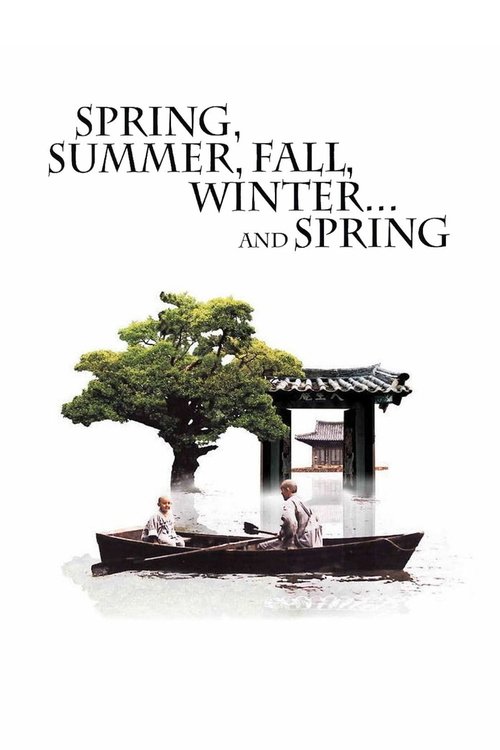
The Floating Temple
Represents the human consciousness and the isolation required for spiritual growth. Its lack of fixed ground reflects the impermanence of existence.
The entire film is set on this raft-like monastery on Jusanji Pond, emphasizing the distance between the sacred and the profane secular world.
The Doors Without Walls
Symbolizes self-discipline and the internal nature of morality. The boundary exists only because the characters choose to respect it.
Both the Master and the apprentice use the doors to move between sections of the temple, even though they could easily walk around them, showing that spiritual laws are self-imposed.
Seasonal Animals
Each animal reflects the spiritual state of that chapter: the Puppy (innocence), the Rooster (lust), the Cat (calming of spirits), and the Snake (anger/rebirth).
A different animal resides at the temple during each season, acting as a silent witness to the monk's development.
The Stone
The physical manifestation of guilt and the heavy burden of one's past sins.
Used by the Master to punish the boy in Spring, and later dragged by the adult monk to the top of a mountain in Winter as an act of final atonement.
Philosophical Questions
Is true enlightenment possible without experiencing sin?
The film suggests that the Master's wisdom comes from his own past mistakes (implied by his handling of the apprentice). It asks whether one can truly understand 'the way' without first being lost.
Can the cycle of human suffering ever be broken?
The ending is ambiguous. While the apprentice finds peace, the new child begins the cycle of cruelty again, questioning whether humanity as a whole can ever escape its base nature.
Core Meaning
The core of the film explores the Buddhist concept of Samsara—the endless cycle of birth, suffering, death, and rebirth. Director Kim Ki-duk suggests that human nature is inherently prone to earthly desires and mistakes, but through discipline and penance, one can attain a higher state of awareness. The film posits that life is not a linear progression but a circular one, where every ending is merely the seed for a new beginning, and the burdens we create in our youth become the weights we must carry until we find the strength to transcend them.