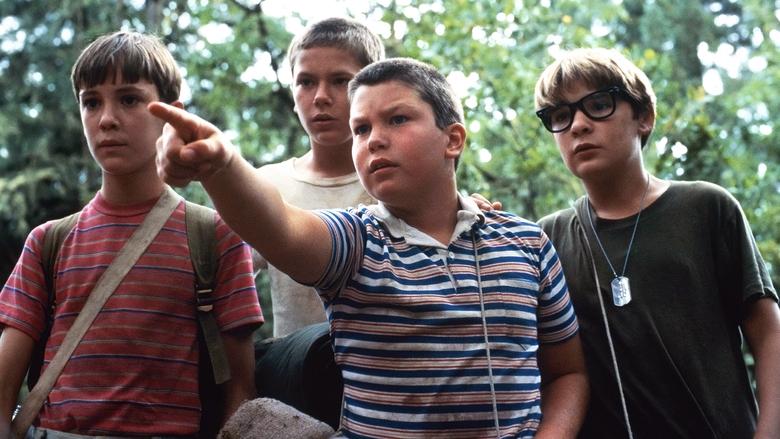
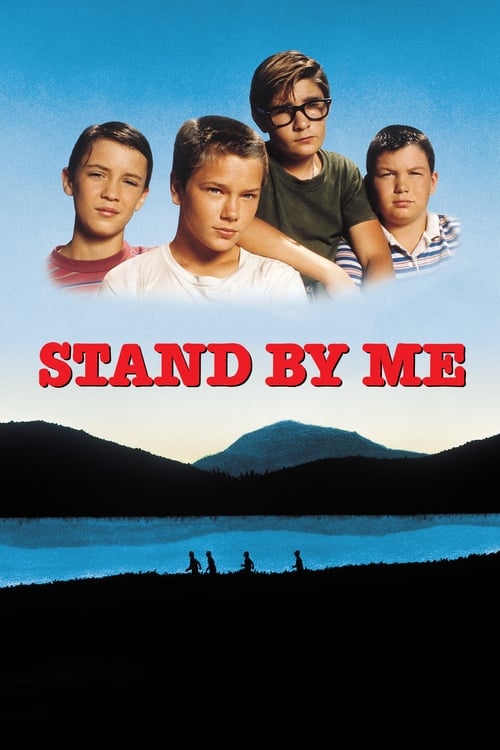
"For some, it's the last real taste of innocence, and the first real taste of life."
Stand by Me - Symbolism & Philosophy
Symbols & Motifs
The Railroad Tracks
The railroad tracks symbolize the journey of life, the path from childhood to adulthood. They represent a predetermined course, yet the boys' choice to follow them on foot signifies their agency in navigating their own lives. The tracks are a liminal space, a threshold between the innocence of their town and the harsh realities of the world beyond.
The entire narrative of the boys' journey unfolds along the railroad tracks. They serve as the physical and metaphorical path that leads them to the discovery of the dead body and, ultimately, to a greater understanding of themselves and the world. The iconic image of the four boys walking along the tracks has become synonymous with the film itself.
The Dead Body (Ray Brower)
Ray Brower's body represents the stark reality of death and the loss of innocence. The boys' initial quest for the body is driven by a morbid curiosity and a desire for fame, but its discovery forces them to confront the grim finality of mortality. For Gordie, the body is a catalyst for confronting his grief over his brother's death.
The search for and eventual discovery of Ray Brower's body is the central plot device of the film. The sight of the deceased boy, who is their own age, is a traumatic and pivotal moment that solidifies their transition from childhood to a more mature understanding of life and death.
The Deer
The deer that Gordie sees in the early morning symbolizes a moment of pure, unadulterated innocence and beauty in a world that is often harsh and ugly. It represents a private, personal experience that Gordie chooses not to share with his friends, suggesting a growing sense of individuality and introspection. It is a moment of peace and tranquility amidst the turmoil of their journey and their lives.
While on his watch one morning, Gordie encounters a deer on the railroad tracks. He stands in silent awe of the creature before it calmly walks away. He later reflects in his narration that he never told his friends about it, making it a personal and significant memory of his journey.
The Gun
The gun symbolizes the dangerous and tempting power of the adult world. It represents a loss of innocence and the potential for violence. When Gordie wields the gun to protect his friends from Ace, it marks a significant step in his maturation and his willingness to take on adult responsibilities and make difficult choices.
Chris steals his father's pistol for protection on their journey. The gun is initially a source of excitement and fear for the boys. Its power is fully realized in the climactic confrontation with Ace and his gang, where Gordie's use of the weapon to defend his friends signifies a major turning point in his character arc.
Philosophical Questions
Are the bonds of childhood friendship fundamentally different and more profound than adult relationships?
The film's final line directly poses this question, suggesting that the friendships we form in our youth hold a unique and irreplaceable significance. "Stand by Me" explores the idea that the shared experiences and vulnerabilities of childhood create a bond of unparalleled intensity and purity. The four boys are united by their shared sense of being outsiders and their need for mutual support in the face of a harsh world. The film prompts viewers to reflect on their own lives and consider whether the friendships of their youth were indeed a singular and unrepeatable phenomenon.
How do our childhood experiences and traumas shape our adult identities?
"Stand by Me" is a powerful examination of the lasting impact of our formative years. Each of the four boys is profoundly shaped by his family background and early life experiences. Gordie's journey is a process of overcoming the trauma of his brother's death and his parents' neglect. Chris's life is a struggle to transcend the negative expectations placed upon him due to his family's reputation. The film suggests that while our childhoods may be fraught with pain and difficulty, they are also the crucible in which our character and resilience are forged.
What is the relationship between storytelling, memory, and truth?
The film is framed as a memoir written by the adult Gordie, which raises questions about the reliability of his narration. To what extent are his memories of that summer accurate, and to what extent have they been shaped and embellished by the passage of time and the act of storytelling? Gordie's talent for telling stories is a central part of his character, and the film implicitly asks us to consider the ways in which we all construct narratives to make sense of our pasts. The film suggests that the emotional truth of a memory may be more important than its factual accuracy.
Core Meaning
"Stand by Me" is a profound exploration of the fleeting nature of childhood friendship and the indelible mark it leaves on one's life. The director, Rob Reiner, wanted to capture the bittersweet nostalgia of looking back on a time when friendships were the most important thing in the world, a sentiment encapsulated in the film's final line: "I never had any friends later on like the ones I had when I was twelve. Jesus, does anyone?". The film's core message is that the journey of self-discovery, especially during the formative years of adolescence, is shaped by the unwavering support and understanding of true friends. The physical journey to find Ray Brower's body serves as a metaphor for the internal journey from innocence to experience, where the boys confront mortality and the harsh realities of the adult world. Ultimately, the film suggests that while life may lead us down different paths, the memories and bonds of our earliest friendships remain a powerful and enduring force in shaping who we become.