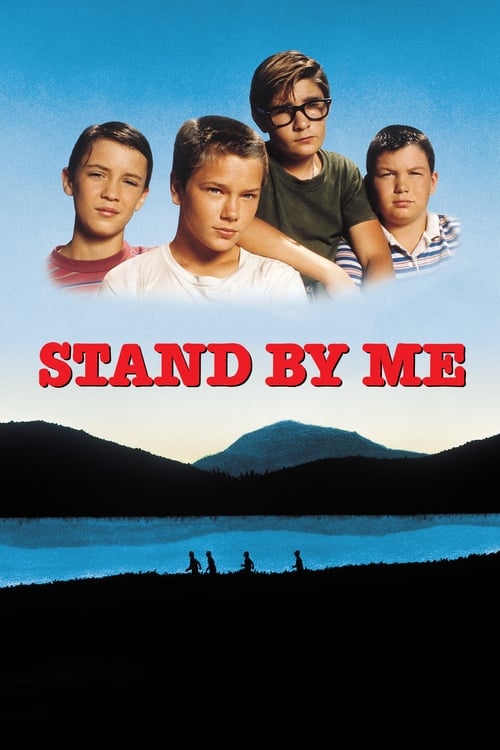
Stand by Me
A bittersweet, nostalgic drama capturing the tender ache of fading childhood friendships against the backdrop of a sun-drenched, melancholic adventure.
Stand by Me

Stand by Me

"For some, it's the last real taste of innocence, and the first real taste of life."

08 August 1986 United States of America 89 min ⭐ 7.9 (6,216)
Director: Rob Reiner
Cast: Wil Wheaton, River Phoenix, Corey Feldman, Jerry O'Connell, Kiefer Sutherland
Drama Crime
Coming of Age and Loss of Innocence The Power of Friendship Confronting Mortality Abuse and Neglect
Budget: $8,000,000
Box Office: $52,300,000

Overview

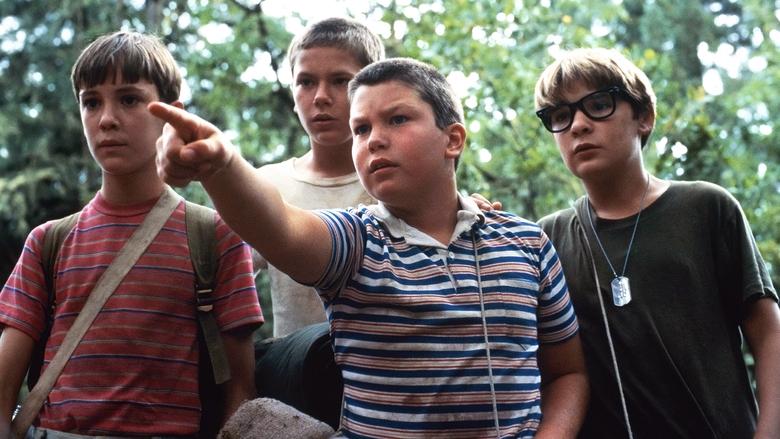
Based on Stephen King's novella "The Body," "Stand by Me" is a quintessential coming-of-age story directed by Rob Reiner. Set in the fictional town of Castle Rock, Oregon, during the summer of 1959, the film follows four twelve-year-old boys: the intelligent and sensitive Gordie Lachance, the natural leader Chris Chambers, the eccentric and troubled Teddy Duchamp, and the timid Vern Tessio. The story is framed by the narration of an adult Gordie, now a writer, who reminisces about a pivotal Labor Day weekend from his childhood.

The adventure begins when Vern overhears his older brother discussing the location of the body of a missing local boy, Ray Brower. Seeking fame and a sense of purpose, the four friends embark on a two-day journey along the railroad tracks to find the body. Their trek becomes a rite of passage, forcing them to confront their deepest fears, insecurities, and the harsh realities of their dysfunctional family lives. Gordie is grappling with the recent death of his beloved older brother and the emotional neglect of his grieving parents. Chris is burdened by his family's criminal reputation, Teddy is haunted by his father's mental illness and abuse, and Vern is constantly belittled for his weight and cowardice.

As they journey, their bonds of friendship are tested and strengthened through a series of misadventures, including a close call with a train on a trestle, a run-in with a cantankerous junkyard owner, and an unnerving leech-filled swamp crossing. Along the way, they share heartfelt conversations, revealing their vulnerabilities and dreams for the future. Their quest is not just about finding a dead body; it's about finding themselves and navigating the transition from the innocence of childhood to the complexities of adulthood.
Core Meaning

"Stand by Me" is a profound exploration of the fleeting nature of childhood friendship and the indelible mark it leaves on one's life. The director, Rob Reiner, wanted to capture the bittersweet nostalgia of looking back on a time when friendships were the most important thing in the world, a sentiment encapsulated in the film's final line: "I never had any friends later on like the ones I had when I was twelve. Jesus, does anyone?". The film's core message is that the journey of self-discovery, especially during the formative years of adolescence, is shaped by the unwavering support and understanding of true friends. The physical journey to find Ray Brower's body serves as a metaphor for the internal journey from innocence to experience, where the boys confront mortality and the harsh realities of the adult world. Ultimately, the film suggests that while life may lead us down different paths, the memories and bonds of our earliest friendships remain a powerful and enduring force in shaping who we become.

Thematic DNA

Coming of Age and Loss of Innocence 35%
The Power of Friendship 30%
Confronting Mortality 20%
Abuse and Neglect 15%

Coming of Age and Loss of Innocence

The central theme of "Stand by Me" is the transition from childhood to adolescence, a journey marked by a profound loss of innocence. The boys' quest to find a dead body forces them to confront the reality of death in a very direct way, shattering their youthful naiveté. This journey is a rite of passage, pushing them to face their own mortality and the complexities of the adult world. Each character grapples with personal demons and dysfunctional family lives, and their shared adventure becomes a crucible in which they are forged into young adults. The film poignantly captures the bittersweet realization that childhood is finite and that the world is a much harsher place than they had imagined.

The Power of Friendship

The enduring bond between the four boys is the heart and soul of the film. Their friendship provides a sanctuary from their troubled home lives, offering the support, loyalty, and understanding they lack from their families. They rely on each other for protection, comfort, and encouragement, as seen when Chris defends Gordie from a bully or when Gordie stands up for his friends against Ace's gang. The film beautifully illustrates how these friendships, forged in the crucible of a shared adventure, are instrumental in shaping their identities and helping them navigate the challenges of growing up. The adult Gordie's nostalgic narration underscores the unique and irreplaceable nature of these childhood friendships.

Confronting Mortality

The boys' morbid curiosity about seeing a dead body evolves into a profound confrontation with the concept of mortality. The discovery of Ray Brower's body is a sobering and transformative experience, stripping away their romanticized notions of death and heroism. For Gordie, in particular, it becomes a catalyst for processing the grief over his brother's recent death. The journey and the discovery force the boys to contemplate the fragility of life and the inevitability of death, accelerating their transition into adulthood.

Abuse and Neglect

A darker, underlying theme in "Stand by Me" is the presence of child abuse and neglect in the lives of the main characters. Each boy comes from a dysfunctional family where they experience some form of mistreatment. Gordie is emotionally neglected by his parents, who are consumed by grief over the death of his older brother. Chris comes from a family of criminals and alcoholics and is physically abused by his father. Teddy's father is a mentally unstable veteran who once held his son's ear to a stove. Vern is constantly belittled and ridiculed. Their journey together is, in part, an escape from these painful home environments and a search for the acceptance and validation they do not receive from their families.

Character Analysis

Gordie Lachance

Wil Wheaton

Archetype: The Protagonist/The Artist
Key Trait: Sensitive and Imaginative

Motivation

Gordie is motivated by a desire to prove his worth, both to himself and to his emotionally distant parents. He also seeks to come to terms with the grief and guilt he feels over his brother's death. His journey is a quest for self-discovery and acceptance.

Character Arc

Gordie begins the film as a quiet, introspective boy who feels invisible in his own family following the death of his older brother, Denny. His journey to find the body is also a journey to find his own voice and self-worth. Through his experiences and the unwavering support of his best friend, Chris, Gordie learns to stand up for himself and his friends, culminating in the climactic standoff with Ace. He comes to accept his brother's death and recognizes his own talent as a writer, a path he ultimately pursues as an adult.

Chris Chambers

River Phoenix

Archetype: The Leader/The Sage
Key Trait: Loyal and Perceptive

Motivation

Chris is motivated by a deep-seated desire to escape his family's legacy and create a better future for himself. He is also driven by a strong sense of loyalty to his friends and a belief in their potential, particularly Gordie's.

Character Arc

Chris is the natural leader of the group, wise beyond his years despite his troubled family background. He is fiercely protective of his friends, especially Gordie, and encourages him to pursue his writing. Chris's arc involves his struggle to overcome the negative reputation of his family and the low expectations of the town. He desires a better life and, with Gordie's encouragement, finds the courage to pursue an education and ultimately becomes a lawyer, breaking free from his predetermined path.

Teddy Duchamp

Corey Feldman

Archetype: The Wild Card/The Damaged Soul
Key Trait: Impulsive and Troubled

Motivation

Teddy is motivated by a desperate need for attention and a desire to prove his bravery, often in self-destructive ways. His actions are a cry for help and a way of coping with the trauma of his abusive upbringing.

Character Arc

Teddy is the most volatile and reckless member of the group, his behavior largely a product of the abuse he suffers at the hands of his mentally ill father. His arc is one of confronting the pain of his family life and learning to rely on his friends for support. While his future is less successful than Gordie's or Chris's, his journey with his friends provides him with a brief period of belonging and acceptance.

Vern Tessio

Jerry O'Connell

Archetype: The Everyman/The Comic Relief
Key Trait: Fearful and Good-natured

Motivation

Vern is motivated by a desire for excitement and to be seen as more than just a cowardly, overweight kid. He wants to be a hero and gain the respect of his friends and the town.

Character Arc

Vern is the most timid and fearful of the group, often the butt of his friends' jokes. His arc involves finding a measure of courage and a sense of belonging within the group. He is the one who initiates the adventure by revealing the location of the body, and despite his fears, he sees the journey through to the end. His journey is one of stepping outside his comfort zone and facing his fears alongside his friends.

John "Ace" Merrill

Kiefer Sutherland

Archetype: The Antagonist/The Bully
Key Trait: Menacing and Cruel

Motivation

Ace is motivated by a desire for power and control. He enjoys intimidating and tormenting those who are weaker than him. His attempt to claim the body for himself is driven by a selfish desire for notoriety.

Character Arc

Ace Merrill is the menacing leader of the older teenage gang and the film's primary antagonist. He represents the darker, more cynical aspects of the adult world that the boys are about to enter. His arc is static; he remains a cruel and intimidating figure throughout the film, serving as a direct threat to the boys' innocence and their quest.

Symbols & Motifs

The Railroad Tracks

Meaning:

The railroad tracks symbolize the journey of life, the path from childhood to adulthood. They represent a predetermined course, yet the boys' choice to follow them on foot signifies their agency in navigating their own lives. The tracks are a liminal space, a threshold between the innocence of their town and the harsh realities of the world beyond.

Context:

The entire narrative of the boys' journey unfolds along the railroad tracks. They serve as the physical and metaphorical path that leads them to the discovery of the dead body and, ultimately, to a greater understanding of themselves and the world. The iconic image of the four boys walking along the tracks has become synonymous with the film itself.

The Dead Body (Ray Brower)

Meaning:

Ray Brower's body represents the stark reality of death and the loss of innocence. The boys' initial quest for the body is driven by a morbid curiosity and a desire for fame, but its discovery forces them to confront the grim finality of mortality. For Gordie, the body is a catalyst for confronting his grief over his brother's death.

Context:

The search for and eventual discovery of Ray Brower's body is the central plot device of the film. The sight of the deceased boy, who is their own age, is a traumatic and pivotal moment that solidifies their transition from childhood to a more mature understanding of life and death.

The Deer

Meaning:

The deer that Gordie sees in the early morning symbolizes a moment of pure, unadulterated innocence and beauty in a world that is often harsh and ugly. It represents a private, personal experience that Gordie chooses not to share with his friends, suggesting a growing sense of individuality and introspection. It is a moment of peace and tranquility amidst the turmoil of their journey and their lives.

Context:

While on his watch one morning, Gordie encounters a deer on the railroad tracks. He stands in silent awe of the creature before it calmly walks away. He later reflects in his narration that he never told his friends about it, making it a personal and significant memory of his journey.

The Gun

Meaning:

The gun symbolizes the dangerous and tempting power of the adult world. It represents a loss of innocence and the potential for violence. When Gordie wields the gun to protect his friends from Ace, it marks a significant step in his maturation and his willingness to take on adult responsibilities and make difficult choices.

Context:

Chris steals his father's pistol for protection on their journey. The gun is initially a source of excitement and fear for the boys. Its power is fully realized in the climactic confrontation with Ace and his gang, where Gordie's use of the weapon to defend his friends signifies a major turning point in his character arc.

Memorable Quotes

I never had any friends later on like the ones I had when I was twelve. Jesus, does anyone?

— The Writer (Adult Gordie)

Context:

This line is delivered in voice-over by the adult Gordie as he finishes writing his memoir about the events of that fateful summer. It serves as a poignant and reflective conclusion to the film, leaving the audience to ponder their own childhood friendships.

Meaning:

This is the film's closing line and its central thesis. It encapsulates the profound and irreplaceable nature of childhood friendships, suggesting that the bonds forged during that formative period are unique and unparalleled in their intensity and purity. It speaks to a universal feeling of nostalgia and the bittersweet recognition that some things can never be reclaimed.

We'd only been gone for two days, but somehow the town seemed different, smaller.

— The Writer (Adult Gordie)

Context:

The adult Gordie narrates this line as the boys return to Castle Rock after finding the body. It reflects their newfound maturity and the realization that their adventure has irrevocably changed them.

Meaning:

This quote highlights the transformative nature of the boys' journey. Their experiences on the road have changed their perspective on the world and their place in it. The town hasn't physically shrunk, but their understanding of the world has expanded, making their familiar surroundings seem less significant. It signifies their loss of innocence and their first steps into a larger, more complex world.

You're gonna be a great writer someday, Gordie. You might even write about us guys if you ever get hard up for material.

— Chris Chambers

Context:

Chris says this to Gordie during a quiet, heartfelt conversation by the campfire. Gordie has just had a nightmare about his deceased brother and is feeling vulnerable. Chris's words are a source of comfort and inspiration for his friend.

Meaning:

This quote is a powerful affirmation of Gordie's talent and a testament to the depth of his friendship with Chris. At a time when Gordie is filled with self-doubt and feels invisible to his family, Chris's unwavering belief in him is a crucial source of encouragement. It foreshadows Gordie's future as a writer and the enduring impact of their friendship on his life and work.

Am I weird?

— Gordie Lachance

Context:

Gordie asks Chris this question as they are walking along the railroad tracks. It is a moment of vulnerability and a reflection of his self-consciousness. Chris's nonchalant and accepting reply strengthens their bond.

Meaning:

This simple question, and Chris's response ("Yeah. But so what? Everybody's weird."), captures a universal feeling of adolescent insecurity and the comforting acceptance of true friendship. It acknowledges that everyone feels like an outsider at some point, and that true friends accept each other's quirks and eccentricities.

This is my age! I'm in the prime of my youth and I'll only be young once!

— Teddy Duchamp

Context:

Teddy shouts this line in response to Chris telling him to act his age. It is a moment of pure, unadulterated youthful energy and a rejection of the constraints and expectations of the adult world.

Meaning:

Teddy's exclamation is a defiant and exuberant embrace of his youth, despite the pain and turmoil in his life. It is both a celebration of the fleeting freedom of childhood and a poignant foreshadowing of the difficult adulthood that awaits him. It captures the reckless and often contradictory nature of adolescence.

Philosophical Questions

Are the bonds of childhood friendship fundamentally different and more profound than adult relationships?

The film's final line directly poses this question, suggesting that the friendships we form in our youth hold a unique and irreplaceable significance. "Stand by Me" explores the idea that the shared experiences and vulnerabilities of childhood create a bond of unparalleled intensity and purity. The four boys are united by their shared sense of being outsiders and their need for mutual support in the face of a harsh world. The film prompts viewers to reflect on their own lives and consider whether the friendships of their youth were indeed a singular and unrepeatable phenomenon.

How do our childhood experiences and traumas shape our adult identities?

"Stand by Me" is a powerful examination of the lasting impact of our formative years. Each of the four boys is profoundly shaped by his family background and early life experiences. Gordie's journey is a process of overcoming the trauma of his brother's death and his parents' neglect. Chris's life is a struggle to transcend the negative expectations placed upon him due to his family's reputation. The film suggests that while our childhoods may be fraught with pain and difficulty, they are also the crucible in which our character and resilience are forged.

What is the relationship between storytelling, memory, and truth?

The film is framed as a memoir written by the adult Gordie, which raises questions about the reliability of his narration. To what extent are his memories of that summer accurate, and to what extent have they been shaped and embellished by the passage of time and the act of storytelling? Gordie's talent for telling stories is a central part of his character, and the film implicitly asks us to consider the ways in which we all construct narratives to make sense of our pasts. The film suggests that the emotional truth of a memory may be more important than its factual accuracy.

Alternative Interpretations

While "Stand by Me" is largely seen as a straightforward coming-of-age story, some alternative interpretations have emerged over the years. One perspective is that the entire story is a fabrication of the adult Gordie's imagination, a romanticized and fictionalized account of his childhood created to cope with the loss of his friends and the passage of time. This interpretation is supported by the fact that the story is framed as a memoir, giving Gordie the creative license to shape the narrative.

Another interpretation focuses on the film's darker undertones, suggesting that it is less a celebration of childhood innocence and more a critique of the toxic masculinity and societal pressures that shape young boys' lives. From this perspective, the boys' journey is not just a fun adventure but a desperate attempt to escape their abusive and neglectful home lives and to prove their manhood in a world that constantly challenges it. The film's nostalgic tone can be seen as a way of masking the deep-seated trauma and pain that the characters experience.

The ending of the film can also be interpreted in different ways. While the on-screen text tells us that Chris became a lawyer and was killed trying to break up a fight, some viewers have questioned the reliability of Gordie's narration. It is possible that Gordie, as a writer, has given his friend a more heroic and redemptive ending than what actually occurred. This interpretation adds a layer of ambiguity to the film's conclusion and raises questions about the nature of memory and storytelling.

Cultural Impact

"Stand by Me" was a critical and commercial success upon its release in 1986, and its influence on popular culture has been both significant and enduring. It is widely regarded as one of the greatest coming-of-age films ever made and has become a nostalgic touchstone for generations of viewers. The film's heartfelt and realistic portrayal of childhood friendship resonated deeply with audiences and critics alike, earning it an Academy Award nomination for Best Adapted Screenplay and two Golden Globe nominations for Best Motion Picture – Drama and Best Director.

The film's influence can be seen in numerous subsequent films and television shows that explore similar themes of youth, friendship, and nostalgia. John Singleton, the director of "Boyz n the Hood," has cited "Stand by Me" as a direct influence on his film, which also features a journey to see a dead body. The pop culture-laden, witty banter between the characters in Quentin Tarantino's films has also been traced back to the naturalistic dialogue of the four boys in "Stand by Me." The 1995 film "Now and Then" is often considered a female counterpart to "Stand by Me." The film has been parodied and referenced in shows like "Family Guy" and "Euphoria," and even in the video game "Pokémon Red and Blue."

The film's title, taken from the classic Ben E. King song, led to a resurgence in the song's popularity, causing it to re-enter the music charts in 1986. The song is now inextricably linked with the film and its themes of enduring friendship and loyalty. "Stand by Me" has solidified its place in the cultural lexicon as a timeless and poignant exploration of the joys and sorrows of growing up.

Audience Reception

"Stand by Me" was met with widespread critical acclaim upon its release and has since become a beloved classic, holding a 91% approval rating on Rotten Tomatoes. Audiences and critics alike praised the film for its heartfelt and authentic portrayal of childhood friendship, its poignant exploration of coming-of-age themes, and the exceptional performances of its young cast, particularly Wil Wheaton and River Phoenix. The film's blend of humor, drama, and adventure resonated with a wide audience, and its nostalgic tone struck a chord with viewers of all ages.

While overwhelmingly positive, some minor criticisms have been leveled at the film over the years. A few critics found the constant swearing and rough language of the young boys to be excessive, leading to its "R" rating, which some felt was too restrictive for a film about childhood. Others have noted that the film's nostalgic lens can sometimes gloss over the darker and more painful aspects of the boys' lives. However, these criticisms are generally minor, and the overwhelming consensus is that "Stand by Me" is a masterfully crafted and deeply moving film that continues to captivate audiences decades after its initial release.

Interesting Facts

  • The film is based on Stephen King's 1982 novella "The Body.".
  • Director Rob Reiner changed the title from "The Body" to "Stand by Me" because he felt the original title sounded like a horror or bodybuilding film.
  • The cigarettes smoked by the young actors were made from cabbage leaves at the insistence of Rob Reiner, an avid anti-smoking advocate.
  • The vomit in the "Lardass" pie-eating contest story was made from cottage cheese and blueberry pie filling.
  • Kiefer Sutherland, who played the bully Ace Merrill, stayed in character off-camera and picked on the four main actors to maintain a sense of tension. Jerry O'Connell later admitted to being genuinely scared of him.
  • The scene with the leeches was inspired by a real-life experience from Stephen King's childhood.
  • The town of Castle Rock in the film was actually Brownsville, Oregon.
  • After a private screening, Stephen King was so moved by the film that he had to excuse himself for fifteen minutes to compose himself. He later called it one of the best adaptations of his work.
  • The film's budget of approximately $8 million was financed by producer Norman Lear after the original studio, Embassy Communications, was sold to Coca-Cola, which then pulled the funding.

Easter Eggs

The story Gordie tells about the pie-eating contest, "The Revenge of Lardass Hogan," contains a line that foreshadows a later event in the film. Gordie describes the sound of the vomiting as being like "a log truck coming at you at a hundred miles per hour.".

This is a subtle piece of foreshadowing, as later in the film, the boys have a tense standoff with a log truck while playing a game of "chicken" on the highway. It's a clever narrative link between Gordie's fictional storytelling and the real-life events of their journey.

The total amount of money the boys pool together for their trip is $2.37.

The number 237 is a recurring motif in Stephen King's work, most famously as the haunted room number in "The Shining." Its inclusion in "Stand by Me" is a deliberate nod to King's broader literary universe and a fun easter egg for fans of his work.

The fictional town of Castle Rock, Oregon, is a recurring setting in many of Stephen King's stories.

The use of Castle Rock connects "Stand by Me" to a larger interconnected universe of Stephen King's creation. Other stories that take place in or reference Castle Rock include "Cujo," "The Dead Zone," and "Needful Things." This shared setting enriches the viewing experience for devoted King readers.

The film contains a reference to another Stephen King adaptation, "The Shawshank Redemption."

The novella "The Body" was published in the same collection, "Different Seasons," as "Rita Hayworth and the Shawshank Redemption." The film subtly acknowledges this connection when characters mention the Shawshank Prison.

The character of Teddy Duchamp was first mentioned in Stephen King's debut novel, "Carrie."

In "Carrie," it is mentioned that Teddy Duchamp once worked at a gas station that was destroyed by the titular character. This is another example of King's intricate world-building and the interconnectedness of his stories.

In the Japanese version of the video game "Pokémon Red and Blue," the player's mother is watching a movie on TV described as "Four boys are walking on railroad tracks."

This is a direct and widely recognized reference to "Stand by Me," indicating the film's significant cultural impact in Japan. The reference was so popular that it was retained in the English localization of the game.

⚠️ Spoiler Analysis

Click to reveal detailed analysis with spoilers

Frequently Asked Questions

Explore More About This Movie

Dive deeper into specific aspects of the movie with our detailed analysis pages

Comments (0)

Leave a comment

No comments yet. Be the first to share your thoughts!