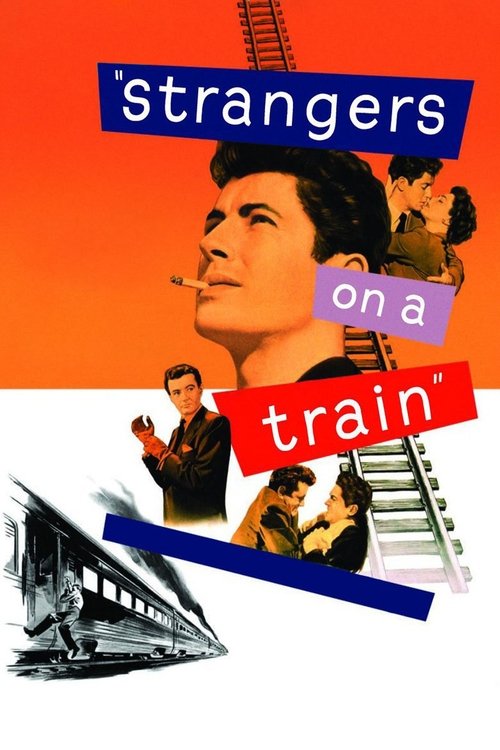
"It starts with a shriek of a train whistle... and ends with shrieking excitement!"
Strangers on a Train - Symbolism & Philosophy
Symbols & Motifs
The Cigarette Lighter
The monogrammed lighter symbolizes guilt, identity, and the inescapable bond between the two men. Engraved with crossed tennis rackets, it represents the "criss-cross" nature of their deadly pact.
Guy carelessly leaves it on the train, and Bruno weaponizes it, threatening to plant it at the murder scene to frame Guy. The lighter becomes the ultimate MacGuffin, driving the breathless race against time in the film's climax.
Crossing Train Tracks
The tracks symbolize the chaotic, intersecting trajectories of fate and the concept of duality. They visually establish the "criss-cross" theme that dictates the entire narrative structure.
In the opening sequence, Hitchcock shoots the intersecting rails from a low angle as they weave and separate, perfectly foreshadowing the inevitable collision of Guy and Bruno's vastly different lives.
The Runaway Carousel
The carousel represents a loss of control, the dizzying descent into madness, and the collapse of childhood innocence. It transforms an object of joy into an engine of terror.
During the spectacular climax at the amusement park, the carousel spins violently out of control while Guy and Bruno fight to the death, literally crushing the villain beneath the weight of his own chaotic machinations.
Miriam's Eyeglasses
The thick glasses represent a distorted, suffocating vision of the world, as well as a reflection of guilt. They also serve as an eerie visual link to Anne's younger sister, Barbara.
In one of the film's most iconic and chilling shots, the murder is shown entirely as a distorted reflection within Miriam's fallen glasses. Later, Barbara's identical glasses trigger a terrifying psychological breakdown in Bruno at a high-society party.
Philosophical Questions
Is the desire for a crime morally equivalent to committing it?
The film thrusts Guy into a state of profound guilt simply because he benefited from a murder he secretly wished for. It challenges the viewer to consider whether passive complicity and dark thoughts carry the same spiritual and moral weight as pulling the trigger.
How fragile is the boundary between civilization and savagery?
Through the juxtaposition of the highly structured world of tennis and politics with the chaotic violence of the amusement park, the film suggests that polite society is merely a thin veneer. It asks what it takes for a civilized person to resort to primal violence.
Are our fates inherently intertwined with strangers?
The "criss-cross" motif raises questions about destiny and chaos theory. The narrative illustrates how a single, random encounter in a public space can irrevocably alter the trajectory of a life, highlighting the terrifying lack of control we have over our own destinies.
Core Meaning
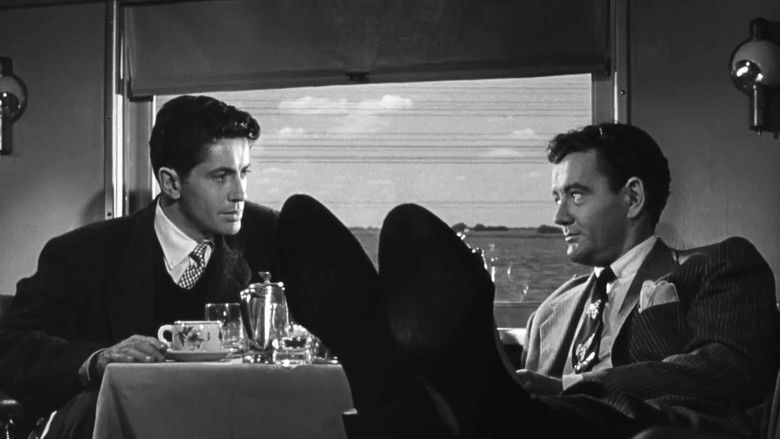
At its core, Strangers on a Train is an exploration of the duality of human nature and the thin, fragile line separating civilized morality from suppressed, primal desires. Hitchcock suggests that evil is not merely an external force that attacks from the outside, but rather a manifestation of our own darkest impulses. Bruno acts as Guy's shadowy alter ego—a walking id who executes the very dark wish Guy harbors but lacks the ruthless will to commit.
The film implies that even the most seemingly innocent individuals possess a latent capacity for violence. By inextricably binding the polished, socially acceptable athlete with the charismatic psychopath, Hitchcock makes the unsettling argument that guilt isn't solely defined by the physical act of murder, but by the secret desires that precipitate it. It is a cynical, suspenseful meditation on shared guilt and the inescapable shadows of the human psyche.