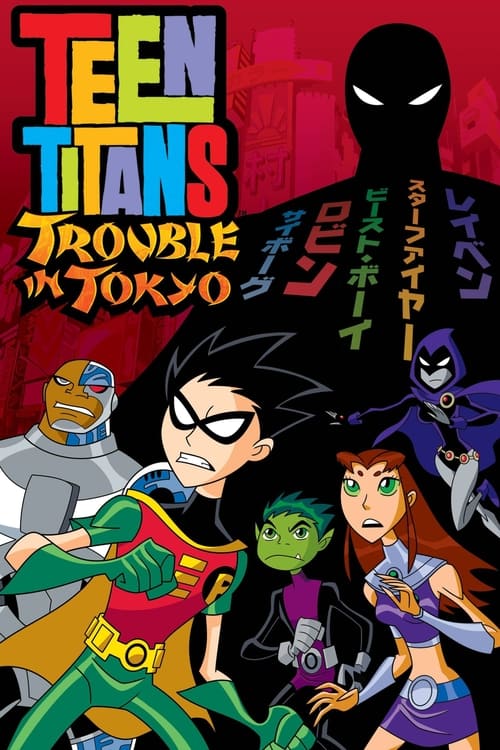
The central twist of "Teen Titans: Trouble in Tokyo" is the revelation of the true villain. Throughout the film, the team pursues Brushogun, a mysterious figure spoken of in whispers who can bring his ink drawings to life. He is presented as the mastermind behind the attacks. However, the Titans eventually discover that Brushogun is actually a captive, not a criminal. He is an elderly artist who, after trying to bring his lost love back to life through a magic spell, became a being of living ink.
The real antagonist is Commander Uehara Daizo, the head of the Tokyo Troopers who is publicly lauded as the city's greatest hero. Daizo found the magically afflicted Brushogun and imprisoned him within a massive printing press, using his power to create an army of ink monsters and villains. Daizo would then publicly "defeat" his own creations, manufacturing a constant state of crisis to solidify his heroic status and gain adoration. He framed Robin for murder to remove the Titans, as they were a threat to his scheme. Brushogun had sent the first Saico-Tek to Jump City not as an act of aggression, but as a desperate cry for help, hoping to attract heroes who could free him. In the final battle, Daizo merges with the ink press to become a giant ink monster himself. Robin frees Brushogun from the press, causing him to pass away peacefully and all of his ink creations, including the empowered Daizo, to dissolve. With the truth revealed, Robin's name is cleared, and the Titans are honored as the true heroes of Tokyo.