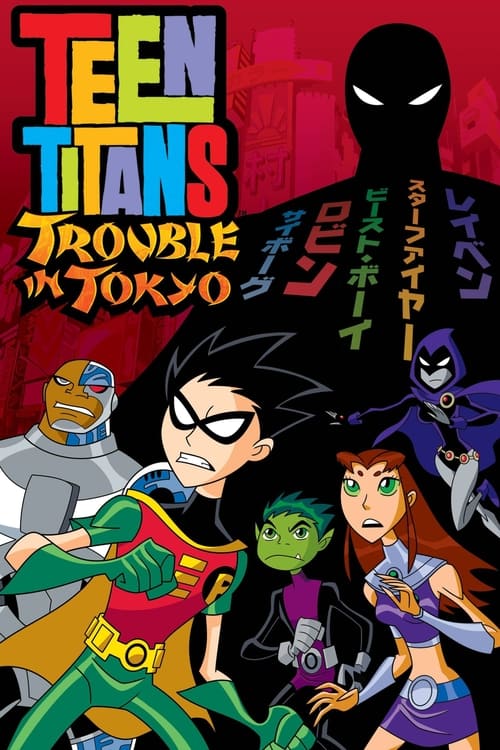
"The Titans go ninja on the notorious villain Brushogun in their awesome first feature-length movie."
Teen Titans: Trouble in Tokyo - Symbolism & Philosophy
Symbols & Motifs
Brushogun's Ink
The ink symbolizes the power of creation and illusion. It represents how reality can be manipulated and how appearances can be deceiving. The creatures born from the ink are formidable but ultimately hollow, lacking true substance, much like Commander Daizo's heroic persona.
The ink is the medium for all the antagonists the Titans face, from Saico-Tek to the giant monsters. It is later revealed that Brushogun, an artist, brought his drawings to life with magic, but this power was twisted and exploited by Daizo using a cursed printing press. The fact that the ink creatures dissolve in water becomes a key plot point.
Tokyo Tower / Titans Tower
Both towers represent a place of safety, headquarters, and identity for their respective protectors. The initial destruction of Titans Tower symbolizes the disruption of the Titans' world and the catalyst for their journey. The battles in Tokyo, often with its skyline and prominent towers in the background, highlight their status as outsiders trying to protect a city that isn't their own.
The film opens with a devastating attack on Titans Tower, forcing the team out of their home base. In Tokyo, they are shown around the headquarters of the Tokyo Troopers, a parallel organization. The climax of the film involves a large-scale battle across the city, reinforcing the urban landscape as a battleground.
Robin's Mask
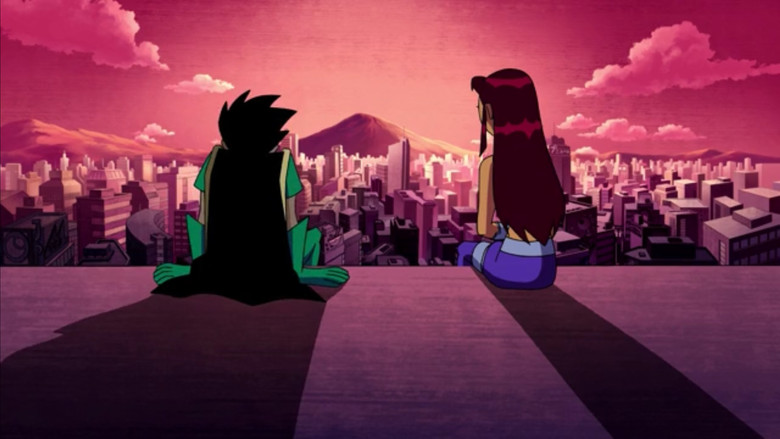
While a constant part of his costume, the mask in this film subtly emphasizes his guarded emotions and his struggle to separate his hero persona from his true self. His brief glimpse without the mask during a vulnerable moment with Starfire is significant, as is his temporary adoption of a disguise when he's a fugitive, forcing him to shed his "Robin" identity.
Robin's identity is challenged when he is framed for murder and becomes a wanted criminal. He is forced to go undercover, wearing a different outfit and letting his hair down, physically altering the image of "Robin". His most emotionally open moments are with Starfire, where the focus is on his face and the emotions he can't completely hide behind the mask.
Philosophical Questions
What is the true definition of a hero?
The film directly contrasts two definitions of a hero through Robin and Commander Daizo. Daizo believes being a hero is about public perception, fame, and being seen to defeat threats, even if he has to create them himself. Robin, on the other hand, learns that heroism is not just about relentless duty. His journey and final confrontation with Daizo lead him to declare that he knows what a hero is, and it's defined by integrity and sacrifice, not by public accolades. The film suggests that true heroism also involves vulnerability and the courage to build meaningful personal connections.
Can one's duty and personal desires coexist?
This question is the central struggle for Robin. He initially believes that his duty as a hero precludes him from having a personal life or pursuing his feelings for Starfire, seeing it as a distraction or a weakness. The events in Tokyo force him to realize that this binary view is flawed. His love for Starfire doesn't diminish his heroic capabilities; in fact, her rescue and support are crucial. The film's conclusion, where he accepts the need for a vacation and embraces his relationship, is a clear statement that duty and personal happiness are not mutually exclusive and can, in fact, enrich one another.
Core Meaning
The core meaning of "Teen Titans: Trouble in Tokyo" revolves around the theme of identity and finding balance between one's duties and personal life. The film explores the idea that being a hero is not just about fighting villains, but also about personal growth, vulnerability, and embracing relationships. It particularly focuses on Robin's internal conflict, forcing him to confront the notion that his identity as a hero shouldn't completely overshadow his personal self and his feelings for Starfire. Ultimately, the movie suggests that true strength comes from accepting all parts of oneself, including the capacity for love and the need for connection, and that even heroes deserve a vacation and a chance at happiness.