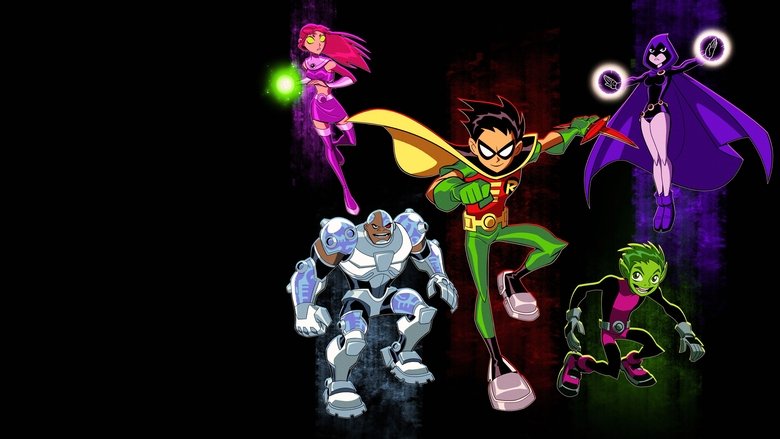
"When there's trouble, you know who to call."
Teen Titans - Symbolism & Philosophy
Symbols & Motifs
Slade's Mask
Represents the unknown, fear, and the darker potential within Robin himself. It symbolizes the cold, emotionless adulthood that Robin fears becoming.
Used as a recurring visual motif, particularly in the episode 'Haunted', where the mask itself becomes a trigger for Robin's psychological breakdown.
The T-Tower
A symbol of independence and sanctuary. It is the physical manifestation of their teenage autonomy, separating them from the adult world below.
It serves as their home and base, often damaged or invaded when their personal lives and safety are threatened.
The White Monster
Symbolizes the inevitability of change and the faceless, unfeeling nature of life moving forward without closure.
Appears in the series finale 'Things Change', serving as a distraction that the Titans must fight while Beast Boy is forced to accept that Terra has moved on.
Mirrors and Reflections
Duality and the fractured self. Characters often face their dark reflections, symbolizing the internal conflict between their hero personas and their inner demons.
Prominent in Raven's arc ('Nevermore') where she confronts her different personality emoticons, and in Robin's battles where he sees Slade in his own reflection.
Philosophical Questions
Is identity defined by nature or nurture?
Through Raven (born of evil) and Terra (a hero turned villain turned hero), the series asks if we are bound by our origins. It concludes that while our past shapes us, our choices define us. Raven chooses good despite her heritage, while Terra's tragedy lies in her inability to trust her own capacity for good.
Does the end justify the means?
Robin frequently wrestles with this, especially in his hunt for Slade. He is willing to endanger his team and compromise his morals (becoming Red X) to achieve the 'greater good' of stopping a villain. The show consistently critiques this utilitarian view, showing the personal cost of such compromises.
Core Meaning
At its heart, Teen Titans is an allegory for the teenage experience, where superpowers are metaphors for the intense emotions and identity crises of adolescence. The series posits that the transition from child to adult is the true battle, filled with confusion, betrayal, and the necessity of accepting that some things—friendships, innocence, and the past—cannot be preserved forever.