Teen Titans
A vibrant fusion of Western superhero tropes and Japanese animation aesthetics that serves as a kinetic metaphor for the turbulent journey of adolescence. Through high-octane battles and emotional shadows, it explores the pain of growing up and the power of found family.
Teen Titans

Teen Titans

"When there's trouble, you know who to call."

19 July 2003 — 16 January 2006 United States of America 5 season 65 episode Ended ⭐ 8.4 (1,292)
Cast: Greg Cipes, Scott Menville, Khary Payton, Tara Strong, Hynden Walch
Animation Sci-Fi & Fantasy Action & Adventure
Identity and Self-Acceptance The Found Family Moral Ambiguity and Redemption Obsession and Control

Overview

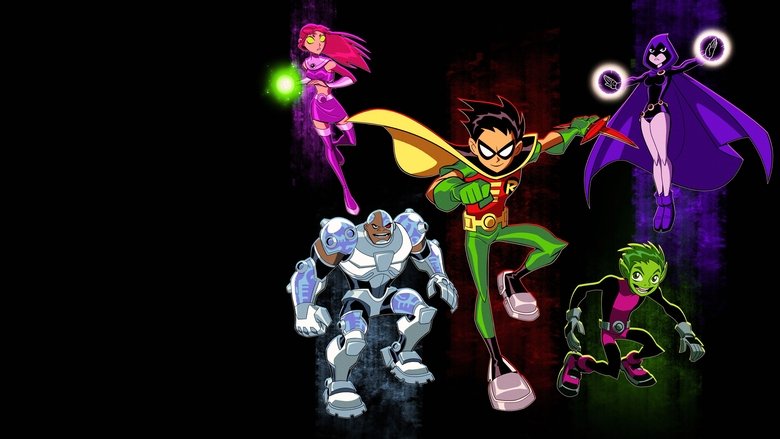
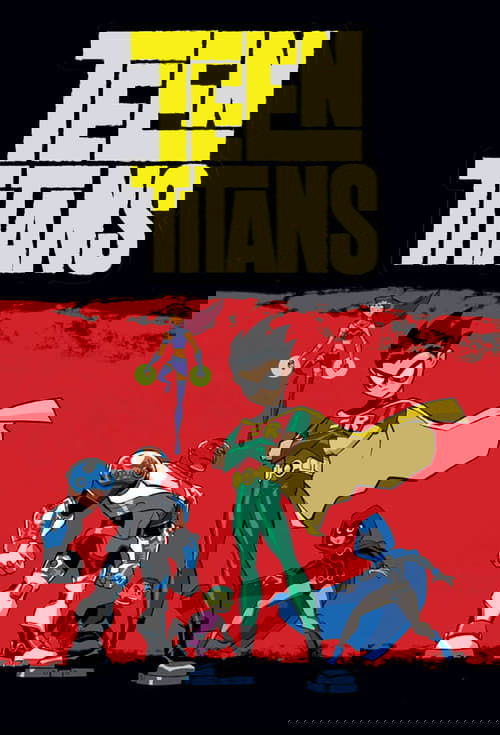
Running for five seasons, Teen Titans (2003) reimagines the classic DC comic team as a group of unsupervised teenagers living in a high-tech tower, balancing the mundane struggles of youth with saving the world. The series is notable for its distinct storytelling structure, blending standalone comedic episodes with season-long serious story arcs that delve into the personal demons of specific characters. The team—Robin, Starfire, Cyborg, Beast Boy, and Raven—faces a rogues' gallery led by the enigmatic and terrifying Slade.

As the series progresses, the narratives mature significantly, tackling themes of betrayal, obsession, destiny, and mortality. The show moves from Robin's psychological battle with Slade to Terra's tragic infiltration of the team, and eventually to cosmic threats involving Raven's demonic heritage. The series concludes not with a massive final battle, but with a quiet, poignant reflection on the inevitability of change and moving on.
Core Meaning

At its heart, Teen Titans is an allegory for the teenage experience, where superpowers are metaphors for the intense emotions and identity crises of adolescence. The series posits that the transition from child to adult is the true battle, filled with confusion, betrayal, and the necessity of accepting that some things—friendships, innocence, and the past—cannot be preserved forever.

Thematic DNA

Identity and Self-Acceptance 30%
The Found Family 25%
Moral Ambiguity and Redemption 25%
Obsession and Control 20%

Identity and Self-Acceptance

This theme permeates every season, as each character grapples with who they are versus who the world expects them to be. Robin fights to separate himself from his mentor's shadow; Cyborg struggles to accept his mechanical nature; and Raven battles the literal destiny of evil written into her DNA. The series argues that identity is a choice, not a preordained fate.

The Found Family

Unlike traditional superhero teams bound by duty, the Titans are a family by choice. The show explores how bonds forged in shared trauma and daily cohabitation can transcend biological lineage. They support each other through isolation (Starfire's alienation), trauma (Beast Boy's loss), and family abuse (Raven and Trigon), illustrating that true belonging is created, not inherited.

Moral Ambiguity and Redemption

The series refuses to paint the world in black and white, most notably through the character of Terra and the villain Slade. It asks difficult questions about whether 'bad' actions define a person forever and if redemption is always possible. The show suggests that while mistakes (even catastrophic ones) are part of growing up, one must live with the consequences.

Obsession and Control

Primarily explored through Robin, the show delves into the dangers of needing to control every outcome. His obsession with Slade mirrors the teenage desire to control an increasingly chaotic world. The series demonstrates that true strength often comes from letting go and trusting others, rather than shouldering the burden alone.

Character Analysis

Robin

Scott Menville

Archetype: The Driven Leader
Key Trait: Obsessive dedication

Motivation

To protect his city and friends, driven by a deep-seated fear of failure and inadequacy compared to his mentor.

Character Arc

Robin starts as a perfectionist leader desperate to prove himself outside of Batman's shadow. His arc is defined by his descent into obsession during the Slade saga, where he nearly becomes the villain he fights to protect his friends. Over the series, he learns to trust his team and accept that he cannot control everything, evolving from a solitary vigilante into a true leader of equals.

Raven

Tara Strong

Archetype: The Reluctant Mystic
Key Trait: Suppressed emotion

Motivation

To control her powers and prevent the prophecy that she will destroy the world.

Character Arc

Raven begins as a stoic recluse, terrified that her emotions will unleash her demonic power. Her journey is one of opening up, learning that her friends accept her darkness. Her arc culminates in the Season 4 'Trigon' storyline, where she accepts her destiny only to reject it, proving that her will is stronger than her prophecy.

Beast Boy

Greg Cipes

Archetype: The Tragic Jester
Key Trait: Resilience through humor

Motivation

To be accepted and loved, using comedy to mask his fear of abandonment.

Character Arc

Beast Boy uses humor as a defense mechanism to hide the pain of his past. His arc forces him to mature through his relationship with Terra, where he experiences love, betrayal, and loss. By the finale, he is the character who must learn the hardest lesson: that you cannot save everyone, and sometimes you must let people go.

Starfire

Hynden Walch

Archetype: The Fish Out of Water
Key Trait: Unabashed empathy

Motivation

To understand her new home and maintain the bonds of friendship among the team.

Character Arc

Starfire evolves from a naive alien confused by Earth customs into a wise and emotionally intelligent warrior. She serves as the emotional glue of the team. Her arc focuses on overcoming the prejudice of others (like in 'Troq') and dealing with the complex jealousy of her sister Blackfire, ultimately defining her own worth independent of her royal lineage.

Cyborg

Khary Payton

Archetype: The Gentle Giant
Key Trait: Boisterous heart

Motivation

To prove that he is more than just a machine and to find his place in the world.

Character Arc

Cyborg struggles with the loss of his humanity and his dreams of being an athlete. Throughout the series, he faces villains who offer him a return to flesh or total machine efficiency. His growth comes from accepting his cybernetic nature as an asset rather than a curse, eventually becoming a mentor figure and leader for the Titans East.

Symbols & Motifs

Slade's Mask

Meaning:

Represents the unknown, fear, and the darker potential within Robin himself. It symbolizes the cold, emotionless adulthood that Robin fears becoming.

Context:

Used as a recurring visual motif, particularly in the episode 'Haunted', where the mask itself becomes a trigger for Robin's psychological breakdown.

The T-Tower

Meaning:

A symbol of independence and sanctuary. It is the physical manifestation of their teenage autonomy, separating them from the adult world below.

Context:

It serves as their home and base, often damaged or invaded when their personal lives and safety are threatened.

The White Monster

Meaning:

Symbolizes the inevitability of change and the faceless, unfeeling nature of life moving forward without closure.

Context:

Appears in the series finale 'Things Change', serving as a distraction that the Titans must fight while Beast Boy is forced to accept that Terra has moved on.

Mirrors and Reflections

Meaning:

Duality and the fractured self. Characters often face their dark reflections, symbolizing the internal conflict between their hero personas and their inner demons.

Context:

Prominent in Raven's arc ('Nevermore') where she confronts her different personality emoticons, and in Robin's battles where he sees Slade in his own reflection.

Memorable Quotes

Titans, Go!

— Robin

Context:

Shouted by Robin (and occasionally others) in almost every episode before charging into battle.

Meaning:

The team's iconic battle cry, symbolizing their unity and readiness to face any threat together. It became the defining catchphrase of the franchise.

I already have a father.

— Robin

Context:

Season 1, Episode 13 'Apprentice - Part 2', when Slade tries to claim a paternal role over Robin.

Meaning:

A pivotal moment where Robin rejects Slade's manipulation and affirms his loyalty to Batman (referenced visually) and his own values.

Things change, Beast Boy. The girl you want me to be is just a memory.

— Terra

Context:

Season 5, Episode 13 'Things Change', when Beast Boy confronts the resurrected Terra who refuses to remember her past.

Meaning:

The crushing thesis statement of the finale: the past cannot be reclaimed, and people grow apart. It signifies the end of childhood innocence.

Azarath Metrion Zinthos!

— Raven

Context:

Used by Raven throughout the series whenever she casts spells or telekinesis.

Meaning:

Raven's mantra used to focus her dark energy. It represents her constant struggle for control and inner peace.

I am the thing that keeps you up at night. The evil that haunts every dark corner of your mind. I will never rest... and neither will you.

— Slade

Context:

Season 3, Episode 5 'Haunted', delivered by a hallucination of Slade inside Robin's mind.

Meaning:

Encapsulates the psychological horror Slade inflicts on Robin. It shows that Slade's true power is not physical, but his ability to corrupt the mind.

Episode Highlights

Haunted

S3E5

Robin inhales a dust that causes him to hallucinate Slade, leading him to fight a brutal battle against a phantom. The other Titans watch helplessly as their leader injures himself fighting nothing.

Significance:

Widely considered the series' psychological peak, it explores Robin's trauma and obsession, showing that his greatest enemy is his own mind.

Aftershock (Part 1 & 2)

S2E12

Terra betrays the Titans to Slade, systematically taking them down, only to eventually turn on Slade and sacrifice herself to save the city from a volcano.

Significance:

The tragic conclusion to the 'Judas Contract' adaptation. It deals with irredeemable mistakes and the high cost of redemption, leaving a lasting scar on the team.

How Long Is Forever?

S2E1

Starfire is accidentally thrown 20 years into the future, where she finds the team has disbanded and the world is bleak. She must reunite the embittered older Titans to return home.

Significance:

Highlights that friendship requires effort to maintain. It serves as a warning of what the Titans could become without their bond.

The End (Part 1, 2 & 3)

S4E11

Raven's destiny arrives as Trigon enters the world, turning everyone to stone. Raven must accept her fate to save her friends, eventually defeating her father with her own power.

Significance:

The climax of the series' darkest arc. It is a powerful metaphor for overcoming abusive family dynamics and reclaiming one's own life.

Things Change

S5E13

Beast Boy discovers a girl who looks exactly like Terra attending school, but she has no memory of him. While the team fights a new monster, Beast Boy tries to make her remember.

Significance:

A controversial but thematically poignant finale. It denies the audience a traditional 'happy ending' in favor of a realistic lesson about moving on.

Philosophical Questions

Is identity defined by nature or nurture?

Through Raven (born of evil) and Terra (a hero turned villain turned hero), the series asks if we are bound by our origins. It concludes that while our past shapes us, our choices define us. Raven chooses good despite her heritage, while Terra's tragedy lies in her inability to trust her own capacity for good.

Does the end justify the means?

Robin frequently wrestles with this, especially in his hunt for Slade. He is willing to endanger his team and compromise his morals (becoming Red X) to achieve the 'greater good' of stopping a villain. The show consistently critiques this utilitarian view, showing the personal cost of such compromises.

Alternative Interpretations

The finale, 'Things Change', offers the most fertile ground for interpretation. Some viewers believe the girl Beast Boy meets is not Terra, but a doppelganger, symbolizing his inability to let go of the past. Others believe it is Terra, and she is feigning amnesia to escape her traumatic life as a super-weapon, representing the right to choose a normal life over a hero's duty. Another interpretation concerns Slade in Season 3; his 'ghost' in 'Haunted' is often viewed not just as a hallucination, but as a manifestation of Robin's PTSD and survivor's guilt, blurring the line between supernatural villainy and mental illness.

Cultural Impact

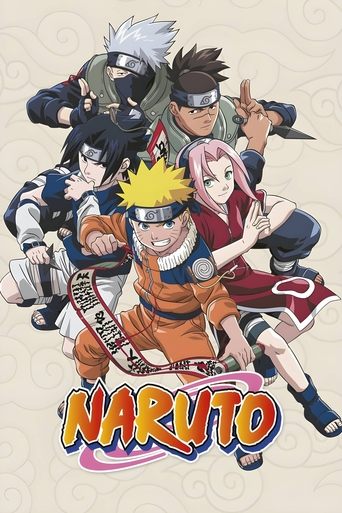
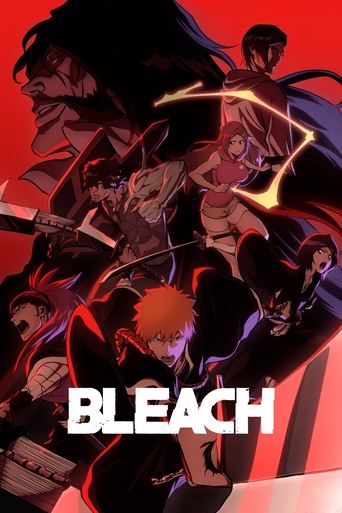
Teen Titans (2003) is a seminal work in Western animation, credited with popularizing the 'anime-influenced' style that would later be seen in shows like Avatar: The Last Airbender. It served as a gateway for a generation of children into the DC Universe and Japanese animation tropes. The show's nuanced handling of mature themes like trauma, racism ('Troq'), and moral ambiguity set a new standard for children's action cartoons. Its cancellation and the subsequent release of the comedic spin-off Teen Titans Go! created a massive cultural rift in the fandom, turning the 2003 series into a cult classic revered for its storytelling depth and emotional resonance.

Audience Reception

Upon its debut, Teen Titans received mixed reactions from purists who disliked the anime-inspired art style and departure from the Bruce Timm Justice League aesthetic. However, it quickly gained a massive, passionate following among children and teens. The 'Terra' and 'Raven' seasons are universally acclaimed for their emotional weight. The finale, 'Things Change', remains divisive; some view it as a brilliant, mature conclusion about acceptance, while others see it as an unsatisfying cliffhanger. In retrospect, especially compared to Teen Titans Go!, the series is hailed as a masterpiece of character-driven storytelling.

Interesting Facts

  • The series was created by Glen Murakami, who aimed for a style he called 'Murakanime' or 'Americanime', blending Western animation with Japanese anime aesthetics like speed lines and sweat drops.
  • The show's theme song is performed by the Japanese pop duo Puffy AmiYumi, and the show alternates between English and Japanese versions of the song depending on the episode's tone.
  • The villain Slade is never referred to as 'Deathstroke' (his comic book name) due to censorship regulations regarding the word 'death' on a children's network.
  • There is a 'Lost Episode' that was originally exclusive to a Post cereal promotion, featuring a villain named Punk Rocket.
  • The character Red X was created specifically for the show to give Robin a villain identity, but became so popular he was later introduced into the comics.
  • The creators were forbidden from using Batman, so while Wayne Enterprises and bat-imagery appear, Batman himself is never shown or named directly.
  • Season 5 was not originally planned; the show was renewed due to high ratings, allowing for the Brotherhood of Evil arc.

Easter Eggs

Batman References

Throughout the series, there are subtle nods to the Dark Knight. In 'Apprentice Part 2', Robin says 'I already have a father' followed by a shot of bats. Wayne Enterprises buildings appear in the skyline.

Japanese Pop Culture

The show is filled with references to anime like FLCL (the scooter designs) and Akira. The movie 'Trouble in Tokyo' explicitly indulges in these references.

Jason Todd and Red X

A theory teasingly referenced in the show (and later Teen Titans Go!) suggests the second Red X might be Jason Todd, hinted at by the theft of the suit and the fighting style, though never confirmed.

⚠️ Spoiler Analysis

Click to reveal detailed analysis with spoilers

Frequently Asked Questions

Explore More About This Movie

Dive deeper into specific aspects of the movie with our detailed analysis pages

Comments (0)

Leave a comment

No comments yet. Be the first to share your thoughts!