
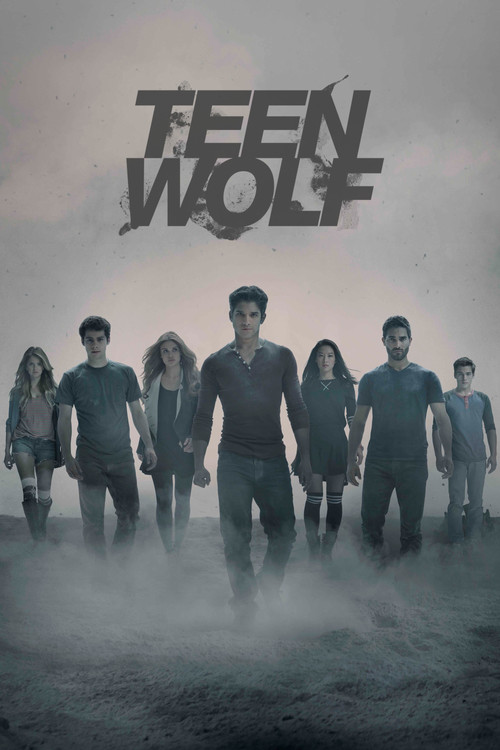
"Watch your pack."
Teen Wolf - Symbolism & Philosophy
Symbols & Motifs
The Triskele
A Celtic symbol with three spirals, it represents various trinities, but within the series, it most importantly stands for "Alpha, Beta, Omega." It symbolizes the cyclical nature of power and identity within the werewolf community: one can rise to power (Alpha), be a follower (Beta), or exist alone (Omega). For Derek Hale, it's a reminder of his family's past and a tool for control. For Scott's pack, it becomes a mantra for self-control and a reminder that one's status is never permanent.
The symbol is physically present as a tattoo on Derek Hale's back and is featured on a talisman box belonging to his family. Derek teaches the mantra "Alpha, Beta, Omega" to his betas, including Scott and later Liam, as a way to anchor them and help them control their transformations during moments of intense emotion or on a full moon.
Mountain Ash
Derived from folklore, mountain ash is a substance that creates an impenetrable barrier against supernatural creatures. It symbolizes protection, boundaries, and the separation between the human and supernatural worlds. It represents a line that cannot be crossed, acting as both a shield for humans and a cage for the supernatural. However, its power is rooted in belief, meaning a broken line or a lack of conviction can render it useless.
Mountain ash is used frequently throughout the series by both heroes and villains. Dr. Deaton, the emissary, first introduces it to Scott as a form of protection. The pack uses it to trap enemies, protect homes, and create safe spaces. Its most significant use is in the final battle against the Anuk-Ite, where Stiles uses it to defeat the seemingly invincible creature.
The Nemeton
An ancient, giant tree stump that acts as a supernatural beacon, drawing creatures from all over the world to Beacon Hills. It symbolizes a nexus of power, a source of life and death, and a connection to the earth's mystical energy. Its power is neutral but potent; it can be used for good or evil, amplifying rituals and attracting chaos. After being dormant for years, its reawakening is a major catalyst for the series' escalating conflicts.
The Nemeton is a central plot device, particularly from Season 3 onwards. It is revived when Scott, Stiles, and Allison perform a ritual sacrifice to save their parents, turning Beacon Hills into a supernatural hotspot. It becomes a site for major battles, sacrifices, and rituals, and its influence is felt throughout the remainder of the series, drawing in creatures like the Dread Doctors and the Wild Hunt.
Philosophical Questions
What is the nature of a true leader?
The series persistently explores this question through Scott McCall's journey. It contrasts the traditional werewolf model of leadership, achieved through violence and dominance (killing an Alpha to take their power), with Scott's ascension as a "True Alpha." Scott earns his status not by killing, but by his unwavering moral character, empathy, and the loyalty he inspires in others. The show posits that true leadership isn't about being the strongest or most ruthless; it's about strength of character, the willingness to sacrifice for your pack, and the ability to lead with compassion. It asks whether power earned is more legitimate than power taken.
Does our inherent nature define us, or do our choices?
This is a central philosophical conflict in "Teen Wolf." Most characters are born with or are unwillingly given a monstrous nature. The series consistently argues that this nature is not a deterministic sentence. Characters like Scott, Malia, and even reformed villains like Peter Hale constantly struggle against their primal instincts. The show's moral compass is fixed on the idea that actions define individuals. The recurring quote, "Not all monsters do monstrous things," serves as the thesis statement, suggesting that humanity is a choice that requires constant effort, regardless of the beast that may lie within.
What constitutes a family?
"Teen Wolf" places a heavy emphasis on the concept of the "found family." Many characters come from broken or single-parent homes. Scott's pack becomes his de facto family, a diverse group of werewolves, a banshee, a werecoyote, and a human who choose to stand by and protect one another. The series challenges the primacy of blood relations, suggesting that the bonds forged through shared experience, loyalty, and unconditional love are just as, if not more, powerful than biological ties. This is exemplified by Scott's relationship with his mentor Dr. Deaton and the Stilinski and McCall households essentially merging into one supportive unit.
Core Meaning
At its heart, "Teen Wolf" is a story about finding your pack and becoming a leader through compassion rather than aggression. The series posits that true strength doesn't come from solitary power or monstrous abilities, but from the bonds of friendship, family, and loyalty. Scott McCall's journey to becoming a "True Alpha"—an alpha who rises through strength of character, not by killing—is the central tenet of the show. It explores the idea that one's identity is not defined by the monstrous things they can do, but by the choices they make and the people they choose to protect. The core message is one of hope, resilience, and the profound idea that you can be your own anchor in the storm of adolescence and the supernatural.