Teen Wolf
A supernatural teen drama pulsating with the raw emotion of adolescence, visually captured like a moonlit battle between shadow and instinct.
Teen Wolf

Teen Wolf

"Watch your pack."

05 June 2011 — 24 September 2017 United States of America 6 season 100 episode Ended ⭐ 8.5 (4,532)
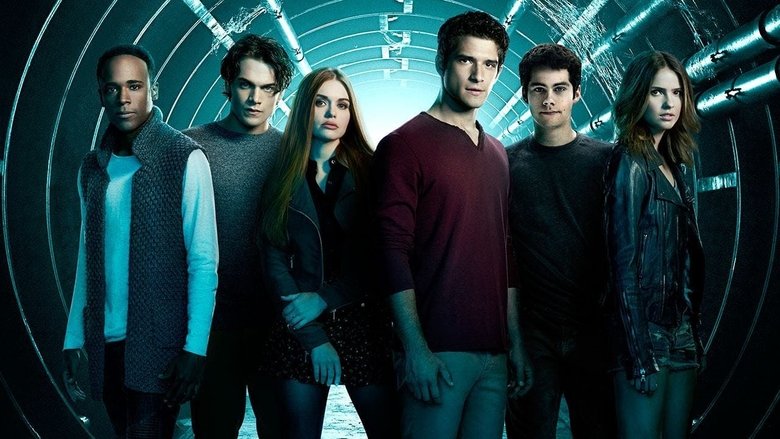
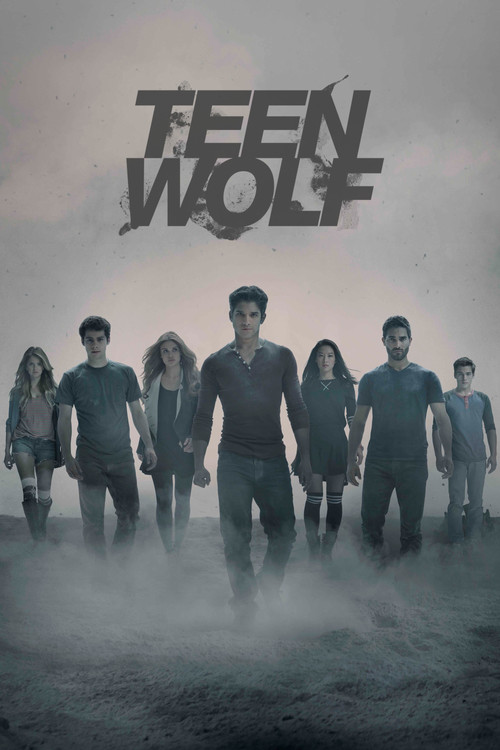
Cast: Tyler Posey, Holland Roden, Dylan O'Brien, Linden Ashby, Shelley Hennig
Drama Sci-Fi & Fantasy Comedy
Identity and Self-Discovery Friendship and Loyalty Power and Responsibility Humanity vs. Monstrosity

Overview

"Teen Wolf," developed by Jeff Davis, is a supernatural drama that reimagines the 1985 film with a darker, more serialized approach. The series follows Scott McCall, a high school outcast in the fictional town of Beacon Hills, California, whose life is irrevocably changed when he's bitten by a werewolf. This transformation forces him to navigate the complexities of high school life—friendships, romance, and lacrosse—while grappling with his new supernatural identity.

Across its six seasons, Scott, with the help of his fiercely loyal best friend Stiles Stilinski and a growing circle of allies, uncovers that Beacon Hills is a beacon for supernatural creatures. Each season introduces new threats and mythologies, from rival werewolf packs and a vengeful hunter family to ancient spirits and monstrous scientific experiments. The series evolves from a story of a single teenager's struggle into a saga about the formation of a diverse pack dedicated to protecting their town from escalating dangers, testing their bonds and forcing them to confront the monster within themselves and others.

Core Meaning

At its heart, "Teen Wolf" is a story about finding your pack and becoming a leader through compassion rather than aggression. The series posits that true strength doesn't come from solitary power or monstrous abilities, but from the bonds of friendship, family, and loyalty. Scott McCall's journey to becoming a "True Alpha"—an alpha who rises through strength of character, not by killing—is the central tenet of the show. It explores the idea that one's identity is not defined by the monstrous things they can do, but by the choices they make and the people they choose to protect. The core message is one of hope, resilience, and the profound idea that you can be your own anchor in the storm of adolescence and the supernatural.

Thematic DNA

Identity and Self-Discovery 35%
Friendship and Loyalty 30%
Power and Responsibility 20%
Humanity vs. Monstrosity 15%

Identity and Self-Discovery

The primary theme is the struggle with identity, literalized through Scott's transformation. The series explores the universal adolescent experience of feeling like a monster in your own skin. Each character grapples with who they are versus who they are becoming, whether it's Scott controlling his wolf instincts, Lydia discovering she's a Banshee, or Stiles fighting for his humanity against demonic possession. The journey is about accepting all parts of oneself, the light and the dark, to forge a coherent identity.

Friendship and Loyalty

The foundational theme of the series is the unwavering loyalty of Scott's pack. The platonic bond between Scott and Stiles is the show's emotional anchor, proving that humanity and friendship are often more powerful than any supernatural ability. The motto "we protect those who cannot protect themselves" becomes the pack's creed, showcasing a theme of found family where friends become siblings, willing to sacrifice everything for one another. This loyalty is constantly tested by outside forces, but ultimately proves to be their greatest weapon.

Power and Responsibility

From the moment Scott is bitten, he is burdened with new powers and the responsibility that comes with them. The series continually questions what it means to be a leader and how to wield power ethically. Scott's evolution into a True Alpha is a direct rejection of the traditional, violent path to power. The show contrasts his leadership style with that of other alphas who rule through fear, emphasizing that true authority is earned through moral integrity and the desire to protect, not dominate.

Humanity vs. Monstrosity

"Teen Wolf" consistently blurs the line between human and monster. The series argues that monstrosity is a matter of action, not nature, encapsulated in the quote, "Not all monsters do monstrous things." While supernatural characters struggle with their inner beasts, the most monstrous villains are often the humans driven by fear, hatred, and a lust for power, like the werewolf hunters Gerard and Kate Argent. The show champions the idea that humanity is a choice that must be actively fought for every day.

Character Analysis

Scott McCall

Tyler Posey

Archetype: The Reluctant Hero
Key Trait: Compassionate

Motivation

Initially, Scott is motivated by a desire for a normal life and to protect his first love, Allison Argent. As the threats escalate, his motivation expands to protecting his pack—his found family—and eventually all the innocent people of Beacon Hills. His core drive is to prove that you can be a predator without being a killer and to save everyone he can, often at great personal cost.

Character Arc

Scott begins as an insecure, asthmatic high school sophomore. After being bitten, his initial journey is one of fear and struggle as he tries to control his new powers and hide his identity. Over the seasons, he grows from a follower into a leader, defined by his unwavering moral compass. His greatest challenge and defining achievement is becoming a "True Alpha"—a rare leader who rises through sheer force of will and virtue, not by killing. By the end of the series, he has fully embraced his role as a protector, not just of his friends, but of any supernatural creature in need, becoming a beacon of hope.

Mieczyslaw "Stiles" Stilinski

Dylan O'Brien

Archetype: The Strategist/The Everyman
Key Trait: Loyal

Motivation

Stiles' primary motivation is an unshakeable loyalty to Scott. He is driven by a fierce need to protect his friends and his father, often throwing himself into danger despite his physical vulnerability. He is the detective of the group, motivated by an insatiable curiosity and a desire to understand the supernatural world that has consumed his life. His love for Lydia Martin also becomes a significant driving force for him throughout the series.

Character Arc

Stiles starts as the hyperactive, sarcastic, and seemingly powerless best friend. Lacking supernatural abilities, he relies on his intelligence, relentless research, and deductive reasoning to solve mysteries and save his friends, effectively being the "brains" of the pack. His arc takes a dark and profound turn in Season 3 when he is possessed by the Nogitsune, forcing him to confront his own darkness and fragility. This trauma matures him significantly, solidifying his role as the pack's human anchor and strategist. By the series' end, he joins the FBI, channeling his skills to help people on a larger scale.

Lydia Martin

Holland Roden

Archetype: The Oracle/The Hidden Genius
Key Trait: Intelligent

Motivation

Lydia is motivated by a deep-seated desire to prevent the deaths she foresees. Her powers are a burden, but she is driven by a sense of responsibility to use them for good. Her motivation is also deeply tied to her love for her friends; as she grows closer to the pack, she becomes fiercely protective and willing to put herself in harm's way to decipher the clues her powers provide.

Character Arc

Lydia is introduced as a popular, seemingly shallow girl who hides her genius-level intellect. Her journey is one of profound self-discovery after a supernatural encounter in Season 1 awakens her dormant abilities as a Banshee—a harbinger of death. Initially terrified of her powers, she grows to understand and control them, transforming from a background character into a vital member of the pack who uses her premonitions to save lives. Her arc is about embracing her true, powerful self beneath the popular facade and finding strength in her unique abilities.

Derek Hale

Tyler Hoechlin

Archetype: The Mentor/The Reformed Cynic
Key Trait: Protective

Motivation

Initially, Derek is motivated by a quest for revenge against his family's killers and a desire to rebuild his pack and reclaim his family's legacy. This often puts him at odds with Scott's more cautious approach. Over time, his motivation shifts from personal vengeance to a protective instinct over Scott and the pack, seeing in them a chance to have the family he lost.

Character Arc

Derek is introduced as a mysterious, brooding, and antagonistic older werewolf who acts as a reluctant mentor to Scott. Traumatized by the fire that killed most of his family, he is initially driven by anger and a desire for power, making many mistakes as a new Alpha. His arc is a slow, painful journey of healing and redemption. He gradually sheds his harsh exterior, learns to trust others, and evolves from a lone wolf into a true ally and integral part of Scott's pack. He ultimately finds peace by sacrificing his own alpha status and focusing on protecting his found family.

Symbols & Motifs

The Triskele

Meaning:

A Celtic symbol with three spirals, it represents various trinities, but within the series, it most importantly stands for "Alpha, Beta, Omega." It symbolizes the cyclical nature of power and identity within the werewolf community: one can rise to power (Alpha), be a follower (Beta), or exist alone (Omega). For Derek Hale, it's a reminder of his family's past and a tool for control. For Scott's pack, it becomes a mantra for self-control and a reminder that one's status is never permanent.

Context:

The symbol is physically present as a tattoo on Derek Hale's back and is featured on a talisman box belonging to his family. Derek teaches the mantra "Alpha, Beta, Omega" to his betas, including Scott and later Liam, as a way to anchor them and help them control their transformations during moments of intense emotion or on a full moon.

Mountain Ash

Meaning:

Derived from folklore, mountain ash is a substance that creates an impenetrable barrier against supernatural creatures. It symbolizes protection, boundaries, and the separation between the human and supernatural worlds. It represents a line that cannot be crossed, acting as both a shield for humans and a cage for the supernatural. However, its power is rooted in belief, meaning a broken line or a lack of conviction can render it useless.

Context:

Mountain ash is used frequently throughout the series by both heroes and villains. Dr. Deaton, the emissary, first introduces it to Scott as a form of protection. The pack uses it to trap enemies, protect homes, and create safe spaces. Its most significant use is in the final battle against the Anuk-Ite, where Stiles uses it to defeat the seemingly invincible creature.

The Nemeton

Meaning:

An ancient, giant tree stump that acts as a supernatural beacon, drawing creatures from all over the world to Beacon Hills. It symbolizes a nexus of power, a source of life and death, and a connection to the earth's mystical energy. Its power is neutral but potent; it can be used for good or evil, amplifying rituals and attracting chaos. After being dormant for years, its reawakening is a major catalyst for the series' escalating conflicts.

Context:

The Nemeton is a central plot device, particularly from Season 3 onwards. It is revived when Scott, Stiles, and Allison perform a ritual sacrifice to save their parents, turning Beacon Hills into a supernatural hotspot. It becomes a site for major battles, sacrifices, and rituals, and its influence is felt throughout the remainder of the series, drawing in creatures like the Dread Doctors and the Wild Hunt.

Memorable Quotes

Not all monsters do monstrous things.

— Lydia Martin

Context:

In Season 4, Lydia says this to Meredith Walker, another banshee who is orchestrating a supernatural deadpool, believing all supernatural creatures bring darkness and must be eliminated. Lydia's statement is a plea for empathy and a rejection of that black-and-white worldview.

Meaning:

This quote encapsulates one of the series' central themes: that one's nature does not define their actions. It argues that true monstrosity lies in one's choices, not their identity or species. It becomes a moral touchstone for the pack as they encounter various creatures and human villains.

Be your own anchor.

— Melissa McCall

Context:

Melissa McCall gives this advice to her son, Scott, during a difficult period where his emotional anchors are unstable. It signifies a turning point for Scott, pushing him to find a way to control his transformation without relying solely on others, a key step on his path to becoming a True Alpha.

Meaning:

This is a powerful piece of advice about finding inner strength and self-control. In the show's mythology, a werewolf needs an emotional 'anchor' to stay human. While this is often another person, this quote emphasizes the importance of self-reliance and emotional stability from within, a crucial step in maturation.

We protect those who cannot protect themselves.

— Allison Argent / Scott McCall

Context:

Allison Argent says this in Season 3 as she forges a new code for her family, breaking from their brutal traditions. After her death, Scott and the pack adopt this creed as their own, carrying on her legacy. It defines their purpose and is repeated in the series finale as they recruit a new werewolf.

Meaning:

This phrase becomes the official mantra and mission statement for Scott's pack. It originates from Allison's family, the Argents, but she redefines it to mean protecting all innocents, human or supernatural, rather than just hunting monsters. It signifies a shift from a world of hunters and hunted to one of protectors.

Sarcasm is my only defense.

— Stiles Stilinski

Context:

Stiles delivers this iconic line early in the series, explaining his personality to Derek Hale. It's a moment that defines his role and his self-awareness, establishing that his sharp tongue is how he navigates the constant fear and danger surrounding him.

Meaning:

This line perfectly captures Stiles' character. As a human in a world of super-powered beings, his wit, intelligence, and humor are his primary weapons and coping mechanisms. It highlights his vulnerability while also celebrating the unique strength he brings to the pack.

Episode Highlights

Motel California

S3E6

While on a cross-country team trip, the pack stays at a motel with a dark history of suicides. Wolfsbane in the coach's whistle causes the werewolves—Scott, Isaac, Boyd, and Ethan—to suffer vivid hallucinations, driving them to attempt suicide. Lydia's banshee powers help her discover the motel's grim past as she tries to save them. The episode is a masterclass in psychological horror and character bonding.

Significance:

This episode is a fan favorite and critically praised for its tense, atmospheric storytelling. It deepens the mythology by exploring the emotional and psychological vulnerabilities of werewolves. The climactic scene where Stiles talks Scott down from setting himself on fire is a powerful affirmation of their friendship and Scott's potential as a leader.

Riddled

S3E18

The episode begins with Stiles missing, having seemingly sleepwalked into a dangerous situation. The search for him is interwoven with his terrifying realization that he might have the same degenerative brain disease that killed his mother. The narrative brilliantly blends real-world fear with the supernatural horror that he is actually being possessed by the Nogitsune.

Significance:

"Riddled" is a pivotal episode for Dylan O'Brien's character, showcasing his dramatic range. It marks the full takeover of Stiles' body by the Nogitsune, the season's main antagonist, setting the stage for the dark and emotional final arc of the season. The fusion of genuine medical terror with supernatural possession makes it one of the show's most compelling and heartbreaking hours.

Insatiable

S3E23

As the pack scrambles to find a way to save Stiles from the Nogitsune's control, the dark spirit kidnaps Lydia. The ensuing rescue mission leads to a chaotic battle against the Oni demons. The episode culminates in a shocking and tragic turn of events.

Significance:

This episode contains one of the most significant and heartbreaking moments in the entire series: the death of a main character, Allison Argent. Her death in Scott's arms is a devastating turning point for all the characters and the show's narrative, fundamentally altering the group dynamics and raising the stakes to their highest point.

The Divine Move

S3E24

In the aftermath of Allison's death, Scott's pack must make their final stand against the Nogitsune. The episode is a complex chess game where the pack uses a "divine move"—a move in the game of Go that is an unexpected, game-changing play—to trick and defeat the seemingly invincible spirit without killing Stiles.

Significance:

As the explosive finale to the widely acclaimed Season 3, this episode is a thematic and narrative peak. It solidifies Scott's status as a True Alpha by demonstrating his ability to lead and win through strategy and sacrifice rather than brute force. The resolution to the Nogitsune storyline is both clever and emotionally resonant, providing a satisfying, albeit bittersweet, conclusion.

Memory Lost

S6E1

The final season premiere introduces the Ghost Riders and the Wild Hunt, supernatural entities who erase people from existence. As Stiles becomes their next target, he desperately tries to make his friends remember him before he is completely forgotten. The episode ends with Lydia faintly remembering one last thing he said to her.

Significance:

This episode masterfully sets up the central conflict and emotional core of the final season. It's a powerful and haunting exploration of memory, loss, and the fear of being forgotten. The premise of erasing a main character from the narrative was a bold creative choice that re-energized the series for its final run.

Radio Silence

S6E5

Trapped in a phantom train station by the Wild Hunt, Stiles encounters an unexpected ally: Peter Hale. Together, they must find a way to make contact with the world of the living and help their friends in Beacon Hills remember them. The episode is largely focused on Stiles's ingenuity and determination.

Significance:

Considered one of the best episodes of the series by fans, "Radio Silence" is a testament to the strength of Stiles's character. It cleverly uses the show's lore to create a compelling bottle-like episode that relies on sharp dialogue and emotional stakes. The final scene, where Stiles successfully contacts Scott and Lydia through his Jeep's radio, is a triumphant and emotionally charged moment.

Philosophical Questions

What is the nature of a true leader?

The series persistently explores this question through Scott McCall's journey. It contrasts the traditional werewolf model of leadership, achieved through violence and dominance (killing an Alpha to take their power), with Scott's ascension as a "True Alpha." Scott earns his status not by killing, but by his unwavering moral character, empathy, and the loyalty he inspires in others. The show posits that true leadership isn't about being the strongest or most ruthless; it's about strength of character, the willingness to sacrifice for your pack, and the ability to lead with compassion. It asks whether power earned is more legitimate than power taken.

Does our inherent nature define us, or do our choices?

This is a central philosophical conflict in "Teen Wolf." Most characters are born with or are unwillingly given a monstrous nature. The series consistently argues that this nature is not a deterministic sentence. Characters like Scott, Malia, and even reformed villains like Peter Hale constantly struggle against their primal instincts. The show's moral compass is fixed on the idea that actions define individuals. The recurring quote, "Not all monsters do monstrous things," serves as the thesis statement, suggesting that humanity is a choice that requires constant effort, regardless of the beast that may lie within.

What constitutes a family?

"Teen Wolf" places a heavy emphasis on the concept of the "found family." Many characters come from broken or single-parent homes. Scott's pack becomes his de facto family, a diverse group of werewolves, a banshee, a werecoyote, and a human who choose to stand by and protect one another. The series challenges the primacy of blood relations, suggesting that the bonds forged through shared experience, loyalty, and unconditional love are just as, if not more, powerful than biological ties. This is exemplified by Scott's relationship with his mentor Dr. Deaton and the Stilinski and McCall households essentially merging into one supportive unit.

Alternative Interpretations

One of the most prominent alternative interpretations of "Teen Wolf" revolves around the subtext of the relationship between Stiles Stilinski and Derek Hale, known by the portmanteau "Sterek." A significant portion of the audience and several critics read their dynamic not just as a begrudging alliance but as a developing romantic relationship. This interpretation is fueled by their intense on-screen chemistry, moments of profound vulnerability, and a classic "opposites attract" narrative. Proponents argue that their journey from antagonism to deep, trusting reliance follows the beats of a romantic arc. The show's writers and actors acknowledged this interpretation, sometimes playing into it, which led to accusations of queerbaiting from those who felt the subtext was intentionally exploited without any canonical payoff.

Another interpretation views the series through a lens of trauma and mental health. Scott's lycanthropy can be seen as a metaphor for managing anxiety or panic attacks, requiring anchors and breathing techniques for control. Season 3's Nogitsune storyline is often interpreted as a powerful allegory for depression and dissociative disorders, as Stiles literally battles a dark entity that takes over his mind and body, isolating him from those who love him. This reading suggests the supernatural elements are externalizations of internal, psychological struggles common in adolescence.

Cultural Impact

"Teen Wolf" premiered in 2011, becoming a cornerstone of MTV's push into scripted programming and a significant player in the supernatural teen drama genre, which was dominated by shows like "The Vampire Diaries." It carved its own niche by blending genuine horror elements with witty, fast-paced dialogue and a strong emphasis on platonic male friendship, which was a refreshing departure from the romance-heavy focus of its contemporaries. The show's darker tone and complex mythology, developed by Jeff Davis, distinguished it from the campier 1985 film it was based on.

The series cultivated a massive and highly active online fandom, particularly on platforms like Tumblr. This digital footprint was crucial to its longevity, with fan engagement often cited as a reason for its continued renewal. However, this passionate fandom also brought scrutiny. The show faced significant criticism for "queerbaiting," particularly concerning the relationship between Stiles and Derek Hale ("Sterek"). While the show featured openly gay characters like Danny and Ethan, critics and fans argued that the writers deliberately played up the homoerotic subtext between the two male leads to attract LGBTQ+ viewers without ever intending to make the relationship canonical. This sparked a wider conversation within fandom culture about representation versus exploitation.

Despite this controversy, "Teen Wolf" was praised for its character development, intricate season-long arcs (especially Season 3's Nogitsune storyline), and its ability to balance horror, action, and heartfelt emotion. It launched the careers of its young cast, most notably Dylan O'Brien. The series' legacy is that of a cult favorite that, while not always perfect, told a compelling story about loyalty, identity, and found family, leaving a lasting mark on the teen television landscape and culminating in a 2023 reunion film, "Teen Wolf: The Movie."

Audience Reception

"Teen Wolf" garnered a highly dedicated and vocal audience throughout its six-season run. The initial reception was mixed, with some critics viewing it as just another teen supernatural drama. However, the show quickly found its footing, and audience opinion grew overwhelmingly positive, particularly during its third season, which is widely regarded by fans and critics as the series' peak. This season was praised for its complex Nogitsune storyline, darker tone, and stellar performance by Dylan O'Brien.

Audiences consistently praised the strong character development, the witty and fast-paced dialogue, and especially the central friendship between Scott and Stiles, which was often cited as the heart of the show. The ensemble cast was also a major point of praise. However, the series was not without its criticisms from viewers. The final seasons (5 and 6) received a more divided response; while many remained loyal, some felt the storylines became convoluted and that the departure of several key characters, like Allison Argent and Derek Hale, left a void. The show also faced significant and persistent criticism for queerbaiting, with many viewers feeling manipulated by the marketing and writing surrounding the "Sterek" (Stiles/Derek) relationship. Despite these critiques, the overall verdict from the audience was overwhelmingly positive, leading to its cult status and the commissioning of a reunion movie on Paramount+, which itself received mixed reviews from fans who felt it couldn't recapture the magic of the series.

Interesting Facts

  • The creator, Jeff Davis, aimed to create a darker, edgier, and more thrilling version of the 1985 film, drawing inspiration from the tone of the 1987 vampire movie "The Lost Boys."
  • Despite mixed initial reviews for the first season, the show gained significant traction, with later seasons receiving very positive critical reception. Season 2 holds a 90% approval rating on Rotten Tomatoes.
  • The show had a massive online viewership, with up to eight million streams per episode on MTV's online platforms, which was a major factor in its renewal for a sixth season.
  • Tyler Posey, who played Scott McCall, originally auditioned for the role of Jacob Black in the "Twilight" film series.
  • Dylan O'Brien was not originally intended to audition for Stiles. He went to the audition to support a friend and was given the script to read, ultimately winning the part.
  • The series won three Saturn Awards for Best Youth-Oriented Television Series and numerous Teen Choice Awards for the show and the performances of its cast members.
  • Crystal Reed, who played Allison Argent, asked to be written off the show after Season 3 because she felt the age difference between herself and her character was becoming too significant and she wanted to pursue other creative opportunities.

Easter Eggs

Stiles's Jeep

Stiles's iconic blue CJ5 Jeep is more than just a vehicle; it's a character in its own right. It represents his steadfastness and reliability. The Jeep's constant breakdowns and mismatched parts mirror Stiles's own perceived flaws, yet it's always there when needed. In Season 6, the Jeep becomes a crucial plot point, serving as a tangible link to Stiles after he has been erased from everyone's memory.

Greenberg

Throughout the series, Coach Finstock frequently yells at an unseen lacrosse player named Greenberg. This running gag became a beloved piece of lore for fans. Greenberg is never shown on screen, and his terrible performance is a constant source of frustration for the coach. It's a small, consistent detail that adds comedic texture to the high school scenes.

The name "Stiles"

For most of the series, Stiles's real first name is a mystery. In Season 6, it's revealed to be Mieczyslaw, a Polish name that he couldn't pronounce as a child, leading his father to give him the nickname "Stiles." This was a long-awaited reveal for fans and added a layer of personal history to the character.

Creator's Cameo

Jeff Davis, the series creator, has a subtle, uncredited cameo in the Season 1 episode "Wolf's Bane." He can be seen as one of the teachers in the background at the parent-teacher conference.

⚠️ Spoiler Analysis

Click to reveal detailed analysis with spoilers

Frequently Asked Questions

Explore More About This Movie

Dive deeper into specific aspects of the movie with our detailed analysis pages

Comments (0)

Leave a comment

No comments yet. Be the first to share your thoughts!