
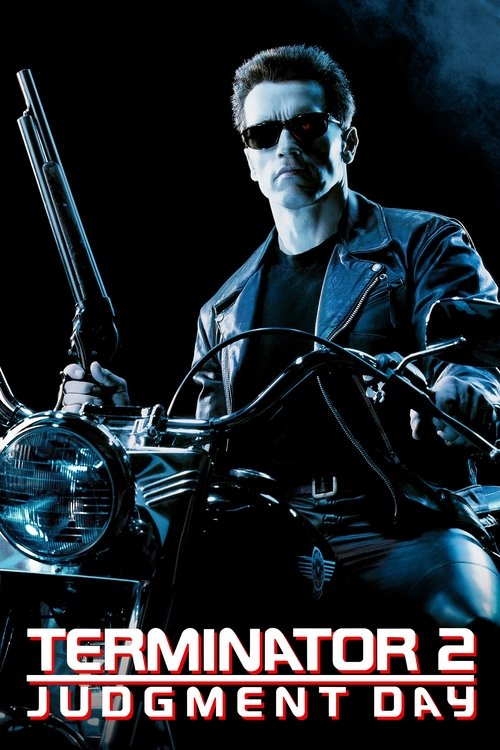
"It's nothing personal."
Terminator 2: Judgment Day - Symbolism & Philosophy
Symbols & Motifs
Molten Steel
The molten steel represents both destruction and purification. It is the only substance in the film capable of permanently destroying the seemingly invincible Terminators. It serves as a crucible that erases the technological threats from the past, present, and future.
The climax of the film takes place in a steel mill, where both the T-1000 and the T-800 are ultimately destroyed in a vat of molten steel. The T-800's voluntary descent into the molten steel is a moment of self-sacrifice, purifying the timeline of its own potentially dangerous technology.
The T-800's Sunglasses and Leather Jacket
Initially, the sunglasses and leather jacket symbolize the T-800's cold, inhuman, and intimidating nature, much like in the first film. However, as the T-800 develops a more human-like connection with John, the removal of the sunglasses often signifies moments of vulnerability and burgeoning humanity. The sunglasses are a physical barrier that, when removed, allows for a more direct and emotional connection.
The T-800 acquires the sunglasses and leather jacket at the beginning of the film, establishing his tough exterior. Throughout the movie, he is often seen wearing them during action sequences. However, in more emotional moments with John, he is sometimes depicted without them. The shedding of his sunglasses is a subtle visual cue of his character's evolution.
Nuclear Nightmare Sequence
Sarah's recurring nightmare of a nuclear holocaust is a powerful symbol of her trauma and the impending doom of Judgment Day. It represents the collective fear of nuclear annihilation prevalent during the Cold War era and serves as a visceral depiction of the stakes the characters are fighting for. The imagery of children playing in a park being incinerated is a haunting representation of innocence lost and the horrific consequences of humanity's self-destructive nature.
Sarah has a vivid and terrifying dream of a playground in Los Angeles being engulfed in a nuclear blast. This nightmare is what galvanizes her to take a more aggressive approach and attempt to kill Miles Dyson to prevent the future she has witnessed. The dream sequence is a pivotal moment that shifts the narrative from flight to fight.
Philosophical Questions
Can a machine become human?
The film explores this question through the character of the T-800. While it is explicitly a machine with a neural-net processor, its ability to learn and adapt from its interactions with John Connor blurs the line between artificial intelligence and genuine understanding. The T-800's development of a protective, almost paternal, bond with John, and its ultimate sacrifice, challenges the notion that machines are incapable of grasping complex human concepts like love and selflessness. The film's conclusion, with Sarah Connor's hopeful reflection that "if a machine...can learn the value of human life, maybe we can too," suggests that the capacity for humanity is not limited to biological beings.
Is free will an illusion?
The central conflict of "Terminator 2" revolves around the struggle between a predetermined, apocalyptic future and the characters' belief that they can change their destiny. The film's narrative champions the idea of free will, with the characters actively fighting to create a new future. However, the existence of time travel and the seemingly fixed nature of certain events in the timeline (such as John Connor's eventual leadership) raise questions about the extent to which their choices are truly free. The sequels further complicate this by suggesting that their efforts may have only delayed the inevitable, leading to a more fatalistic interpretation of the film's events.
What is the moral responsibility of creators for their creations?
The character of Miles Dyson embodies this philosophical dilemma. He is a brilliant and well-intentioned scientist who is unknowingly creating the technology that will lead to humanity's near-extinction. When confronted with the consequences of his work, he is horrified and readily agrees to destroy it, ultimately sacrificing his life to do so. The film uses his character to explore the immense ethical responsibilities that come with scientific and technological innovation, and the potential for even the most well-meaning creations to have devastating, unforeseen consequences.
Core Meaning
The central message of "Terminator 2: Judgment Day" is one of hope and the power of human choice against a seemingly predetermined fate. The film posits that the future is not a fixed path, but a fluid outcome shaped by the actions and decisions made in the present. This is encapsulated in the recurring mantra, "There is no fate but what we make for ourselves."
Director James Cameron wanted to explore the idea that even in the face of seemingly insurmountable odds and a bleak, apocalyptic future, humanity has the capacity for change and redemption. The film suggests that if a machine, a Terminator, can learn the value of human life, then perhaps humanity itself can overcome its self-destructive tendencies. The narrative serves as a cautionary tale about the dangers of unchecked technological advancement and the importance of empathy and compassion in a world increasingly dominated by cold logic and machinery.