Les Quatre Cents Coups
"Angel faces hell-bent for violence."
The 400 Blows - Symbolism & Philosophy
Symbols & Motifs
The Sea
The sea symbolizes the ultimate freedom and escape that Antoine desperately craves throughout the film. It is the mythical place he has always wanted to see, representing a horizon beyond the oppressive confines of his life in Paris.
Antoine mentions wanting to see the sea, and his mother even suggests sending him to a youth center near the coast. The film's final, iconic sequence is an extended shot of Antoine running away from the detention center until he reaches the shoreline. However, upon reaching it, his expression is ambiguous, suggesting that the reality of freedom is more complex and uncertain than the dream.
Running
The act of running is a recurring motif that represents Antoine's constant state of flight and his irrepressible desire for liberation from the constraints of his family, school, and the authorities.
Antoine is frequently shown running through the streets of Paris, whether skipping school or escaping from a situation. The most significant instance is the final scene, a long tracking shot that follows his desperate run from the reform school to the sea, viscerally conveying his final bid for freedom.
The Rotor Ride
The spinning rotor ride at the funfair is a powerful visual metaphor for Antoine's journey. It symbolizes a moment of fleeting joy and ecstatic freedom, but also his struggle against the powerful forces of society that pin him down.
While playing truant, Antoine goes on a spinning ride called a "rotor." As the ride accelerates, centrifugal force pins him to the wall, and he smiles with pure joy for the first time. He tries to turn himself upside down, fighting against the force, which allegorically represents his struggle for liberation against the constrictions of his life. The ride ends, and he is returned to the real world.
The Freeze-Frame
The freeze-frame, particularly the final shot, symbolizes a moment of capture and uncertainty. It freezes Antoine in a moment of transition, caught between his oppressive past and an unknown future, breaking the fourth wall to confront the audience with his unresolved plight.
The film uses a freeze-frame twice. The first is on Antoine's mugshot after his arrest, which zooms in to show him trapped and defined by the system. The second is the famous final shot. After reaching the sea, Antoine turns and looks directly into the camera. The film freezes on his face, and the camera zooms in, leaving his fate entirely ambiguous.
Philosophical Questions
Is rebellion a product of nature or nurture?
The film compellingly argues for nurture. Antoine is not presented as an inherently "bad" child. His delinquency is a direct consequence of his environment: the emotional neglect of his parents and the oppressive rigidity of his school. The film asks us to consider whether society creates its own delinquents by failing to provide children with the love, understanding, and freedom they need to thrive. Antoine's actions are a reaction to his circumstances, a desperate attempt to cope with a world that has already labeled him a troublemaker.
What is the true nature of freedom?
Antoine spends the entire film searching for freedom from the physical and emotional constraints of his life. He finds fleeting moments of it in the cinema, on the streets with René, and on the rotor ride. His ultimate goal is the sea, a symbol of boundless liberty. However, when he finally reaches it, the film questions whether this physical liberation equates to true freedom. The ambiguous final shot suggests that freedom is not merely an escape from confinement but also a state of being that involves purpose and a place in the world, things Antoine has yet to find.
Can authority be just without empathy?
The film portrays a world where authority—parental, educational, and judicial—is exercised without empathy. Antoine's parents and teacher punish and discipline him without ever trying to understand the root causes of his behavior. The juvenile justice system treats him as a case file, not a person. "The 400 Blows" suggests that authority without understanding is merely oppression, and that such systems, intended to correct and reform, only succeed in further alienating and damaging the individuals they are supposed to help.
Core Meaning
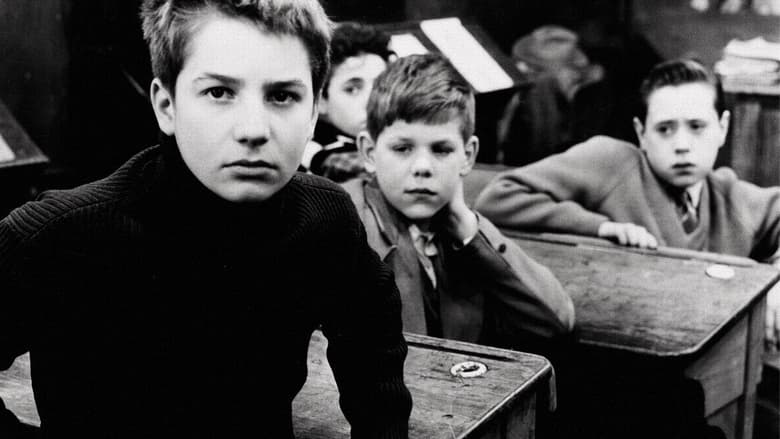
The core meaning of "The 400 Blows" is a deeply personal and unsentimental exploration of the injustices and neglect faced by children in an indifferent adult world. Director François Truffaut, drawing heavily on his own troubled childhood, critiques the rigid and often cruel institutions of family and school that fail to understand or nurture a rebellious spirit. The film isn't just a character study of a delinquent; it's a powerful statement on the universal need for love, freedom, and understanding during the vulnerable transition from childhood to adulthood. Antoine's rebellion is portrayed not as malice, but as a desperate cry for the attention and affection he is denied. The film ultimately suggests that such a restrictive environment can push a sensitive child toward a path of alienation and crime, leaving them trapped with an uncertain future.