Skip to content
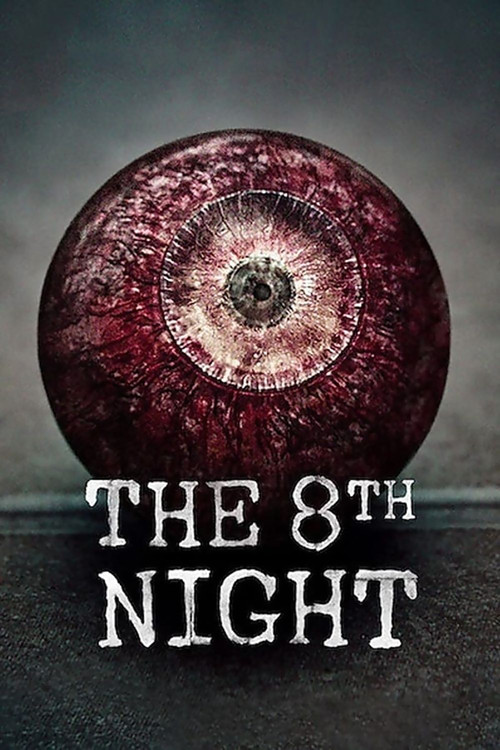
The 8th Night
A candlelit Buddhist nightmare where an ancient, blinded evil counts down seven nights of sleepwalking corpses, and a broken monk walks back into the dark he once fled.
The 8th Night
The 8th Night

제8일의 밤

"Dark night of the soul."

02 July 2021 South Korea 115 min 6.2 (171)

Director: Kim Tae-hyoung

Cast: Lee Sung-min, Nam Da-reum, Park Hae-joon, Kim You-jung, Kim Dong-young

Thriller Mystery Horror Guilt and Redemption Good vs. Evil in a Buddhist Frame Suffering as Contagion Faith and Doubt Sacrifice and Innocence

The 8th Night — Ending Explained

⚠️ Spoiler Analysis

The film's core logic is revealed in its prologue myth. The monster needs its Red and Black Eyes reunited to open the door to Hell. After 2,500 years in separate śarīra caskets, one Eye is freed and begins a journey across seven nights, moving through the seven \"stepping stones\": human hosts that leave a trail of deaths for Detective Kim Ho-tae to investigate. On the eighth night, the Eyes would be joined.

Ae-ran, the virgin Bodhisattva, turns out to be tied directly to the stepping stones, which makes her the key to the final confrontation. Cheong-seok (Park Jin-su), the exorcist who renounced his role, is pulled back by the young monk Seon-hwa. The monks' story and the detective's investigation converge at the climax, where Cheong-seok has to face both the monster and his own past.

Looking back, the title names the deadline the whole story runs toward, and the Buddhist framework recasts the exorcism as an act of spiritual discipline and sacrifice rather than a triumph of force. Many critics found the ending muddled, so the resolution hits harder as a thematic statement than as a clean plot payoff. (Moment-by-moment ending details were not fully covered in the sources consulted.)

Alternative Interpretations

Viewers can read the film on two levels:

  • Literal: a supernatural thriller in which an ancient evil must be stopped before a deadline.
  • Allegorical: the Red and Black Eyes stand for the dualities of the human mind, such as desire and aversion, or grief and rage. Keeping them apart is a form of spiritual discipline, and reuniting them is the collapse into Hell on earth.

Cheong-seok's struggle can also be read as a psychological battle with his own guilt, with the monster's hold on him standing in for trauma he has not dealt with. Some critics found the ending muddled, which leaves room to argue whether the victory is a real cosmic triumph or only a postponement until the next time a casket is opened.

Explore More About This Movie

Dive deeper into specific aspects of the movie with our detailed analysis pages

Similar Movies