Skip to content
The 8th Night
A candlelit Buddhist nightmare where an ancient, blinded evil counts down seven nights of sleepwalking corpses, and a broken monk walks back into the dark he once fled.
The 8th Night

The 8th Night

제8일의 밤

"Dark night of the soul."

02 July 2021 South Korea 115 min 6.2 (171)

Director: Kim Tae-hyoung

Cast: Lee Sung-min, Nam Da-reum, Park Hae-joon, Kim You-jung, Kim Dong-young

Thriller Mystery Horror Guilt and Redemption Good vs. Evil in a Buddhist Frame Suffering as Contagion Faith and Doubt Sacrifice and Innocence

Overview

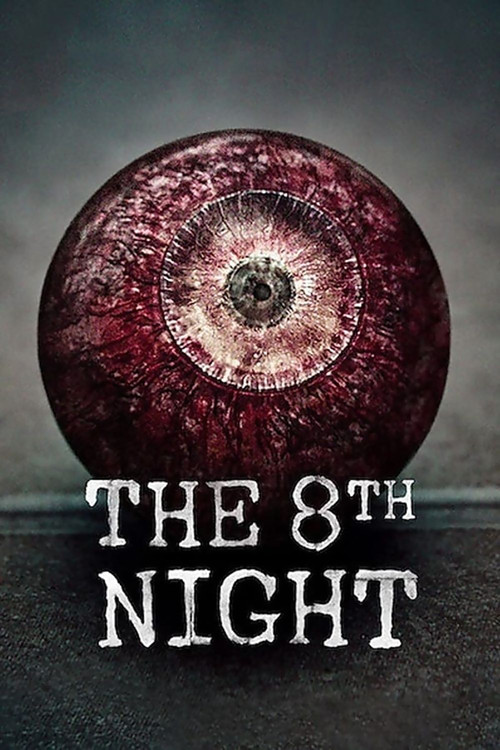
The 8th Night (제8일의 밤) is a 2021 South Korean horror-mystery written and directed by Kim Tae-hyoung and produced by Gom Pictures. It premiered on Netflix on July 2, 2021 and streamed in 190 countries. The film opens with a myth: long ago a monster tried to open the door between the human world and Hell so that people would suffer. The Buddha stopped it by tearing out its Red Eye and Black Eye, the source of its power, and sealing each in a separate śarīra casket for 2,500 years.

In the present day, one of the caskets is opened and the old danger comes back. A former exorcist monk, Cheong-seok (Lee Sung-min), gave up his calling and now lives as Park Jin-su. A young monk, Seon-hwa (Nam Da-reum), is sent to bring him back to stop the two Eyes from reuniting. A strange chain of deaths also draws in Detective Kim Ho-tae (Park Hae-joon), and the story tracks his investigation alongside the monks' search.

A mysterious young woman, Ae-ran (Kim You-jung), described as a virgin Bodhisattva, is linked to a secret about seven "stepping stones". The story becomes a race over eight nights between faith, guilt and an evil that moves from one body to the next.
Core Meaning

Under its genre surface, The 8th Night is a Buddhist story about facing what you have run from. The evil is literally a pair of eyes: it is a way of seeing the world through suffering and desire. It can only be defeated by someone who stops avoiding his own pain. Cheong-seok's return from the outside world to his old role suggests that redemption is a practice you take back up, not something you earn once. The film also presents Hell as something humans let in through their own grief and attachment. The monster wants people to suffer, and its power grows wherever people are already suffering.

Thematic DNA

Guilt and Redemption 30%
Good vs. Evil in a Buddhist Frame 25%
Suffering as Contagion 20%
Faith and Doubt 15%
Sacrifice and Innocence 10%

Guilt and Redemption

Cheong-seok has left his monastic life and exorcist past to live as the ordinary Park Jin-su. The plot forces him to take up the role he abandoned, so the fight against the monster also becomes a way for him to atone.

Good vs. Evil in a Buddhist Frame

The film is built on invented Buddhist mythology: the Buddha, śarīra caskets, Bodhisattvas and Sanskrit incantations. This sets it apart from the Christian exorcism films that dominate the genre, and it frames evil as suffering and attachment rather than sin.

Suffering as Contagion

The monster's goal is to open the door to Hell and make humans suffer. Its spread from person to person through the "stepping stones" shows how pain passes from one life to the next.

Faith and Doubt

The devout young monk Seon-hwa is set against the disillusioned Cheong-seok, and the skeptical detective Ho-tae is set against both. This lets the film test belief against reason.

Sacrifice and Innocence

Ae-ran, the virgin Bodhisattva, and the naïve Seon-hwa stand for a purity the monster hunts. That raises the question of what innocents must give up so that others can be saved.

Character Analysis

Cheong-seok / Park Jin-su

Lee Sung-min

Archetype: Reluctant hero / fallen mentor Key Trait: Weary, guilt-ridden resolve

Motivation

To stop the monster's resurrection and make peace with his past.

Character Arc

He goes from a monk who has renounced his old identity to a man who takes his exorcist role back up to stop the Eyes from reuniting.

Seon-hwa

Nam Da-reum

Archetype: Innocent disciple / messenger Key Trait: Earnest devotion

Motivation

To carry out his master's mission and serve the Buddha's cause.

Character Arc

A young monk sent to find Cheong-seok. His purity and faith are tested by the horror he runs into.

All 4 characters and cast

Symbols & Motifs

The Red Eye and the Black Eye

Meaning:

The monster's split power. Duality kept apart is harmless, and reunited it is catastrophic. The eyes also suggest a way of seeing through desire and suffering.

Context:

The prologue shows the Buddha tearing out both eyes and sealing them in separate caskets. The whole plot turns on stopping them from coming back together.

Śarīra caskets

Meaning:

Sacred containment: the Buddha's power to hold evil in check, which lasts only as long as people guard it.

Context:

The two Eyes are locked away in separate caskets for 2,500 years. Opening one sets off the story.

The seven stepping stones

Meaning:

A path toward damnation made of human bodies, where each victim becomes a step for evil to cross.

Context:

They are tied to Ae-ran's secret and to the countdown of nights before the eighth.

The eighth night

Meaning:

The threshold after the seven stones, when the door to Hell could open. It works as a doomsday clock.

Context:

The title and the film's night-by-night structure build toward this deadline.

Sanskrit incantation

Meaning:

Spiritual authority and discipline, the monk's true weapon.

Context:

Cheong-seok recites a Sanskrit chant while gripping Seon-hwa's arm.

Philosophical Questions

Can a person who has abandoned their calling truly return to it?

Cheong-seok left monastic life and became Park Jin-su. The plot makes him take up his old role again and asks whether redemption requires going back to the self he once was.

Is evil an external force or something that feeds on human suffering?

The monster's aim is to make humans suffer, and it moves through people as "stepping stones." This suggests that evil depends on the vulnerabilities humans already carry.

What is the cost of protecting innocence?

The figures of Ae-ran and Seon-hwa raise the question of whether purity can survive contact with darkness, and who pays so that others can be saved.

How It Ends

Alternative Interpretations

Viewers can read the film on two levels:

Full ending explanation

Cultural Impact

The 8th Night is one of a group of Korean genre films that went straight to Netflix during the pandemic era and reached a global audience in 190 countries. Its most distinctive contribution is its Buddhist occult framework. Exorcism cinema is dominated by Catholic imagery, and even Korean films in the genre often lean on Christian or shamanic traditions. This film instead builds its mythology from Buddhist relics, Bodhisattvas and Sanskrit chants.

Critics' response was mixed. Reviewers praised the premise and the cast, but many felt the film did not tie its threads together, fell back on standard horror tropes and thin characters, and built toward a muddled ending. Its IMDb user rating sits around 5.3.

Audience Reception

Audiences were divided, and the film holds an IMDb user rating of about 5.3.

  • Praised: the performances, especially Lee Sung-min's brooding lead; the unusual Buddhist mythology; the atmosphere; and occasional flashes of dark humor, including a detective's wisecrack at a bloody crime scene.
  • Criticized: a convoluted plot that fails to tie its threads together, thin characters, reliance on familiar horror tropes, and a muddled ending.

Overall verdict: a promising, well-acted Korean horror film with fresh lore that does not fully deliver on its premise.

Interesting Facts

  • Principal photography began on May 19, 2019 and wrapped on September 26, 2019.
  • The film was produced by Gom Pictures and written and directed by Kim Tae-hyoung.
  • Its release came almost two years after filming ended. It premiered on Netflix on July 2, 2021 and streamed in 190 countries.
  • The incantation Lee Sung-min recites while holding Nam Da-reum's arm is the Sanskrit version of 'Aze, Aze, Bara, Aja, Bara, Aja, Mojisabaha'.
  • Its lore rests on an invented Buddhist myth in which the Buddha rips out a monster's Red and Black Eyes and seals them in separate śarīra caskets for 2,500 years.

Frequently Asked Questions

Explore More About This Movie

Dive deeper into specific aspects of the movie with our detailed analysis pages

Comments (0)

Leave a comment

No comments yet. Be the first to share your thoughts!

Similar Movies