The Amazing World of Gumball - Symbolism & Philosophy
Symbols & Motifs
The Void
The Void symbolizes irrelevance, mistakes, and forgotten concepts within the show's universe and, metaphorically, in the real world. It represents the discarded ideas, outdated designs, and continuity errors of the series, giving a physical form to the creative process's 'cutting room floor.' It also serves as a meta-commentary on the transient nature of media and ideas.
Introduced in Season 3, The Void is a static-filled dimension where everything the world of Elmore deems a 'mistake' is sent. Characters like Rob, who was a forgotten background character, become major figures after escaping it. The Void plays a crucial role in the latter half of the series, especially in episodes like "The Void" and the finale, "The Inquisition," where it threatens to consume Elmore entirely.
Mixed Media Animation
The show's defining visual element—the combination of 2D, 3D, stop-motion, puppetry, and live-action—symbolizes the diversity and chaotic harmony of the world. It visually represents the idea that different people (or creatures) from vastly different backgrounds and realities can coexist, interact, and form a cohesive, albeit eccentric, community. It is the literal world-building metaphor for the show's themes of acceptance and embracing differences.
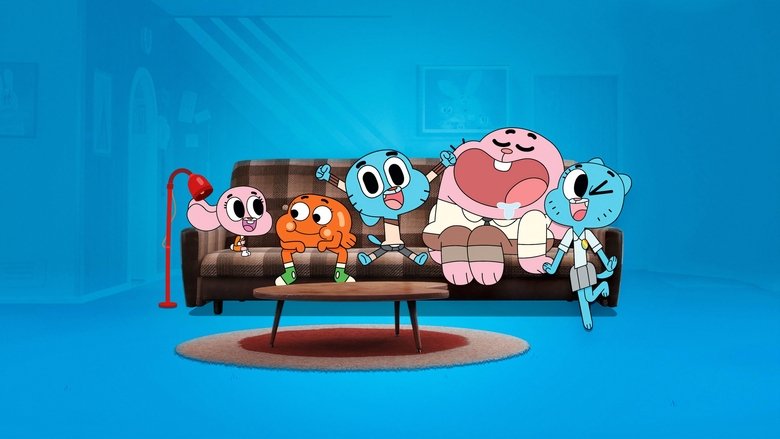
This is a constant throughout the entire series. The Watterson family is primarily 2D animated, living in a live-action photographed house and neighborhood. Their classmates include a 3D T-Rex (Tina), a paper cutout monkey (Miss Simian), and a talking cloud (Masami). This visual cacophony is the backdrop for every single episode and is fundamental to the show's identity.
The Rainbow Factory
The Rainbow Factory, where Nicole works, symbolizes the monotonous and soul-crushing nature of corporate work. Despite its cheerful name, it's depicted as a bleak, stressful environment. It represents the sacrifices Nicole makes for her family and the daily grind of adult responsibility that contrasts sharply with her children's chaotic freedom.
The factory is mentioned and shown in various episodes throughout the series whenever Nicole's job is a plot point. In episodes like "The Job" or "The Limit," her work-related stress is a key driver of the conflict, and the factory is the physical embodiment of that pressure.
Philosophical Questions
What defines 'reality' when the lines between genres and mediums are blurred?
The series constantly plays with the concept of reality through its visual style. A 2D cat can interact with a 3D dinosaur and a live-action banana. This raises questions about the nature of existence within a fictional framework. The show suggests that reality is subjective and that different forms of being can coexist. The introduction of The Void further complicates this, presenting a space for things that are 'mistakes' or no longer 'relevant' to reality, implying that existence is curated and not absolute.
How do we find meaning and identity in a world that is inherently chaotic and absurd?
Elmore is a world governed by chaos, where the laws of physics and logic are frequently suspended for the sake of a gag. The characters, particularly the Wattersons, find meaning not by trying to impose order on this chaos, but by embracing it. Their identities are forged through their reactions to absurd situations. The core meaning is found in their relationships and unwavering loyalty to one another, suggesting that personal connections are the only stable anchor in an otherwise nonsensical universe.
If you knew you were a fictional character, how would it change your actions?
This question becomes central in the later seasons. Characters like Gumball and, most notably, Rob, become aware of their status as cartoon characters. This meta-awareness leads to existential crises and desperate attempts to control their own narratives. Rob's villainy is driven by his knowledge that he is the 'bad guy' in Gumball's story. The series explores whether free will is possible within a pre-written narrative and examines the psychological toll of realizing one's life is a form of entertainment for others.
Core Meaning
At its heart, "The Amazing World of Gumball" is a satirical yet affectionate celebration of the modern family and the beautiful chaos of childhood. Through its surreal humor and meta-commentary, the series explores the idea that life is messy, unpredictable, and often absurd, but these imperfections are what make it meaningful. It champions the importance of family bonds, unconditional love, and embracing one's own weirdness in a world that doesn't always make sense. The show consistently delivers a message of finding joy in the mundane, learning from (or hilariously failing to learn from) mistakes, and the unwavering support system that a loving, albeit dysfunctional, family provides.