魔法使いの嫁
"Will he bring her the light she desperately needs, or drown her in ever deeper shadows?"
The Ancient Magus' Bride - Symbolism & Philosophy
Symbols & Motifs
Poppy Flowers
Symbolizes remembrance, sleep, and the cycle of death and rebirth. They are tied to Chise’s memories of her mother and represent the fragile beauty of her magic.
Used in Chise's first magical lesson and appearing frequently in her dreams and the opening sequences to signify her emotional growth and the lingering impact of her mother's suicide.
Thorns
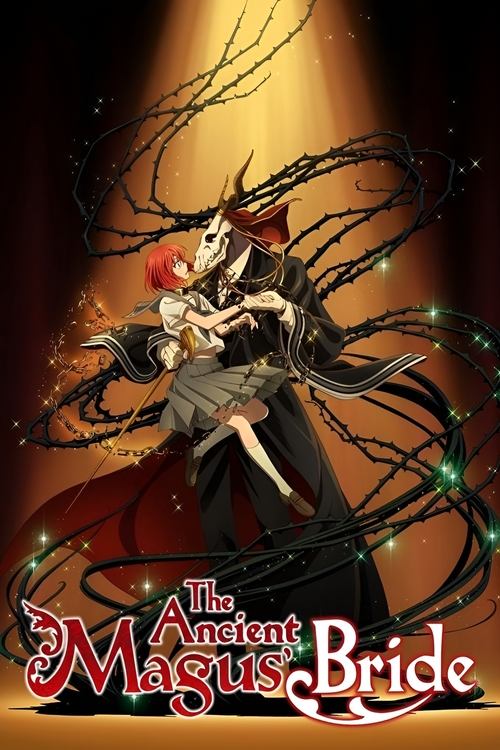
Represents protection, pain, and isolation. Thorns are a literal part of Elias’s magic (he is the 'Child of Thorns') and symbolize the barriers the characters build to keep others away.
Elias uses thorns to defend Chise, but they also symbolize the 'stinging' nature of his own unrefined emotions and the prickly path of their relationship development.
The Collar and Necklace
Initially a symbol of slavery and possession, it is transformed into a symbol of protection and chosen connection.
The collar Chise wears at the auction is replaced by a magical stone necklace crafted by Elias, marking her transition from a slave to an apprentice with a permanent home.
The Dragon's Arm
Symbolizes the burden of survival and the physical manifestation of sacrifice.
After Chise absorbs a dragon's curse, her arm becomes a blackened, claw-like limb, serving as a constant reminder of the price she pays for her selflessness.
Philosophical Questions
Does a person's worth depend on their utility to others?
The series explores this through Chise’s belief that she only deserves a place to stay if she is a useful 'tool' for Elias, eventually deconstructing this into the realization that life has inherent value regardless of usefulness.
What defines a 'monster' vs. a 'human'?
By presenting a skull-headed mage who is kinder than many humans, and a 'heroic' girl capable of cold sacrifice, the show suggests that humanity is a set of choices rather than a physical form.
Core Meaning
At its heart, the series is a profound study of healing from deep-seated trauma and the transition from unhealthy co-dependency to mutual autonomy. It posits that love is not necessarily about possession or traditional romance, but about the slow, painful work of understanding another person’s soul. Through Chise and Elias, the creators explore the idea that monsters and humans are not so different: both are capable of immense cruelty and profound kindness, and both must learn that their worth is not determined by their utility to others, but by their inherent right to exist.