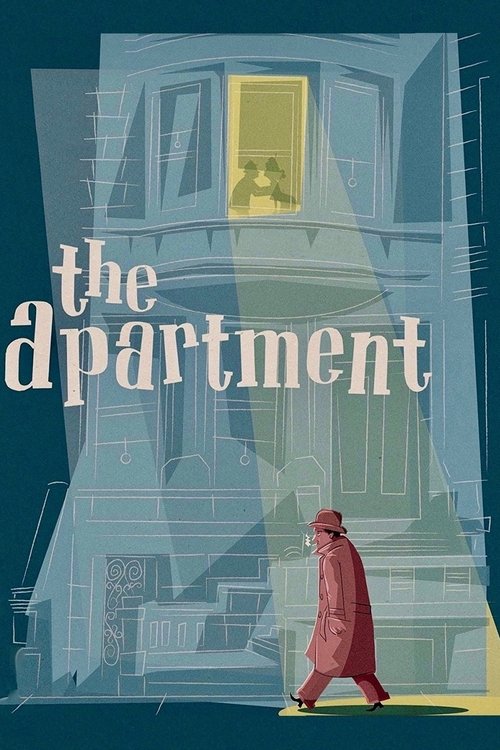
The Apartment
A bittersweet symphony of urban loneliness, where a man's desperate climb up the corporate ladder echoes through the borrowed walls of his solitary home.
The Apartment
The Apartment

"Movie-wise, there has never been anything like it - laugh-wise, love-wise, or otherwise-wise!"

21 June 1960 United States of America 125 min ⭐ 8.2 (2,482)
Director: Billy Wilder
Cast: Jack Lemmon, Shirley MacLaine, Fred MacMurray, Ray Walston, Jack Kruschen
Drama Comedy Romance
Corporate Dehumanization and Moral Compromise Loneliness and Alienation The Search for Integrity and Self-Respect Power Dynamics and Exploitation of Women
Budget: $3,000,000
Box Office: $25,000,000

The Apartment - Ending Explained

⚠️ Spoiler Analysis

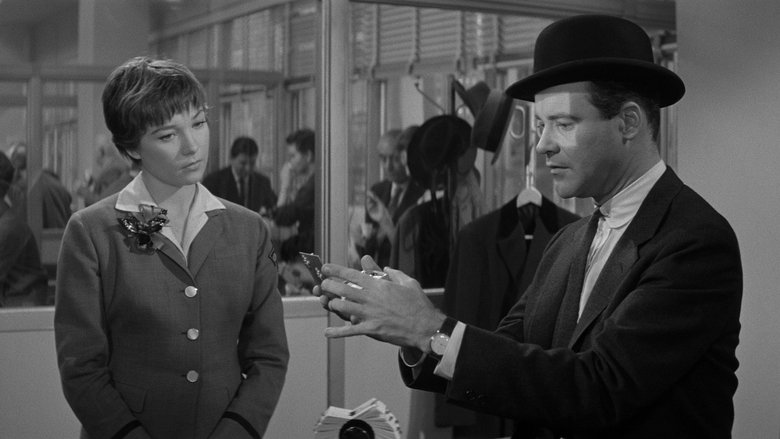
The central twist of "The Apartment" is the revelation that Fran Kubelik, the elevator operator Bud Baxter is infatuated with, is the same woman his boss, J.D. Sheldrake, has been bringing to his apartment. Bud discovers this on Christmas Eve when Sheldrake gives him tickets to a show, and Bud sees Fran's broken compact mirror, which he recognizes from their earlier conversation. This reveal shifts the film's tone from light cynical comedy to poignant drama, as Bud is now a direct, unwilling accomplice in the heartbreak of the woman he loves.

The film's dramatic midpoint occurs after Fran, distraught upon learning from Sheldrake's secretary that she is just one in a long line of his mistresses, attempts suicide in Bud's apartment by overdosing on his sleeping pills. Bud returns home with another woman to find Fran unconscious in his bed. He and his neighbor, Dr. Dreyfuss, manage to revive her. This event is the catalyst for Bud's moral transformation. In nursing Fran back to health over the next two days, they form a genuine bond, sharing stories of past heartbreaks, including Bud's own suicide attempt. He falls completely in love with her.

The climax occurs on New Year's Eve. Sheldrake, having been kicked out by his wife, believes he can now have Fran all to himself and demands the apartment key from Bud. In a defining moment of courage, Bud refuses, holding up the key and declaring, "The old hygiene is back." He quits his high-paying job rather than continue to enable Sheldrake's exploitation of Fran. Meanwhile, at a New Year's party with Sheldrake, Fran learns of Bud's sacrifice. Realizing who truly loves her, she abandons the stunned Sheldrake mid-sentence and runs to Bud's apartment. She arrives just as he is packing to leave, and the film ends with her dealing a deck of cards and delivering the iconic line, "Shut up and deal," signifying the hopeful, unwritten beginning of their life together.

Alternative Interpretations

A Critique of Capitalism

One prominent interpretation views "The Apartment" as a sharp allegory for capitalist exploitation. Bud Baxter's act of renting out his apartment is seen as a symbol of how workers must sell not only their labor but also their private lives and integrity to succeed in a corporate system. The apartment itself becomes an extension of the office—a space where the powerful exploit the powerless. Sheldrake represents the predatory nature of capital, while Bud and Fran are the proletariat who must ultimately form a bond of solidarity to rebel against their oppressor. Their final union is not just a romantic victory but a small act of defiance against a dehumanizing economic structure.

A Non-Romantic Ending?

While often categorized as a romance, some critics and viewers interpret the ending as more ambiguous and focused on companionship rather than traditional love. Fran's final line, "Shut up and deal," is not a passionate declaration but a pragmatic acceptance of a new partnership. Having been deeply hurt by a manipulative "romance," Fran may be choosing something safer and more honest: the simple, caring companionship she found with Bud while playing cards. The ending, in this view, celebrates the triumph of mutual respect and solidarity over the grand, often deceptive, promises of romantic love. It suggests that what these two lonely people need most is not a fairy-tale ending, but a friend to play cards with through the night.

A Feminist Reading

A feminist interpretation focuses on Fran Kubelik's journey toward agency. Initially, she is a passive victim of a patriarchal corporate system, defined by her relationship with a powerful man. Her suicide attempt can be seen as the tragic result of this power imbalance. However, her recovery in Bud's apartment, away from Sheldrake's influence, allows her to begin healing and reassessing her life. Her final decision to leave Sheldrake is a powerful act of self-liberation. She rejects the role of the mistress waiting to be saved and instead actively chooses her own path, opting for a partnership with Bud that is based on equality and care, not power and dependence.