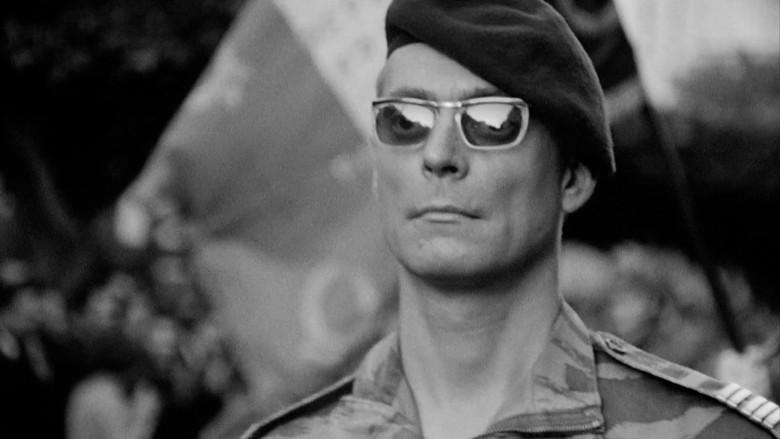
The plot of "The Battle of Algiers" follows a cyclical and ultimately tragic trajectory for its protagonists, reflecting the historical outcome of the specific 1957 battle. The film opens near the end of the timeline, in 1957, with a captured and tortured FLN member leading French paratroopers to the hiding place of Ali La Pointe. The narrative then flashes back three years to 1954 to trace Ali's rise from a petty criminal to a key FLN leader.
Under the strategic command of El-Hadi Jaffar, the FLN successfully consolidates its control over the Casbah and launches a devastating campaign of guerrilla warfare against the French. This culminates in a series of coordinated bombings in the European quarter, carried out by three women who disguise themselves as Europeans to bypass checkpoints. In response, the French government gives Colonel Mathieu and his paratroopers carte blanche to eradicate the FLN.
The film's second half details Mathieu's methodical and ruthless success. Using a pyramidal system of intelligence gathering built upon the systematic torture of captured suspects, the paratroopers slowly dismantle the FLN's cellular structure from the bottom up. One by one, the FLN leadership is captured or killed. Jaffar eventually surrenders to avoid a bloody siege, and Larbi Ben M'hidi is captured and later reported to have committed suicide, though the film implies he was executed. The climax returns to the opening scene's timeline, with Ali La Pointe and his last remaining comrades, including a woman and a young boy, cornered in their hideout. They refuse to surrender, and the French blow up the building, killing them all.
The film's powerful spoiler lies in its epilogue. Despite Mathieu's complete tactical victory in crushing the FLN's Algiers network, a title card announces "Two Years Later." The film then shows massive, spontaneous demonstrations and riots erupting in the streets in 1960, with the Algerian people, waving a new flag, demanding independence. This final sequence reveals the core meaning of the film: the French won the Battle of Algiers, but in doing so, they lost the Algerian War. They could eliminate the revolutionaries, but they could not extinguish the revolution itself, which had become ingrained in the collective consciousness of the people.