La meglio gioventù
"The Possibilities Were Endless..."
The Best of Youth - Symbolism & Philosophy
Symbols & Motifs
The Unfinished Journey to the North Cape
The planned trip to the North Cape in their youth symbolizes unfulfilled dreams, youthful idealism, and the open road of possibilities. It represents a state of pure potential before life's complexities and compromises set in.
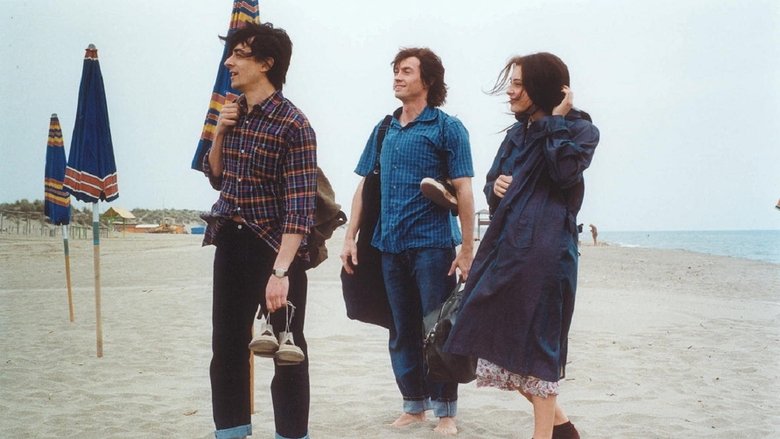
At the beginning of the film, Nicola and Matteo plan a trip to the northernmost point of Norway. The journey is aborted after their traumatic experience with Giorgia, marking the point where their paths diverge. The film concludes with Matteo's son, Andrea, completing the journey, symbolizing a generational healing and the continuation of life's promise.
The 1966 Florence Flood
The flood represents both destruction and a moment of collective solidarity and rebirth. It is a historical turning point that literally and figuratively washes away the past, forcing the characters and the nation to confront crisis and rebuild. It symbolizes the chaotic, uncontrollable forces of history that shape individual lives.
The brothers, separated after the incident with Giorgia, are reunited in Florence as volunteers helping to save priceless books and art from the mud. It is here that Nicola meets his future wife, Giulia, amidst the devastation, signifying that new beginnings can emerge from tragedy. The event brought together a generation of young people, later known as the 'Mud Angels'.
Giorgia
Giorgia is a powerful symbol of innocence, vulnerability, and the societal injustices the brothers initially vow to fight. She can be seen as the 'bewildered, imprisoned conscience' of both the brothers and of Italy itself. Her suffering represents the pain that the system can inflict on the fragile, and the failure to protect her becomes a defining moment for both Nicola and Matteo.
Introduced early as a patient in a mental institution, her mistreatment inspires the brothers' first major act of rebellion. Her subsequent recapture and long-term institutionalization serve as a recurring thread in the narrative, motivating Nicola's career and haunting Matteo's psyche.
Photographs
Photographs act as tangible links to the past, catalysts for memory, and vessels of truth. They freeze moments in time, allowing characters to revisit the past, uncover secrets, and find new connections. They symbolize memory's power to bridge distance and time.
Mirella, a photographer, captures an image of Matteo that she later exhibits. Years after Matteo's death, Nicola sees this photograph, which leads him to Mirella and the discovery that he has a nephew. This discovery brings new life and meaning to the grieving Carati family, particularly the mother, Adriana.
Philosophical Questions
How do we reconcile personal ideals with the imperfections of the world?
The film explores this question through the divergent paths of Nicola and Matteo. Nicola represents the path of pragmatic idealism; he accepts the world's flaws but works within the system to enact positive change, as seen in his psychiatric practice. He adapts his ideals to reality. Matteo represents uncompromising idealism; he cannot accept imperfection, which leads him to reject the world and, ultimately, himself. His tragic fate poses the question of whether pure idealism is sustainable in a complex reality.
Is our destiny shaped more by personal choices or by historical forces?
"The Best of Youth" constantly plays with the tension between free will and determinism. The characters' lives are undeniably shaped by the historical currents of their time—student protests, political violence, economic shifts. Giulia's story, in particular, shows how a historical movement can consume a life. Yet, within these contexts, the film emphasizes the critical importance of individual choices. The contrast between Nicola and Matteo, who come from the same family but choose to react to the world in opposite ways, suggests that while history provides the stage, our character and decisions write the script.
What is the nature of time and memory?
With its forty-year span, the film is a profound meditation on how time shapes identity. It shows how the past is never truly gone, echoing through the present in memories, photographs, and unresolved emotions. The narrative's novelistic structure, with its leaps in time, allows the audience to feel the weight of the years and understand how youthful decisions can resonate for a lifetime. The final scenes suggest that memory can be a bridge to the future, allowing the next generation to understand and perhaps heal the wounds of the past.
Core Meaning
The core meaning of "The Best of Youth" lies in its exploration of the intricate relationship between personal destiny and the grand sweep of history. Director Marco Tullio Giordana intended to portray a generation—those who came of age during the counter-cultural movements of the 1960s—and their attempts to navigate a world in flux without losing their ideals. The film suggests that while life's trajectory is influenced by political and social forces, individual choices, personal connections, and the resilience of the human spirit are the ultimate determinants of one's path. It is a profound meditation on the passage of time, the enduring power of family bonds, and the bittersweet nature of memory. The narrative ultimately posits that despite personal tragedies and societal failures, there is a persistent beauty and hope to be found in life, often through the connections we forge and the next generation that follows.