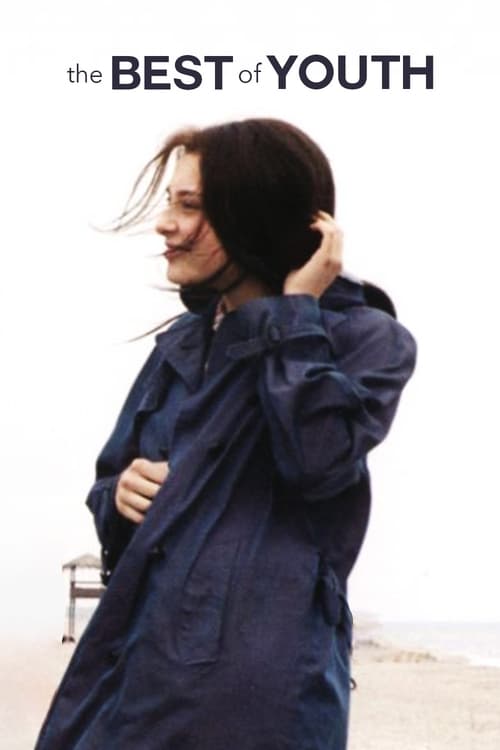
The Best of Youth
La meglio gioventù
"The Possibilities Were Endless..."
Overview
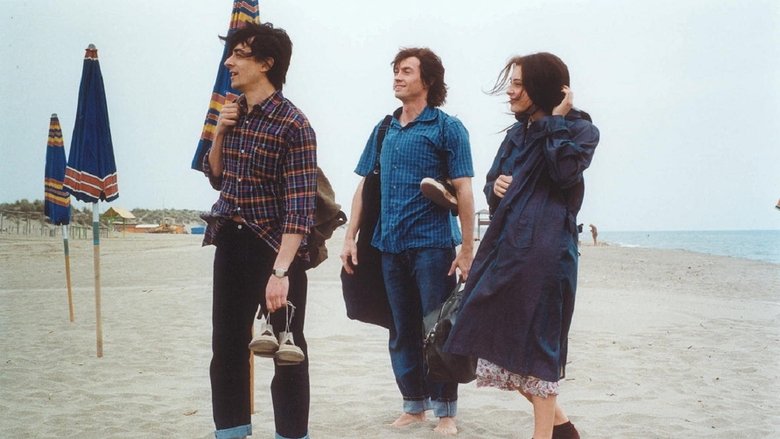
"The Best of Youth" (La meglio gioventù) is a sprawling family saga that chronicles the lives of the Carati family, primarily focusing on two brothers, Nicola (Luigi Lo Cascio) and Matteo (Alessio Boni), from 1966 to 2003. Their journey begins in Rome, where their shared ideals and aspirations are soon tested by a fateful encounter with a troubled young woman named Giorgia. This event acts as a catalyst, setting them on starkly different paths that mirror the social and political upheavals of modern Italy.
As the years unfold, Nicola becomes a compassionate psychiatrist, embodying a more optimistic and engaged approach to life, while the more introverted and tormented Matteo joins the police force, seeking order in a chaotic world. Their personal stories of love, marriage, fatherhood, and loss are intricately woven into the fabric of Italian history, including the 1966 Florence flood, the student protests, the rise of the Red Brigades, and the fight against the Mafia. The film, originally conceived as a television miniseries, uses its extended runtime to create a novelistic depth, allowing characters to age and evolve realistically against a changing national landscape.

Core Meaning
The core meaning of "The Best of Youth" lies in its exploration of the intricate relationship between personal destiny and the grand sweep of history. Director Marco Tullio Giordana intended to portray a generation—those who came of age during the counter-cultural movements of the 1960s—and their attempts to navigate a world in flux without losing their ideals. The film suggests that while life's trajectory is influenced by political and social forces, individual choices, personal connections, and the resilience of the human spirit are the ultimate determinants of one's path. It is a profound meditation on the passage of time, the enduring power of family bonds, and the bittersweet nature of memory. The narrative ultimately posits that despite personal tragedies and societal failures, there is a persistent beauty and hope to be found in life, often through the connections we forge and the next generation that follows.
Thematic DNA
The Personal and the Political
This is the central theme, illustrating how major Italian historical events—the 1966 Florence flood, the student movements of '68, the 'Years of Lead' with the Red Brigades, and the fight against the Mafia—are not just a backdrop but an active force shaping the characters' lives. Nicola's activism and career in psychiatry and Matteo's role as a police officer place them on opposing sides of the social turmoil. Giulia's radicalization into a terrorist represents the extreme manifestation of this theme, showing how political ideology can shatter personal lives. The film masterfully shows how individual destinies are inextricably linked to the collective journey of a nation.
Idealism vs. Disillusionment
The film traces the journey from the boundless optimism of youth to the often harsh realities of adulthood. Nicola largely retains his idealism, channeling it into his work to reform psychiatric care. In contrast, Matteo's youthful idealism, shattered by his failure to 'save' Giorgia, curdles into a rigid, self-destructive disillusionment. This theme explores the different ways individuals cope with the compromises and failures that life presents, and whether it's possible to maintain one's core beliefs over time.
The Complexity of Family
The Carati family serves as the film's emotional anchor. The narrative explores the powerful, often fraught, bonds between parents and children, and especially between the two brothers. Their love for each other is a constant, even as their paths diverge and communication breaks down. The film portrays the family as a microcosm of Italian society, a source of both immense strength and profound conflict, where love, guilt, and unspoken tensions coexist. It is the place of 'impossible love-stories' where the deepest affections and disagreements reside.
Mental Health and Social Responsibility
The character of Giorgia, a young woman subjected to brutal electroshock therapy, introduces a critical examination of Italy's mental healthcare system. Her story is a catalyst for both brothers: it propels Nicola toward a career as a reformist psychiatrist dedicated to humane treatment, while her loss haunts Matteo and contributes to his emotional isolation. The film champions a more compassionate and humanistic approach to mental suffering, reflecting the real-life Basaglia Law reforms in Italy.
Character Analysis
Nicola Carati
Luigi Lo Cascio
Motivation
Driven by a deep-seated empathy and a desire to heal others and correct injustice. His motivations are rooted in a belief in human connection, progress, and the power of understanding. He is always ready to engage with the world and the people in it.
Character Arc
Nicola begins as a sensitive and open-minded young man who, after the traumatic event with Giorgia, channels his idealism into a constructive path. He becomes a psychiatrist dedicated to humane reform, a loving father, and the stable center of the family. His journey is one of endurance and adaptation; he faces profound personal loss—the estrangement of his wife Giulia and the suicide of his brother—but emerges not broken, but with a deeper, more mature understanding of life. He learns the limits of his ability to 'save' others but never loses his fundamental compassion, ultimately finding a new form of happiness and family with Mirella.
Matteo Carati
Alessio Boni
Motivation
Matteo is motivated by a fierce, almost punishing sense of justice and a yearning for an unattainable purity in a flawed world. He seeks order and rules to contain the chaos he feels internally, but this ultimately suffocates him.
Character Arc
Matteo starts as a brilliant, passionate, but deeply troubled and volatile young man. His idealism is rigid and absolute. The failure to rescue Giorgia shatters him, leading him to abandon his studies and seek refuge in the rigid structures of the army and police force. His arc is a tragic descent into emotional isolation and self-destruction. He consistently pushes away those who love him, like Mirella, unable to reconcile his inner turmoil with the world around him. His journey culminates in his suicide, a final act of despair from a man who could not find a way to live with his own perceived failures and internal demons.
Giulia Monfalco
Sonia Bergamasco
Motivation
Motivated by a profound indignation at social and economic injustice, she seeks to fundamentally change the world. Her initial desire for a better society evolves into a conviction that violent action is the only way to achieve it.
Character Arc
Giulia is introduced as a passionate, intelligent university student who falls in love with Nicola. Initially, her political convictions align with the hopeful activism of the era. However, her frustration with the slow pace of change and the injustices she perceives leads her down a path of increasing radicalization. Her arc shows her transformation from an idealist into a hardened member of the Red Brigades, a choice that forces her to abandon her family, including her daughter, Sara. She becomes a tragic figure, sacrificing her personal life for a violent ideology, representing the destructive potential of extremism.
Giorgia
Jasmine Trinca
Motivation
Her primary motivation is survival. Initially trapped in a state of fear and withdrawal, her journey is about reclaiming her voice and her ability to connect with the world, a process facilitated by Nicola's patient kindness.
Character Arc
Giorgia's arc is one of survival and slow, difficult healing. She begins as a victim of an abusive psychiatric system, rendered almost mute and catatonic by electroshock therapy. Her initial 'rescue' by the brothers fails, but she re-emerges years later when Nicola discovers her in another institution. Under Nicola's care, she gradually regains a semblance of life and autonomy. Though she remains scarred by her past, her journey is a testament to resilience. She acts as a catalyst for the brothers' diverging paths and remains a powerful moral touchstone throughout the film.
Symbols & Motifs
The Unfinished Journey to the North Cape
The planned trip to the North Cape in their youth symbolizes unfulfilled dreams, youthful idealism, and the open road of possibilities. It represents a state of pure potential before life's complexities and compromises set in.
At the beginning of the film, Nicola and Matteo plan a trip to the northernmost point of Norway. The journey is aborted after their traumatic experience with Giorgia, marking the point where their paths diverge. The film concludes with Matteo's son, Andrea, completing the journey, symbolizing a generational healing and the continuation of life's promise.
The 1966 Florence Flood
The flood represents both destruction and a moment of collective solidarity and rebirth. It is a historical turning point that literally and figuratively washes away the past, forcing the characters and the nation to confront crisis and rebuild. It symbolizes the chaotic, uncontrollable forces of history that shape individual lives.
The brothers, separated after the incident with Giorgia, are reunited in Florence as volunteers helping to save priceless books and art from the mud. It is here that Nicola meets his future wife, Giulia, amidst the devastation, signifying that new beginnings can emerge from tragedy. The event brought together a generation of young people, later known as the 'Mud Angels'.
Giorgia
Giorgia is a powerful symbol of innocence, vulnerability, and the societal injustices the brothers initially vow to fight. She can be seen as the 'bewildered, imprisoned conscience' of both the brothers and of Italy itself. Her suffering represents the pain that the system can inflict on the fragile, and the failure to protect her becomes a defining moment for both Nicola and Matteo.
Introduced early as a patient in a mental institution, her mistreatment inspires the brothers' first major act of rebellion. Her subsequent recapture and long-term institutionalization serve as a recurring thread in the narrative, motivating Nicola's career and haunting Matteo's psyche.
Photographs
Photographs act as tangible links to the past, catalysts for memory, and vessels of truth. They freeze moments in time, allowing characters to revisit the past, uncover secrets, and find new connections. They symbolize memory's power to bridge distance and time.
Mirella, a photographer, captures an image of Matteo that she later exhibits. Years after Matteo's death, Nicola sees this photograph, which leads him to Mirella and the discovery that he has a nephew. This discovery brings new life and meaning to the grieving Carati family, particularly the mother, Adriana.
Memorable Quotes
L'Italia è un Paese da distruggere: un posto bello e inutile, destinato a morire.
— University Professor
Context:
Spoken to Nicola after his final exam in 1966. The professor advises the brilliant young student to leave Italy, which he sees as being run by 'dinosaurs.' When Nicola asks why the professor himself stays, he replies, "My dear boy, I am one of the dinosaurs to be destroyed!"
Meaning:
Translation: "Italy is a country to be destroyed: a beautiful, useless place, destined to die." This cynical quote encapsulates the disillusionment of an older generation that has witnessed Italy's political stagnation. It presents a direct challenge to the youthful optimism of Nicola and his peers, questioning the very future of the nation.
Senti, ma lo sai che conservo ancora una cartolina che mi hai spedito da Capo Nord nel '66... sotto la traduzione diceva 'tutto quello che esiste è bello' con tre punti esclamativi, ma tu ci credi ancora? [...] Ai punti esclamativi no, non ci credo più.
— Carlo to Nicola, and Nicola's reply
Context:
This conversation takes place in the latter part of the film, when the characters are middle-aged. Carlo nostalgically recalls Nicola's youthful exuberance. Nicola's poignant reply signifies his journey; he still believes in the beauty of existence, but without the unbridled, naive enthusiasm of his past.
Meaning:
Translation: "Listen, do you know I still have a postcard you sent me from the North Cape in '66... under the translation it said 'everything that exists is beautiful' with three exclamation points, but do you still believe that? [...] In the exclamation points no, I don't believe in them anymore." This exchange powerfully illustrates the erosion of youthful, absolute optimism over time, replaced by a more nuanced, mature perspective forged by experience and loss.
Adesso sei felice? Allora è arrivato il momento di essere generosi.
— Nicola Carati
Context:
Nicola says this to his daughter, Sara, late in the film. She has found personal happiness, and he is gently reminding her of the responsibility that comes with it, encouraging her to extend her contentment into kindness and action in the world.
Meaning:
Translation: "Are you happy now? Then it's time to be generous." This line encapsulates Nicola's core philosophy. It suggests that happiness is not a state to be hoarded, but a capacity that, once achieved, should be shared with others. It reflects his compassionate and outward-looking nature.
Philosophical Questions
How do we reconcile personal ideals with the imperfections of the world?
The film explores this question through the divergent paths of Nicola and Matteo. Nicola represents the path of pragmatic idealism; he accepts the world's flaws but works within the system to enact positive change, as seen in his psychiatric practice. He adapts his ideals to reality. Matteo represents uncompromising idealism; he cannot accept imperfection, which leads him to reject the world and, ultimately, himself. His tragic fate poses the question of whether pure idealism is sustainable in a complex reality.
Is our destiny shaped more by personal choices or by historical forces?
"The Best of Youth" constantly plays with the tension between free will and determinism. The characters' lives are undeniably shaped by the historical currents of their time—student protests, political violence, economic shifts. Giulia's story, in particular, shows how a historical movement can consume a life. Yet, within these contexts, the film emphasizes the critical importance of individual choices. The contrast between Nicola and Matteo, who come from the same family but choose to react to the world in opposite ways, suggests that while history provides the stage, our character and decisions write the script.
What is the nature of time and memory?
With its forty-year span, the film is a profound meditation on how time shapes identity. It shows how the past is never truly gone, echoing through the present in memories, photographs, and unresolved emotions. The narrative's novelistic structure, with its leaps in time, allows the audience to feel the weight of the years and understand how youthful decisions can resonate for a lifetime. The final scenes suggest that memory can be a bridge to the future, allowing the next generation to understand and perhaps heal the wounds of the past.
Alternative Interpretations
While the film's narrative is largely straightforward, certain elements, particularly concerning the character of Matteo, invite alternative readings.
Matteo's Inner Conflict: The primary interpretation of Matteo's torment is his inability to reconcile his rigid idealism with a flawed world. His suicide is seen as the tragic culmination of a life of emotional repression and perceived failures. However, some viewers and critics have debated the unspoken source of his deep-seated anger and alienation. One interpretation suggests that Matteo is grappling with repressed homosexuality. This reading points to his discomfort with intimacy, his violent outbursts, his inability to connect with women who love him (like Mirella), and his choice of hyper-masculine, rigidly structured environments like the army and the police as a way to suppress his true nature. While never explicitly stated, this interpretation offers a potential underlying reason for his profound and lifelong sense of being an outsider.
The Ending as a Reconciliation with the Past: The film's ending, with Matteo's son Andrea completing the journey to the North Cape, is generally seen as a hopeful symbol of generational healing. An alternative reading views it less as a simple happy ending and more as a complex reconciliation. It suggests that the 'best of youth' is not a single generation, but an ongoing cycle. Andrea's journey isn't just about fulfilling his father's dream, but about understanding and integrating his father's troubled legacy. He is free to experience the journey's idealism precisely because Nicola and the rest of the family have grappled with the pain of the past, suggesting that true progress comes from confronting history, not repeating or ignoring it.
Cultural Impact
"The Best of Youth" is widely regarded as a landmark in modern Italian cinema, celebrated for its ambitious scope and profound emotional resonance. It arrived at a time when Italian cinema was searching for a new identity and was praised for reviving the tradition of the grand historical-familial saga, reminiscent of works by masters like Luchino Visconti.
Historical Context: The film functions as a collective memory for a generation of Italians. It chronicles nearly forty years of tumultuous history, from the post-war economic boom ('Il Miracolo Italiano') and the optimism of the 1960s, through the social strife of the student protests, the terrorism of the 'Years of Lead' ('Anni di piombo'), the fight against the Mafia, and the political corruption scandals of the 1990s. For an Italian audience, these events are not just historical footnotes but lived experiences, and the film provided a powerful, humanistic lens through which to process this recent past.
Critical and Audience Reception: Critically, the film was a major success both in Italy and internationally. Critics praised its novelistic structure, the depth of its characterizations, and its ability to weave personal stories with major historical events seamlessly. Roger Ebert described it as a film that makes you "drop outside of time," comparing its immersive quality to that of a great novel. Audiences responded with immense affection, drawn to the relatable, deeply human struggles of the Carati family. Its initial broadcast on RAI was a huge success, confirming its appeal to a broad public beyond the festival circuit.
Influence and Legacy: The film's success demonstrated that there was still an appetite for long-form, character-driven narratives that grapple with complex social and political themes. It has become a touchstone for contemporary Italian cinema, praised for its intelligent screenplay and masterful direction. Its influence lies in its powerful demonstration of how a nation's story can be told through the intimate lens of one family, making history feel personal, immediate, and deeply moving.
Audience Reception
Audience reception for "The Best of Youth" has been overwhelmingly positive, with viewers often describing it as a deeply moving and immersive experience. Many praise its epic, novel-like quality, which allows for a profound connection with the characters over their forty-year journey. The film's six-hour runtime is frequently mentioned, but most viewers report that the time passes quickly due to the engrossing nature of the story. The performances of Luigi Lo Cascio (Nicola) and Alessio Boni (Matteo) are consistently singled out for their depth and authenticity. Audiences have lauded the film's ability to seamlessly blend a personal family drama with the broader social and political history of Italy, making the historical context feel immediate and personal. The main points of criticism, though rare, sometimes point to a perceived sentimentality in the latter half of the film or the feeling that certain plot points rely on coincidence. However, the overall verdict is that it is a powerful, unforgettable piece of cinema that resonates long after viewing, with many considering it a modern masterpiece.
Interesting Facts
- The film was originally conceived and produced as a four-part miniseries for Italian state television (RAI).
- Its success at the 2003 Cannes Film Festival, where it won the Un Certain Regard award, prompted a theatrical release in two three-hour parts.
- The title, "La meglio gioventù", is taken from a 1954 collection of Friulian poems by the renowned Italian writer and director Pier Paolo Pasolini.
- Director Marco Tullio Giordana makes a reference to François Truffaut's film "Jules et Jim" through the use of its main musical theme and by having a character describe Nicola as someone who "loves the idea of being in love," a line used to describe Jim in the French film.
- The director intentionally included a scene where Matteo returns home on New Year's Eve as an homage to a similar scene in Luchino Visconti's classic film "Rocco and His Brothers", another epic family saga.
- Many of the lead actors, including Luigi Lo Cascio (Nicola) and Alessio Boni (Matteo), attended the same prestigious acting academy in Rome, the Accademia d'Arte Drammatica Silvio d'Amico.
⚠️ Spoiler Analysis
Click to reveal detailed analysis with spoilers
Frequently Asked Questions
Explore More About This Movie
Dive deeper into specific aspects of the movie with our detailed analysis pages
Comments (0)
No comments yet. Be the first to share your thoughts!