Le Grand Méchant Renard et autres contes...
The Big Bad Fox and Other Tales - Symbolism & Philosophy
Symbols & Motifs
The Theater Stage
Symbolizes the performativity of social roles. The animals are "actors" putting on a show, just as the Fox is "acting" big and bad. It suggests that the identities we present to the world are often just costumes we can take off.
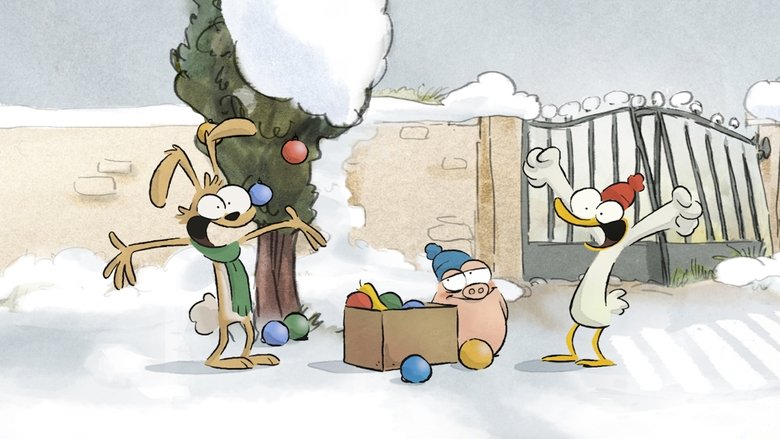
Used as the framing device before and after each segment. We see the backstage chaos, the Fox talking to the audience, and the animals preparing their props, breaking the fourth wall.
The Eggs / Chicks
They represent pure potential and the blank slate of childhood. They are not born fearful; they learn fear (or lack thereof) from their parent. They symbolize the transformative power of parenthood to change the parent as much as the child.
Central to the second story. The Fox steals them as objects (food) but they transform into subjects (children) who fundamentally alter his identity.
The Radishes
Symbolize the Fox's failure as a predator and his vegetarian reality. They are his shame but also his connection to the Pig (civilization/farming) rather than the Wolf (wild/hunting).
The Fox is constantly forced to eat radishes provided by the Pig because he cannot catch chickens. He tries to feed them to the chicks, who reject them for meat.
Philosophical Questions
Does biology dictate identity?
The film explores this through the chicks who identify as foxes and the Fox who identifies as a mother. It suggests existentialism—existence precedes essence. We are what we do, not what we are born as.
What defines a parent?
Through the Fox's struggle, the film argues that parenthood is defined by sacrifice and protection, not biology. The Fox becomes a parent the moment he chooses to protect the chicks from the Wolf, overriding his own survival instincts.
Core Meaning
At its heart, the film deconstructs the idea of biological determinism and social roles. The director, Benjamin Renner, uses the "Big Bad Wolf" fairy tale tropes to ask: Are we defined by what nature says we are, or by the choices we make? The Fox is born a predator but chooses to be a mother; the chicks are born prey but act like predators. The film suggests that love and nurture override nature, and that true family is built on affection rather than blood. It champions the incompetent but well-meaning underdog, showing that even the clumsiest efforts, if driven by love, can lead to success.