バケモノの子
"In a world of beasts, he found a family."
The Boy and the Beast - Symbolism & Philosophy
Symbols & Motifs
Moby Dick (The White Whale)
The white whale from Herman Melville's novel "Moby Dick" symbolizes an all-consuming obsession and the destructive nature of vengeance and inner darkness. It represents a powerful, untamable force that mirrors the turmoil within the characters. For Ichirohiko, the whale becomes an avatar of his own despair and rage, a destructive force he unleashes upon the human world.
Kyuta is introduced to the book "Moby Dick" by Kaede in the human world. The story resonates with him and becomes a crucial element in understanding the film's climax. Ichirohiko's inner darkness manifests as a spectral white whale that terrorizes Shibuya. This directly connects the literary symbol to the film's themes of internal struggle and the potential for that struggle to have devastating external consequences.
The Sword in the Heart
The idea of having a "sword in your heart" is a metaphor for inner strength, conviction, and a guiding moral compass. It represents a source of power that is not just physical but also spiritual and emotional. Kumatetsu's teachings revolve around Kyuta finding his own inner sword.
Throughout his training, Kumatetsu urges Kyuta to find the sword within himself. In the film's climax, Kumatetsu reincarnates as a deity in the form of a sword and fills the void in Kyuta's heart, becoming his literal "sword in the heart." This act symbolizes the ultimate fusion of their bond and the idea that our strength comes from the love and guidance we internalize from those who care for us.
Shibuya Crossing
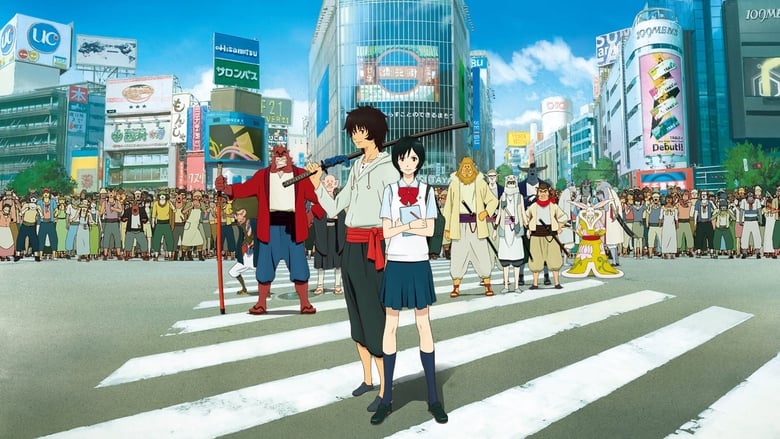
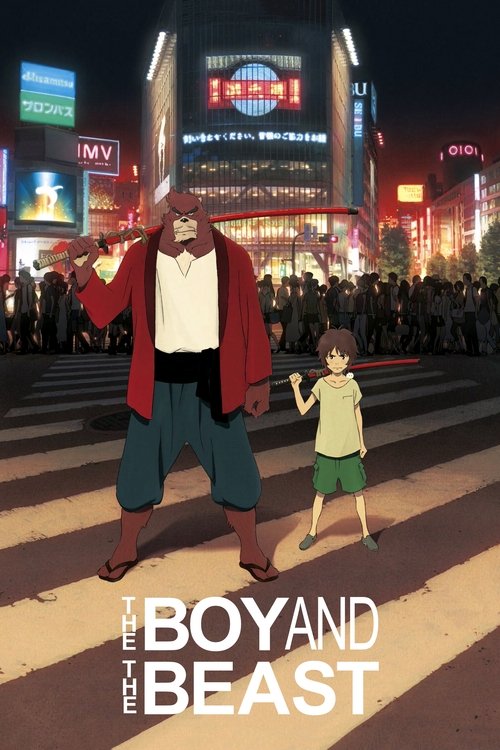
Shibuya Crossing, a famous landmark in Tokyo, symbolizes the chaos, anonymity, and loneliness of the modern human world. It represents the world that Ren initially flees from, a place where he feels lost and disconnected despite being surrounded by people.
The film opens with Ren lost in the crowded streets of Shibuya. The bustling crossing is visually contrasted with the more communal, albeit chaotic, world of Jutengai. The final battle against Ichirohiko's whale form takes place in Shibuya, bringing the conflict between the two worlds and within the characters to a head in this symbolic location.
Philosophical Questions
What constitutes a 'real' family?
The film directly challenges the notion that family is solely defined by blood ties. The central relationship between Kyuta and Kumatetsu, two unrelated individuals from different worlds, becomes the emotional core of the story. Their bond, forged through shared experience, mutual learning, and eventually love and sacrifice, is portrayed as being just as, if not more, powerful than biological kinship. The film explores this by contrasting their relationship with Ren's relationship with his biological father, and Iozen's with his adopted son, Ichirohiko, suggesting that the effort and love invested in a relationship are what truly define a family.
Where does true strength come from?
"The Boy and the Beast" presents a nuanced exploration of the concept of strength. Initially, it is equated with physical power and fighting ability. However, the film systematically breaks down this simplistic view. Kyuta and Kumatetsu learn that their individual strength is amplified when they learn from each other. Furthermore, Kyuta's experiences in the human world with Kaede introduce the idea that knowledge and emotional connection are also forms of strength. The film's climax, where Kumatetsu sacrifices his physical form to become a source of inner strength for Kyuta, posits that the most profound strength is found in love and selflessness.
Core Meaning
The central message of "The Boy and the Beast" revolves around the idea that family is not defined by blood, but by love, mutual respect, and shared experiences. Director Mamoru Hosoda explores the concept of fatherhood and the different forms it can take, from the flawed but dedicated mentorship of Kumatetsu to Ren's reconnection with his biological father. The film suggests that true strength comes not from individual power, but from the bonds we form with others and the willingness to learn and grow together. It also delves into the internal struggle against the "darkness" or void that can exist within the human heart, suggesting that this emptiness can be filled through meaningful connections and a strong sense of self-identity.