The Boy and the Beast
バケモノの子
"In a world of beasts, he found a family."
Overview
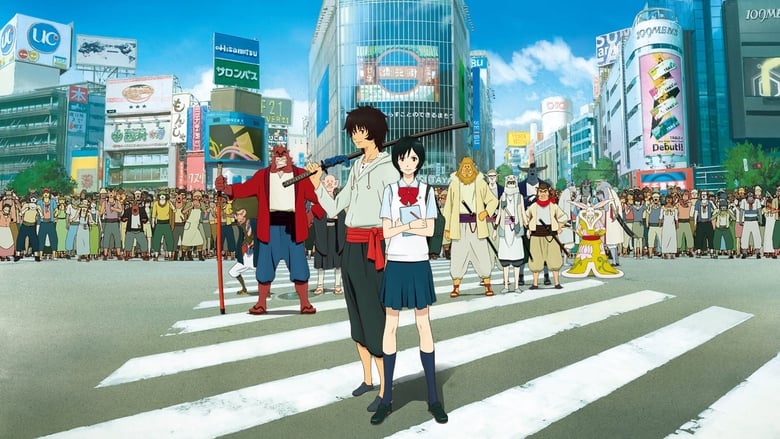
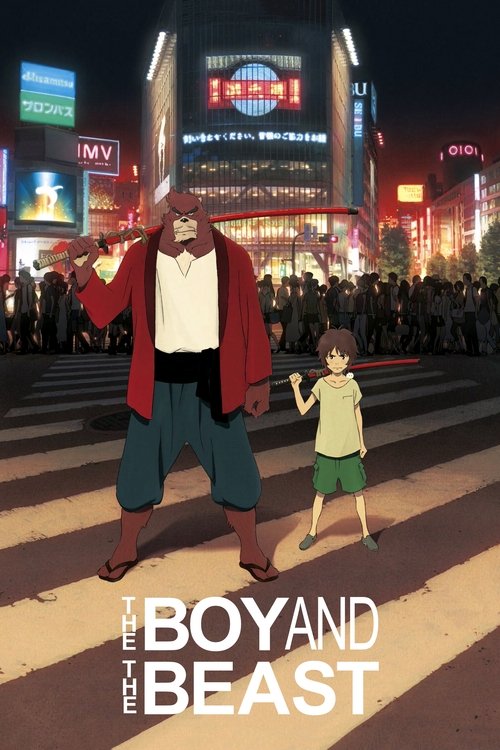
"The Boy and the Beast" tells the story of Ren, a lonely nine-year-old boy who has recently lost his mother and run away from his legal guardians. While wandering the streets of Shibuya, he stumbles into a fantastical world of beasts known as Jutengai. There, he meets Kumatetsu, a powerful but solitary and lazy beast who is one of the two potential successors to the throne of the Beast Kingdom. Kumatetsu takes Ren, whom he renames Kyuta, on as his disciple, hoping it will help him in his bid to become the next lord.
Their relationship is initially fraught with conflict and bickering, but as they train together, a strong, unconventional father-son bond begins to form. Kyuta grows into a strong young man, torn between the human world he left behind and the beast world that has become his home. When he rediscovers a path back to the human world, he meets a high school student named Kaede, who introduces him to a life of learning and human connection. This further complicates his sense of identity and belonging. The film explores Kyuta's journey of self-discovery as he navigates these two worlds and the darkness that resides within the human heart.
Core Meaning
The central message of "The Boy and the Beast" revolves around the idea that family is not defined by blood, but by love, mutual respect, and shared experiences. Director Mamoru Hosoda explores the concept of fatherhood and the different forms it can take, from the flawed but dedicated mentorship of Kumatetsu to Ren's reconnection with his biological father. The film suggests that true strength comes not from individual power, but from the bonds we form with others and the willingness to learn and grow together. It also delves into the internal struggle against the "darkness" or void that can exist within the human heart, suggesting that this emptiness can be filled through meaningful connections and a strong sense of self-identity.
Thematic DNA
Fatherhood and Mentorship
The film presents a multifaceted exploration of fatherhood through the relationship between Kyuta and Kumatetsu. Kumatetsu, an unlikely father figure, is crude and lacks traditional paternal instincts. However, through their shared loneliness and stubbornness, they forge a deep bond where they learn from each other, blurring the lines between master and apprentice. The film also contrasts this with the gentle and regretful nature of Ren's biological father, and the well-intentioned but misguided parenting of Iozen with his adopted human son, Ichirohiko. This theme highlights that being a father is about presence, guidance, and mutual growth, rather than biological ties or perfection.
Finding Your Identity
Ren/Kyuta's journey is a profound search for identity. Torn between the human and beast worlds, he struggles to understand where he truly belongs. This internal conflict is a central element of the film, as he navigates his human emotions and the beastly strength he has acquired. The theme is further explored through the character of Ichirohiko, another human raised in the beast world who struggles with his identity, leading him down a darker path. The film suggests that identity is not about choosing one world over another, but about integrating different aspects of one's life and experiences to form a complete sense of self.
The Nature of Strength
"The Boy and the Beast" challenges traditional notions of strength. Initially, both Kyuta and Kumatetsu believe strength is about physical power and the ability to dominate others. However, as their relationship develops, they learn that true strength lies in cooperation, empathy, and the courage to face one's inner demons. The film illustrates that strength is also found in knowledge and emotional connections, as seen through Kyuta's relationship with Kaede. Ultimately, the greatest strength is shown to be the willingness to sacrifice for others, as demonstrated by Kumatetsu in the film's climax.
Confronting Inner Darkness
A significant theme in the film is the concept of a void or "darkness" that resides within the human heart. This is portrayed as a literal, gaping hole that can consume individuals when they are overwhelmed by negative emotions like hatred, loneliness, and self-doubt. Both Ren and Ichirohiko grapple with this inner darkness. The film suggests that this darkness can be overcome through love, friendship, and a strong sense of self-worth. Kumatetsu ultimately becomes the metaphorical "sword in the heart" for Ren, filling his void with strength and love.
Character Analysis
Kyuta/Ren
Aoi Miyazaki (child), Shota Sometani (teen)
Motivation
Initially motivated by a desire for strength to survive on his own, his motivation shifts to protecting his newfound family and bridging the gap between the human and beast worlds. He seeks to understand his own identity and overcome the darkness within him.
Character Arc
Ren begins as a lonely and angry child who rejects human connection after his mother's death. As Kyuta, he slowly learns to open up and form a bond with Kumatetsu, discovering a new kind of family. His journey is one of self-discovery, as he navigates his dual identity between the human and beast worlds. He learns that true strength comes from both physical prowess and emotional vulnerability, ultimately finding his place in the world by accepting both sides of his life and embracing the connections he has made.
Kumatetsu
Koji Yakusho
Motivation
His initial motivation is to defeat his rival, Iozen, and become the next lord of the Beast Kingdom. This evolves into a deep-seated desire to protect Kyuta and help him find his path, even at his own expense.
Character Arc
Kumatetsu starts as a lazy, ill-tempered, and lonely beast who is powerful but lacks the discipline and emotional maturity to be a true leader. Taking Kyuta as his apprentice forces him to grow and learn, becoming a teacher and a father figure. His arc is about discovering the importance of connection and that true strength is not just about individual might but also about the ability to nurture and guide others. He ultimately makes the ultimate sacrifice, embodying the selflessness he has learned through his relationship with Kyuta.
Ichirohiko
Mamoru Miyano
Motivation
His motivation stems from a profound identity crisis and a feeling of otherness. He is driven by a desire to prove his strength and belonging in the beast world, and his inability to reconcile his human nature leads to his descent into darkness.
Character Arc
Ichirohiko is presented as the quiet and dutiful son of Iozen. His arc is a tragic one of self-discovery turned to darkness. As a human raised by beasts, he secretly harbors deep-seated insecurities about his identity. When his father is defeated and his own nature is revealed, his inner turmoil manifests as a destructive force. He becomes the antagonist not out of pure evil, but out of pain, confusion, and a desperate search for belonging.
Kaede
Suzu Hirose
Motivation
Her motivation is to help Ren navigate the human world and find his path. She is driven by empathy and a genuine desire to see him succeed and be happy. She also finds her own strength through her relationship with him.
Character Arc
Kaede is a kind and intelligent high school student who befriends Ren in the human world. She serves as his guide to human society and education, helping him to reconnect with his human side. Her arc is about finding her own courage and stepping out of her shell to help someone in need. She provides Ren with emotional support and a different perspective on strength, one that values knowledge and human connection.
Symbols & Motifs
Moby Dick (The White Whale)
The white whale from Herman Melville's novel "Moby Dick" symbolizes an all-consuming obsession and the destructive nature of vengeance and inner darkness. It represents a powerful, untamable force that mirrors the turmoil within the characters. For Ichirohiko, the whale becomes an avatar of his own despair and rage, a destructive force he unleashes upon the human world.
Kyuta is introduced to the book "Moby Dick" by Kaede in the human world. The story resonates with him and becomes a crucial element in understanding the film's climax. Ichirohiko's inner darkness manifests as a spectral white whale that terrorizes Shibuya. This directly connects the literary symbol to the film's themes of internal struggle and the potential for that struggle to have devastating external consequences.
The Sword in the Heart
The idea of having a "sword in your heart" is a metaphor for inner strength, conviction, and a guiding moral compass. It represents a source of power that is not just physical but also spiritual and emotional. Kumatetsu's teachings revolve around Kyuta finding his own inner sword.
Throughout his training, Kumatetsu urges Kyuta to find the sword within himself. In the film's climax, Kumatetsu reincarnates as a deity in the form of a sword and fills the void in Kyuta's heart, becoming his literal "sword in the heart." This act symbolizes the ultimate fusion of their bond and the idea that our strength comes from the love and guidance we internalize from those who care for us.
Shibuya Crossing
Shibuya Crossing, a famous landmark in Tokyo, symbolizes the chaos, anonymity, and loneliness of the modern human world. It represents the world that Ren initially flees from, a place where he feels lost and disconnected despite being surrounded by people.
The film opens with Ren lost in the crowded streets of Shibuya. The bustling crossing is visually contrasted with the more communal, albeit chaotic, world of Jutengai. The final battle against Ichirohiko's whale form takes place in Shibuya, bringing the conflict between the two worlds and within the characters to a head in this symbolic location.
Memorable Quotes
胸ん中の剣を握りしめるんだ!
— Kumatetsu
Context:
Kumatetsu shouts this at Kyuta multiple times during his training. Initially, Kyuta doesn't understand its meaning, but it becomes a recurring motif that he eventually comprehends as he matures and faces his own inner darkness.
Meaning:
Translated as "Grasp the sword in your heart!", this is Kumatetsu's central piece of advice to Kyuta. It encapsulates the film's core message about finding inner strength, conviction, and a moral compass that goes beyond mere physical ability.
If you never listen to anyone, you can't give proper advice.
— Hyakushubo (Monk Momoaki)
Context:
Hyakushubo says this to Kumatetsu, pointing out his flaws as a teacher. It's a pivotal moment where Kumatetsu begins to realize that his own growth is tied to his ability to learn from and connect with Kyuta.
Meaning:
This quote highlights the importance of humility, learning from others, and the reciprocal nature of wisdom. It suggests that to be a good teacher or guide, one must also be a good student.
Philosophical Questions
What constitutes a 'real' family?
The film directly challenges the notion that family is solely defined by blood ties. The central relationship between Kyuta and Kumatetsu, two unrelated individuals from different worlds, becomes the emotional core of the story. Their bond, forged through shared experience, mutual learning, and eventually love and sacrifice, is portrayed as being just as, if not more, powerful than biological kinship. The film explores this by contrasting their relationship with Ren's relationship with his biological father, and Iozen's with his adopted son, Ichirohiko, suggesting that the effort and love invested in a relationship are what truly define a family.
Where does true strength come from?
"The Boy and the Beast" presents a nuanced exploration of the concept of strength. Initially, it is equated with physical power and fighting ability. However, the film systematically breaks down this simplistic view. Kyuta and Kumatetsu learn that their individual strength is amplified when they learn from each other. Furthermore, Kyuta's experiences in the human world with Kaede introduce the idea that knowledge and emotional connection are also forms of strength. The film's climax, where Kumatetsu sacrifices his physical form to become a source of inner strength for Kyuta, posits that the most profound strength is found in love and selflessness.
Alternative Interpretations
One alternative interpretation of the film focuses on the idea of toxic masculinity and its deconstruction. Kumatetsu initially embodies many traits of traditional, aggressive masculinity, but his relationship with Kyuta forces him to embrace vulnerability and nurturing qualities. The film can be seen as a critique of the idea that men must be stoic and self-reliant, instead celebrating the strength found in emotional connection and interdependence.
Another reading of the film could be as an allegory for the challenges of adolescence and the transition to adulthood. Kyuta's struggle between the human and beast worlds can be seen as a metaphor for the internal conflicts young people face as they navigate societal expectations, family obligations, and the development of their own identities. The "darkness" within him can be interpreted as the angst, confusion, and anger that often accompany this tumultuous period of life.
Cultural Impact
"The Boy and the Beast" was a major box office success in Japan and received positive reviews internationally, further cementing Mamoru Hosoda's reputation as a master of animated storytelling. The film has been praised for its emotional depth, stunning animation, and its thoughtful exploration of universal themes such as family, identity, and mentorship. It has drawn comparisons to the works of Studio Ghibli, with critics noting Hosoda's unique voice and focus on contemporary family dynamics. The film's use of Shibuya as a central location also resonated with audiences, grounding its fantastical elements in a familiar and modern setting. While not having the same level of global cultural penetration as some of Studio Ghibli's most famous works, "The Boy and the Beast" is a significant film in the landscape of modern anime and has been celebrated for its heartfelt and compelling narrative.
Audience Reception
Audience reception for "The Boy and the Beast" has been largely positive. Viewers have praised the film's beautiful animation, heartwarming story, and the endearing relationship between Kyuta and Kumatetsu. Many find the film to be an emotional and uplifting experience, with its themes of family and belonging resonating strongly. The action sequences are also frequently highlighted as being exciting and well-choreographed. However, some criticisms have been raised regarding the film's pacing, with some viewers feeling that the second half of the film, which focuses more on Ren's life in the human world, is less engaging than the first. The introduction of the antagonist and the climactic battle have also been described by some as feeling rushed or conventional compared to the more character-driven first half.
Interesting Facts
- The film was the second-highest-grossing domestic film in Japan in 2015.
- Director Mamoru Hosoda has stated that the film was inspired by his own experiences of becoming a father and his reflections on how a child grows up and learns from a paternal figure.
- The story explores different types of fatherhood, something Hosoda felt was important to portray.
- The detailed and realistic depiction of Shibuya was a key visual element, with the production team putting a great deal of effort into accurately capturing the look and feel of the iconic Tokyo district.
- The name Kumatetsu gives to Ren, "Kyuta," is a pun on the Japanese word for nine, "kyuu," as Ren is nine years old when they meet.
⚠️ Spoiler Analysis
Click to reveal detailed analysis with spoilers
Frequently Asked Questions
Explore More About This Movie
Dive deeper into specific aspects of the movie with our detailed analysis pages
Comments (0)
No comments yet. Be the first to share your thoughts!