
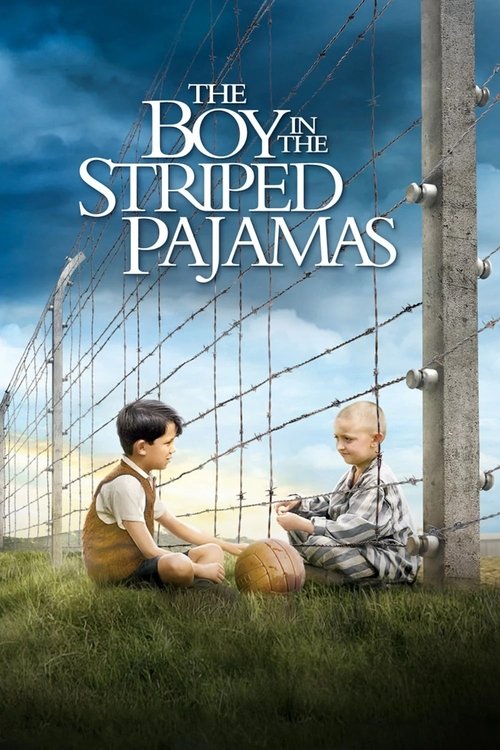
"Lines may divide us, but hope will unite us."
The Boy in the Striped Pyjamas - Symbolism & Philosophy
Symbols & Motifs
The Striped Pyjamas
Symbolizes dehumanization and the loss of individual identity. To the Nazis, the uniform marks the prisoners as sub-human; to Bruno, it is a costume for a game or a comfortable set of clothes, showing his lack of understanding of the prisoners' suffering.
The clothing worn by Shmuel and the other camp inmates. Bruno eventually dons a pair himself to sneak into the camp, which leads to his tragic end.
The Barbed Wire Fence
Represents the ideological barrier between the 'Aryans' and the Jews. It is the physical manifestation of the boundary between life and death, and between the 'protected' German world and the 'condemned' Jewish world.
The fence is where Bruno and Shmuel meet daily. It serves as the primary visual and narrative divider throughout the movie.
The Pile of Naked Dolls
A chilling visual metaphor for the mass graves of the Holocaust. It marks the death of Gretel's childhood and her replacement of empathy with Nazi ideology.
Bruno finds his sister’s discarded dolls in the basement, piled up and stripped of their clothes, mirroring the way prisoners' belongings and bodies were treated at the camp.
Philosophical Questions
Can innocence exist within a system of absolute evil?
The film explores whether Bruno's ignorance makes him 'innocent' or if his indirect participation in the lifestyle provided by the Holocaust makes him complicit. It asks if the 'shield' of childhood is valid when the surrounding reality is so monstrous.
Does the tragedy of the 'accidental victim' outweigh the tragedy of the 'intended' one?
By ending with Bruno’s death, the film forces the audience to confront their own empathy. Many critics argue the film manipulates the audience into grieving for the Nazi’s son more than the thousands of Jewish children, raising questions about how we value human life based on proximity and narrative framing.
Core Meaning
The core meaning of the film lies in the devastating intersection of childhood innocence and adult inhumanity. Director Mark Herman uses the friendship between Bruno and Shmuel to argue that hatred and prejudice are learned behaviors, not innate traits. The film suggests that ideology can blind even 'ordinary' families to the suffering in their own backyards, and that the consequences of such systemic evil are ultimately undiscriminating, consuming the innocent along with the guilty.