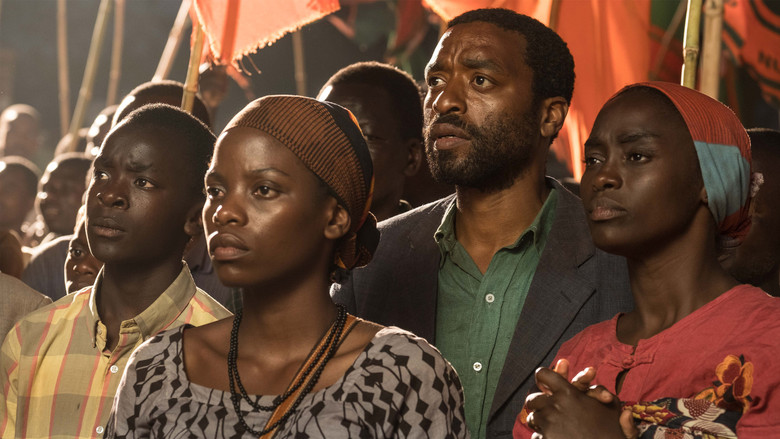
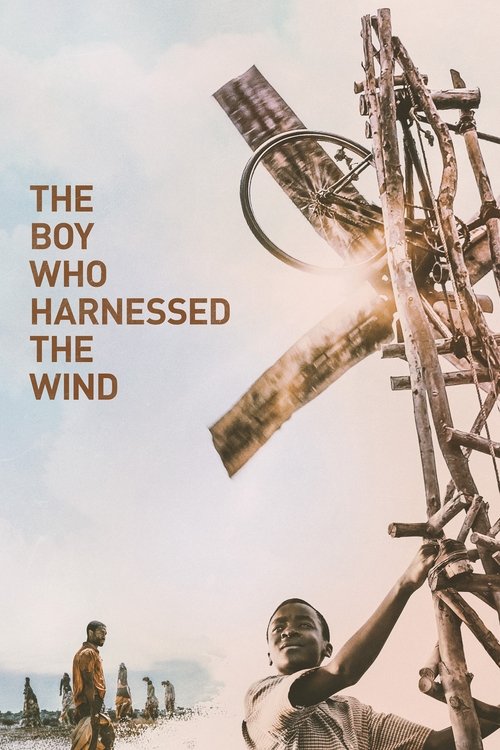
The narrative of "The Boy Who Harnessed the Wind" culminates in a powerful and emotionally resonant climax. After a period of intense conflict and despair, William's mother, Agnes, convinces his father, Trywell, to believe in their son. In a pivotal moment of sacrifice and faith, Trywell gives William the family's only bicycle to dismantle for parts. With the help of his friends and the remaining villagers, William successfully constructs a full-sized windmill. The tense final sequence shows the community gathered as the wind picks up, and the windmill's blades begin to turn, powering the water pump and bringing life-giving water to their parched fields. This triumph not only saves the village from the famine but also vindicates William's vision and bridges the generational and ideological gap between him and his father. The film's ending reveals that word of William's achievement spreads, leading to him receiving a scholarship to continue his education and eventually study at Dartmouth College. The hidden meaning that becomes clear is that the windmill was more than just a machine; it was a catalyst for social change, a symbol of a new future for the village, and the embodiment of the idea that knowledge and innovation can triumph over even the most dire of circumstances.
Director: Chiwetel Ejiofor
Cast: Maxwell Simba, Chiwetel Ejiofor, Aïssa Maïga, Lily Banda, Joseph Marcell
The Boy Who Harnessed the Wind — Ending Explained
⚠️ Spoiler Analysis
Alternative Interpretations
While the film is largely received as a straightforward and inspirational story, some critical interpretations suggest it risks oversimplifying the systemic issues of poverty and governmental failure in Malawi. This perspective argues that by focusing on a single, exceptional individual's triumph, the film may inadvertently downplay the immense structural barriers that prevent countless others from achieving similar success. Another interpretation focuses on the father-son relationship as the central drama, suggesting the film is as much about the passing of the torch from a generation bound by tradition to a new one empowered by knowledge as it is about the windmill itself. Some critics have also pointed out that the narrative follows a conventional and somewhat predictable 'underdog' story arc, which, while emotionally satisfying, might soften the harsher realities of the famine and political corruption depicted.
Explore More About This Movie
Dive deeper into specific aspects of the movie with our detailed analysis pages