The Boy Who Harnessed the Wind
Overview
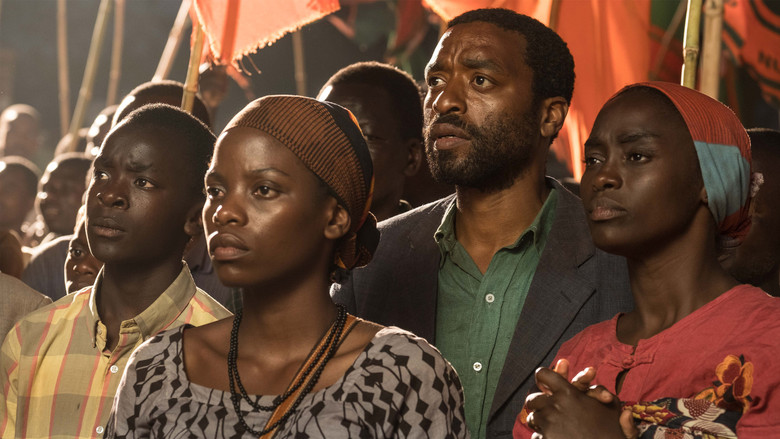
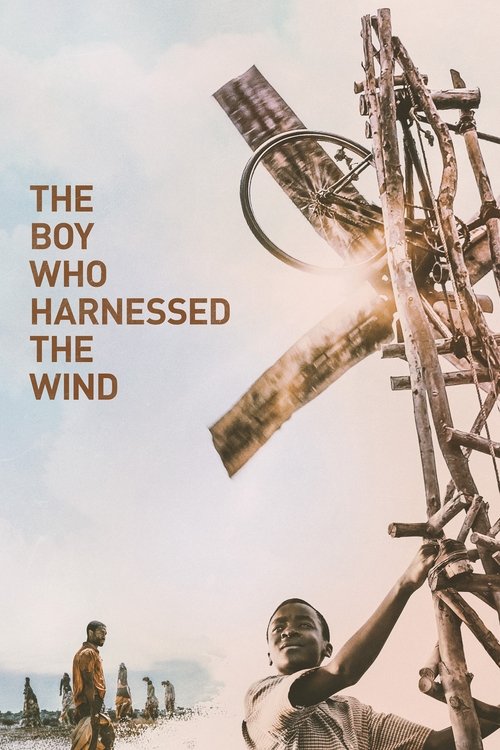
"The Boy Who Harnessed the Wind" is the inspiring true story of William Kamkwamba (Maxwell Simba), a young boy in a small village in Malawi. When a devastating famine strikes his community, William is forced to drop out of school as his family can no longer afford the fees. Undeterred, he sneaks into the school library and, armed with a book on energy, conceives of a daring plan to build a windmill to power a water pump and irrigate the dry land.
The film, directed by Chiwetel Ejiofor, who also plays William's father, Trywell, is a powerful testament to the human spirit's resilience in the face of adversity. It explores the conflict between tradition and progress, the profound impact of education, and the unwavering bond of family. William's journey is not just about building a machine; it's about challenging skepticism, overcoming immense obstacles, and bringing hope to his struggling village.

Core Meaning
The core meaning of "The Boy Who Harnessed the Wind" is a testament to the transformative power of education, innovation, and perseverance in overcoming seemingly insurmountable adversity. The director, Chiwetel Ejiofor, conveys a powerful message about the potential that lies within individuals, particularly the youth, to bring about significant change in their communities. The film champions the idea that knowledge, even when acquired through unconventional means, can be a more potent force than superstition or resignation. It's a celebration of human ingenuity and the refusal to accept a bleak fate, highlighting that with determination and a willingness to challenge the status quo, one person can indeed illuminate the darkness.
Thematic DNA
Perseverance and Hope
William Kamkwamba's unwavering determination in the face of famine, poverty, and skepticism is a central theme. Despite being forced to leave school, he continues his education independently in the library. His relentless pursuit of building a windmill, even when his own father doubts him, embodies the power of hope and resilience. The film illustrates that even in the most desperate of times, a single-minded vision can lead to transformative change for an entire community.
Magic vs. Science
The film presents a conflict between traditional beliefs rooted in magic and the new possibilities offered by science and education. The villagers initially view William's project with suspicion, with some attributing the drought to supernatural causes. William, through his scientific endeavors, challenges these long-held beliefs, demonstrating that practical knowledge and innovation can provide tangible solutions to their problems. This theme highlights a generational and cultural shift, where empirical knowledge begins to supersede superstition.
Education and Knowledge
The film underscores the profound importance of education as a tool for empowerment and social change. William's access to the school library, even after being forced to drop out, is the catalyst for his groundbreaking invention. The narrative champions self-learning and curiosity, showcasing how a single book can ignite a spark of ingenuity that can alter the destiny of a community. It posits that education is not just about formal schooling but about the unquenchable thirst for knowledge.
Community and Family
The dynamics within William's family and the wider village community are central to the story. The film explores the loving but strained relationship between William and his father, Trywell, who is torn between tradition and his son's innovative ideas. Ultimately, the success of the windmill is a communal effort, requiring the support and participation of his friends and some villagers. This theme emphasizes the importance of familial support and collective action in achieving a common goal.
Character Analysis
William Kamkwamba
Maxwell Simba
Motivation
William is driven by a deep desire to save his family and village from starvation. His insatiable curiosity and passion for science fuel his determination to find a practical solution to the drought that plagues their land.
Character Arc
William begins as a curious and intelligent boy with a knack for fixing radios. Faced with the devastating famine and the interruption of his formal education, he transforms from a student into a self-taught inventor and a beacon of hope for his community. His arc is one of empowerment through knowledge, as he overcomes skepticism and personal hardship to achieve his goal and save his village.
Trywell Kamkwamba
Chiwetel Ejiofor
Motivation
Trywell's primary motivation is to provide for and protect his family. He is deeply rooted in his agricultural heritage and struggles to see beyond the traditional ways of survival, which creates conflict with William's innovative approach.
Character Arc
Trywell starts as a loving but traditional father who believes in the value of education but is bound by the harsh realities of farming and tradition. He is initially skeptical and even hostile towards William's seemingly outlandish project. His arc is one of transformation, as he witnesses the dire consequences of the famine and eventually comes to trust in his son's vision, sacrificing his prized bicycle for the greater good of his family and community.
Agnes Kamkwamba
Aïssa Maïga
Motivation
Agnes is motivated by an unwavering love for her family and a deep-seated belief in her son's potential. She strives to maintain peace and unity within the family, even in the most trying of circumstances.
Character Arc
Agnes is the resilient and supportive matriarch of the Kamkwamba family. While she endures the hardships of the famine alongside her husband, she also recognizes and nurtures William's unique talents. Her arc is one of quiet strength and advocacy, as she acts as a crucial bridge between William and Trywell, ultimately persuading her husband to believe in their son's vision.
Symbols & Motifs
The Windmill
The windmill is a powerful symbol of hope, innovation, and the triumph of human ingenuity over adversity. It represents a departure from the cycle of poverty and famine, offering a tangible solution through the application of scientific knowledge. It also symbolizes the power of a single individual's vision to inspire and bring about monumental change.
The windmill is the central focus of William's efforts throughout the second half of the film. He conceives, designs, and builds it from scrap materials, facing numerous setbacks and the ridicule of his community before it ultimately proves successful in pumping water for irrigation.
The Bicycle
The bicycle, particularly its dynamo, symbolizes the initial spark of scientific curiosity and the potential for existing technology to be repurposed for greater innovation. For William's father, it represents a significant family asset and a connection to his past. The ultimate decision to dismantle the bicycle for the windmill signifies a sacrifice of the old for the promise of a new future.
William is fascinated by the bicycle's dynamo and its ability to generate light. The climax of the family drama occurs when William must convince his father to let him take apart the family's only bicycle to use its parts for the larger windmill.
The Library Book 'Using Energy'
The textbook 'Using Energy' symbolizes the power of knowledge and education. It represents the key that unlocks William's potential and provides him with the scientific principles needed to turn his idea into a reality. The book is a beacon of hope and a testament to the importance of access to information.
After being forced to leave school, William discovers the book in the school library. Its diagrams and explanations of windmills become his guide and the foundation for his own invention, which he studies diligently.
Memorable Quotes
I try, and I made it!
— William Kamkwamba
Context:
This is a powerful line from the real William Kamkwamba that reflects the spirit of his character in the film. It captures the essence of his journey from a boy with a dream to a successful inventor who saved his village.
Meaning:
This simple yet profound statement encapsulates the film's central message of perseverance and the power of individual effort. It's a declaration of triumph over adversity and a testament to William's unwavering belief in his abilities, even when others doubted him.
Think of your dreams and ideas as tiny miracle machines inside you that no one can touch. The more faith you put into them, the bigger they get, until one day they'll rise up and take you with them.
— William Kamkwamba (from the book)
Context:
While not a direct quote from the film's dialogue, this line from William Kamkwamba's memoir perfectly captures the ethos of his on-screen character and the film's inspirational message.
Meaning:
This quote beautifully articulates the theme of hope and the internal power of one's aspirations. It suggests that dreams are not just idle fantasies but tangible forces that can propel individuals to achieve the extraordinary, provided they are nurtured with belief.
If you want to make it, all you have to do is try.
— William Kamkwamba
Context:
This line, spoken by the real William Kamkwamba, reflects the core philosophy that his character in the film embodies through his relentless efforts to build the windmill despite numerous obstacles.
Meaning:
This quote serves as an inspirational call to action, emphasizing that the first and most crucial step towards achieving any goal is the act of trying. It distills the film's message of empowerment into a simple, actionable philosophy.
Philosophical Questions
To what extent can individual ingenuity overcome systemic failure?
The film explores this question through William's success in the face of a corrupt government and a devastating famine. It celebrates his individual brilliance and perseverance, suggesting that one person's innovation can make a life-or-death difference. However, it also implicitly raises the question of whether such individual heroism is a sustainable solution to widespread, systemic problems like poverty and climate change, or if it is a rare exception to a grim reality.
What is the relationship between tradition and progress?
This question is explored through the central conflict between William and his father, Trywell. Trywell represents the wisdom and pragmatism of tradition, which has ensured his family's survival for generations. William, on the other hand, embodies the promise of progress through scientific knowledge. The film suggests that while tradition provides a vital foundation, progress and adaptation are necessary for survival and advancement in a changing world. It ultimately argues for a synthesis of the two, where new ideas are embraced to solve age-old problems.
What is the true value of education?
The film posits that the true value of education lies not in formal certification, but in its ability to empower individuals to think critically, solve problems, and transform their circumstances. William's story is a powerful testament to the idea that access to knowledge, even in its most basic form like a library book, can be a catalyst for profound change, transcending the limitations of poverty and a lack of formal schooling.
Alternative Interpretations
While the film is largely received as a straightforward and inspirational story, some critical interpretations suggest it risks oversimplifying the systemic issues of poverty and governmental failure in Malawi. This perspective argues that by focusing on a single, exceptional individual's triumph, the film may inadvertently downplay the immense structural barriers that prevent countless others from achieving similar success. Another interpretation focuses on the father-son relationship as the central drama, suggesting the film is as much about the passing of the torch from a generation bound by tradition to a new one empowered by knowledge as it is about the windmill itself. Some critics have also pointed out that the narrative follows a conventional and somewhat predictable 'underdog' story arc, which, while emotionally satisfying, might soften the harsher realities of the famine and political corruption depicted.
Cultural Impact
"The Boy Who Harnessed the Wind" has had a significant cultural impact by bringing a powerful and inspiring true story from Malawi to a global audience. The film challenges stereotypical Western narratives of Africa by showcasing a story of ingenuity, resilience, and intellectual triumph from within the continent. It has been praised for its authentic portrayal of Malawian culture, including the use of the Chichewa language, which enhances its cultural resonance.
The film's release on Netflix provided widespread access to this important story, sparking conversations about sustainable energy, access to education, and the realities of food insecurity in developing nations. It has been used as an educational tool to inspire young people, particularly in STEM fields, and to highlight the importance of innovation in addressing global challenges like climate change. William Kamkwamba's story, amplified by the film, has made him an inspirational figure, demonstrating the profound impact one individual can have on their community and the world.
Audience Reception
"The Boy Who Harnessed the Wind" was met with a generally positive reception from audiences and critics alike. Audiences were widely moved by the film's inspirational and heartwarming true story, praising its powerful message of hope, perseverance, and the importance of education. The performances, particularly by Maxwell Simba as William and Chiwetel Ejiofor as his father, received significant acclaim for their emotional depth and authenticity. The film's stunning cinematography and its commitment to cultural authenticity, including the use of the Chichewa language, were also frequently highlighted as strengths. Some points of criticism revolved around the film's conventional narrative structure and a pace that some viewers found slow. A few critics also noted that the story's predictability, given its biographical nature, somewhat lessened the dramatic tension. Overall, however, the verdict was overwhelmingly positive, with most viewers finding it to be a compelling and uplifting cinematic experience.
Interesting Facts
- The film was Chiwetel Ejiofor's feature directorial debut.
- The movie was filmed on location in Malawi, adding to its authenticity.
- A majority of the film's dialogue is in Chichewa, the language of Malawi, with English subtitles.
- The film is based on the memoir of the same name by William Kamkwamba and Bryan Mealer.
- The real William Kamkwamba went on to study at Dartmouth College and has become a global advocate for innovation and sustainable energy.
- To enhance the realism of the story, director Chiwetel Ejiofor made creative choices, such as heightening the stakes by making the windmill crucial for pumping water for crops, which in reality, William's first windmill powered lights in his home.
⚠️ Spoiler Analysis
Click to reveal detailed analysis with spoilers
Frequently Asked Questions
Explore More About This Movie
Dive deeper into specific aspects of the movie with our detailed analysis pages
Comments (0)
No comments yet. Be the first to share your thoughts!