
The Breadwinner - Symbolism & Philosophy
Symbols & Motifs
The Story of the Elephant King
This fantastical tale symbolizes Parvana's internal struggle with grief, fear, and hope. The evil Elephant King represents the overwhelming, oppressive forces in her life—the Taliban, the war, and her personal trauma. The boy hero, who she eventually reveals is her late brother Sulayman, represents her own courage and the process of confronting her loss. By telling the story, she gains strength and finds a way to process a reality that is too harsh to face directly.
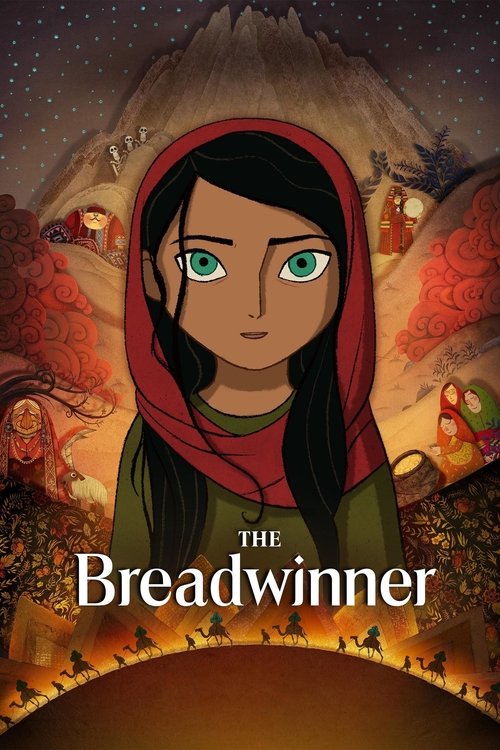
The story is told in segments throughout the film, primarily to her infant brother Zaki. These sequences are animated in a vibrant, paper cut-out style that contrasts sharply with the more realistic, muted tones of Parvana's daily life in Kabul. The story's climax, where Sulayman faces the Elephant King, coincides with Parvana's most terrifying moment at the prison, showing her using the story to find her own courage.
Hair
Hair symbolizes identity, gender, and freedom. For women in the film, hair must be covered by a chador or burqa, representing their subjugation. When Parvana cuts her long hair, it is a pivotal, sacrificial act that transforms her identity, allowing her to move freely and assume the male role of "Atesh." This act symbolizes her reclaiming of agency and her willingness to sacrifice a part of her femininity for the survival of her family.
The scene where Parvana cuts her hair is a turning point in the film. She does it alone in her home after her mother is beaten for being outside without a man. Her new short hair, combined with her brother's old clothes, becomes her disguise, enabling her to work and navigate the city.
Hossain's Clothes
The clothes of Parvana's deceased older brother, Hossain (named Sulayman in the film), symbolize memory, loss, and the assumption of a new role. Initially kept as a painful reminder of his death, the clothes become Parvana's disguise. By wearing them, she physically steps into the role of a son and the family's provider, an uncomfortable and oversized responsibility, just as the clothes are oversized for her.
After deciding to disguise herself, Parvana's mother gives her the clothes that belonged to her late brother. Wearing these clothes, she renames herself "Atesh" and is able to earn money and buy food in the marketplace for the first time.
Flowers
Flowers symbolize hope, beauty, and resilience in a desolate environment. They represent the potential for life and renewal to spring up even in the war-torn, rubble-filled landscape of Kabul. An old man helps Parvana plant them, stating that even if they look withered, their roots are strong, a metaphor for the Afghan people's spirit. They also represent a connection to Afghanistan's vibrant cultural past, which the Taliban seeks to erase.
Parvana notices wildflowers growing amidst the rubble. At the end of the film, as she prepares to flee the city, she plants some of these flowers in the marketplace as a message for the "Window Woman" and a gesture of hope for the future of her country.
Philosophical Questions
What is the relationship between storytelling and survival?
The film explores whether stories are merely a form of escapism or a fundamental tool for human survival. Parvana's fantastical tale of the Elephant King is not just for entertainment; it becomes a therapeutic process through which she confronts her trauma and musters the courage to act. The film posits that imagination and narrative are not luxuries but essential mechanisms that allow individuals to reframe their reality, process grief, and build the resilience needed to endure unbearable circumstances. It questions whether humanity can survive oppression without the power to create and share stories.
How is identity constructed and what does it mean to be free?
"The Breadwinner" delves into the nature of identity by forcing Parvana to adopt a male persona, "Atesh." Paradoxically, by sacrificing her female identity, she gains a freedom she has never known—the ability to move, work, and speak in public. This raises questions about whether identity is inherent or a social construct defined by external rules. The film explores the idea that true freedom is not just about physical movement but also the right to education, self-expression, and the ability to exist without fear, rights that are denied to Parvana as a girl but accessible to her as a boy.
In the face of systemic oppression, is individual courage enough?
Parvana demonstrates immense individual courage, becoming a hero for her family. However, the film constantly shows the limits of that courage against the overwhelming power of the Taliban regime and the impending war. A friendly shopkeeper is arrested, her mother is beaten, and her family is ultimately torn apart by forces far beyond their control. The film poses the difficult question of whether individual acts of bravery can truly create change within a deeply oppressive system, or if they are simply acts of survival that offer fleeting victories in a much larger, unwinnable struggle. The ambiguous ending leaves this question for the audience to ponder.
Core Meaning
The core meaning of "The Breadwinner" revolves around the indomitable power of hope, storytelling, and the resilience of the human spirit, particularly that of women and children, in the face of brutal oppression. Director Nora Twomey sought to create a film that demonstrates how imagination and stories can serve as vital coping mechanisms, providing not just solace but also real-world strategies for survival. The film is a powerful testament to female courage and resourcefulness under a regime that systematically strips them of their rights and voice. It highlights that even in the bleakest of circumstances, the bonds of family and the act of sharing stories can nurture strength and preserve culture and identity. The film ultimately conveys a message that words and courage, like rain, can make flowers grow even in the most desolate landscapes, whereas violence and oppression, like thunder, only bring destruction.