The Breadwinner
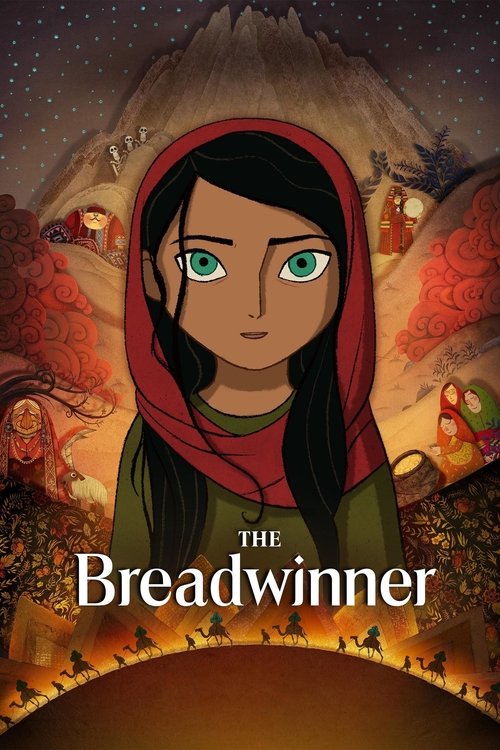
An emotionally resonant animated drama where a young girl's courage ignites a flicker of hope, painting a vibrant tale of resilience against the muted, oppressive backdrop of war-torn Kabul.
The Breadwinner

The Breadwinner

17 November 2017 Canada 94 min ⭐ 7.8 (885)
Director: Nora Twomey
Cast: Saara Chaudry, Soma Bhatia, Noorin Gulamgaus, Laara Sadiq, Ali Badshah
Drama Animation War Family
Oppression of Women and Gender Inequality The Power of Storytelling Family, Courage, and Resilience The Trauma of War
Box Office: $312,381

Overview

"The Breadwinner" tells the poignant story of Parvana, an 11-year-old girl living in Kabul, Afghanistan, under the oppressive rule of the Taliban in 2001. Women are forbidden from leaving their homes without a male escort, making life precarious for Parvana's family after her father, Nurullah, a former teacher, is unjustly arrested. Left with her mother, older sister, and infant brother, the family faces starvation as they are unable to buy food or earn money.

In a desperate act of courage, Parvana cuts her hair and disguises herself as a boy named "Atesh" to become the family's sole provider. Navigating the dangerous and dusty streets of Kabul, she takes on various jobs with her friend Shauzia, who is also a girl in disguise. As Parvana experiences a glimpse of freedom she's never known, she also confronts the harsh realities of her world. Interwoven with her daily struggles is a fantastical story she tells her younger brother about a brave boy on a quest to defeat the evil Elephant King, a tale that mirrors her own journey and helps her process her grief and fear.
Core Meaning

The core meaning of "The Breadwinner" revolves around the indomitable power of hope, storytelling, and the resilience of the human spirit, particularly that of women and children, in the face of brutal oppression. Director Nora Twomey sought to create a film that demonstrates how imagination and stories can serve as vital coping mechanisms, providing not just solace but also real-world strategies for survival. The film is a powerful testament to female courage and resourcefulness under a regime that systematically strips them of their rights and voice. It highlights that even in the bleakest of circumstances, the bonds of family and the act of sharing stories can nurture strength and preserve culture and identity. The film ultimately conveys a message that words and courage, like rain, can make flowers grow even in the most desolate landscapes, whereas violence and oppression, like thunder, only bring destruction.

Thematic DNA

Oppression of Women and Gender Inequality 35%
The Power of Storytelling 30%
Family, Courage, and Resilience 25%
The Trauma of War 10%

Oppression of Women and Gender Inequality

This is the central theme, as the entire plot is driven by the severe restrictions placed on women by the Taliban. Characters like Parvana and her mother, Fattema, cannot go outside, buy food, or work without a male relative. The film starkly portrays the consequences of this misogyny, from public beatings to the loss of education and autonomy. Parvana's transformation into "Atesh" is a direct subversion of these oppressive gender roles, allowing her to access a world of freedom and agency forbidden to her as a girl. Her friendship with Shauzia reinforces that this is a shared struggle.

The Power of Storytelling

Storytelling is depicted as a crucial tool for survival, cultural preservation, and emotional healing. Parvana's father, a teacher, instills in her the value of stories, which "remain in our hearts even when all else is gone." The film employs a distinct visual style for the stories Parvana tells about the boy Sulayman and the Elephant King. This story-within-a-story acts as a parallel narrative, helping Parvana process her grief over her deceased brother and find the courage to face her own insurmountable obstacles. It demonstrates that stories are not mere escapism but a way to make sense of trauma and inspire action.

Family, Courage, and Resilience

The film is a profound exploration of courage in everyday life. Parvana's decision to become the breadwinner is an immense act of bravery born from love for her family. Despite internal bickering, the family members support one another through unimaginable hardship. The theme of resilience is shown not only through Parvana but also through her mother, who endures depression after her husband's arrest, and her friend Shauzia, who works to escape an abusive home. The film celebrates the strength and resourcefulness of women and children who persist against overwhelming odds.

The Trauma of War

The film doesn't shy away from the brutal realities of living in a war zone. The setting of Kabul is filled with rubble, abandoned tanks, and a pervasive sense of danger. The characters are all scarred by conflict: Parvana's father lost his leg, and the family mourns her older brother, Sulayman, who was killed by a landmine. The film depicts the psychological toll of war, including fear, loss, and the constant threat of violence from volatile figures like the young Taliban member, Idrees.

Character Analysis

Parvana / Atesh

Saara Chaudry

Archetype: Hero
Key Trait: Courageous

Motivation

Parvana's primary motivation is the survival of her family. After her father is imprisoned, she is driven by the immediate need to provide food and money. This evolves into a desperate quest to find and free her father from prison before her family is forced to flee Kabul.

Character Arc

Parvana begins as a spirited but ordinary 11-year-old girl, chafing under the Taliban's rules but still a child who squabbles with her sister. The unjust arrest of her father forces her into a role of immense responsibility. Her arc is one of courageous transformation; she sheds her identity to become "Atesh," discovering newfound freedom and resilience. She evolves from a frightened child into a determined provider and protector, finding her inner strength through storytelling and her love for her family.

Nurullah (Father)

Ali Badshah

Archetype: Mentor / The Wounded Healer
Key Trait: Wise

Motivation

Nurullah is motivated by his love for his family and his profound belief in the power of education and stories to preserve their culture and humanity. He strives to educate his daughters despite the Taliban's prohibition, believing it is essential for Afghanistan's future.

Character Arc

Nurullah is a former teacher who has lost a leg in the war but retains his wisdom and gentle spirit. He acts as the moral and intellectual center of the family, encouraging Parvana's education and spirit. His arc is one of unjust suffering; he is arrested for perceived defiance. Though physically weakened in prison, his influence continues to guide Parvana. His eventual rescue at the end, frail but alive, represents a fragile victory of spirit over tyranny.

Shauzia / Deliwar

Soma Bhatia

Archetype: The Ally / The Pragmatist
Key Trait: Pragmatic

Motivation

Shauzia is driven by a powerful desire for escape and a better life. Her dream is to save enough money to travel to the sea, a place that represents freedom and peace, away from the oppression of both the Taliban and her own family situation.

Character Arc

Shauzia is Parvana's old school friend, who has also disguised herself as a boy to survive and support her family. She is more cynical and pragmatic than Parvana, hardened by her experiences. Her arc is about finding a path to personal freedom. While she provides Parvana with practical advice and companionship, her ultimate goal is to earn enough money to escape Kabul and her abusive father, highlighting a different, more individualistic form of survival.

Fattema (Mother)

Laara Sadiq

Archetype: The Griever
Key Trait: Resilient

Motivation

Initially paralyzed by grief and fear, Fattema's motivation becomes ensuring the long-term safety of her children. This leads her to arrange for the family to leave Kabul and seek refuge with relatives, even if it means potentially leaving Parvana and Nurullah behind.

Character Arc

Fattema is a writer who has been silenced by the Taliban regime. She initially falls into a deep depression after her husband's arrest, leaving Parvana to take charge. Her arc is about rediscovering her strength. Galvanized by her children's needs and the help of her friend Mrs. Weera, she slowly emerges from her grief to make difficult decisions for her family's survival, such as arranging her older daughter's marriage for protection.

Symbols & Motifs

The Story of the Elephant King

Meaning:

This fantastical tale symbolizes Parvana's internal struggle with grief, fear, and hope. The evil Elephant King represents the overwhelming, oppressive forces in her life—the Taliban, the war, and her personal trauma. The boy hero, who she eventually reveals is her late brother Sulayman, represents her own courage and the process of confronting her loss. By telling the story, she gains strength and finds a way to process a reality that is too harsh to face directly.

Context:

The story is told in segments throughout the film, primarily to her infant brother Zaki. These sequences are animated in a vibrant, paper cut-out style that contrasts sharply with the more realistic, muted tones of Parvana's daily life in Kabul. The story's climax, where Sulayman faces the Elephant King, coincides with Parvana's most terrifying moment at the prison, showing her using the story to find her own courage.

Hair

Meaning:

Hair symbolizes identity, gender, and freedom. For women in the film, hair must be covered by a chador or burqa, representing their subjugation. When Parvana cuts her long hair, it is a pivotal, sacrificial act that transforms her identity, allowing her to move freely and assume the male role of "Atesh." This act symbolizes her reclaiming of agency and her willingness to sacrifice a part of her femininity for the survival of her family.

Context:

The scene where Parvana cuts her hair is a turning point in the film. She does it alone in her home after her mother is beaten for being outside without a man. Her new short hair, combined with her brother's old clothes, becomes her disguise, enabling her to work and navigate the city.

Hossain's Clothes

Meaning:

The clothes of Parvana's deceased older brother, Hossain (named Sulayman in the film), symbolize memory, loss, and the assumption of a new role. Initially kept as a painful reminder of his death, the clothes become Parvana's disguise. By wearing them, she physically steps into the role of a son and the family's provider, an uncomfortable and oversized responsibility, just as the clothes are oversized for her.

Context:

After deciding to disguise herself, Parvana's mother gives her the clothes that belonged to her late brother. Wearing these clothes, she renames herself "Atesh" and is able to earn money and buy food in the marketplace for the first time.

Flowers

Meaning:

Flowers symbolize hope, beauty, and resilience in a desolate environment. They represent the potential for life and renewal to spring up even in the war-torn, rubble-filled landscape of Kabul. An old man helps Parvana plant them, stating that even if they look withered, their roots are strong, a metaphor for the Afghan people's spirit. They also represent a connection to Afghanistan's vibrant cultural past, which the Taliban seeks to erase.

Context:

Parvana notices wildflowers growing amidst the rubble. At the end of the film, as she prepares to flee the city, she plants some of these flowers in the marketplace as a message for the "Window Woman" and a gesture of hope for the future of her country.

Memorable Quotes

Raise your words, not your voice. It is rain that makes the flowers grow, not thunder.

— Parvana (quoting her father, Nurullah)

Context:

This is the final line of the film, spoken by Parvana as she and her weakened father are in a truck, leaving the chaos of Kabul behind. It serves as a concluding thought that summarizes the lessons learned and the enduring philosophy passed down from her father.

Meaning:

This quote, attributed to the poet Rumi, encapsulates the film's central message. It champions the power of gentle persuasion, intellect, and storytelling over brute force and anger. It signifies that true growth and positive change are nurtured through wisdom and thoughtful communication, not violence and oppression.

We are a land whose people are its greatest treasure. We are at the edges of empires at war with each other. We are a fractured land in the claws of the Hindu Kush mountains, scorched by the fiery eyes of the northern deserts.

— Parvana

Context:

These are among the opening lines of the film, as Parvana helps her father in the marketplace. It is part of a story he is telling, grounding the audience immediately in the rich, troubled history of Afghanistan from the perspective of its people.

Meaning:

This quote, spoken at the beginning of the film, establishes the historical and cultural context of Afghanistan. It speaks to a deep national pride in its people and heritage, while simultaneously acknowledging the country's tragic history as a crossroads for conflict and invasion. It sets a tone of resilience and love for a homeland defined by both its beauty and its scars.

When you're a boy, you can go anywhere you like.

— Shauzia

Context:

Shauzia says this to Parvana shortly after they reconnect in the marketplace, both disguised as boys. She is explaining the grim reality and the practical advantages of their shared deception.

Meaning:

This simple line starkly summarizes the gender inequality that defines the characters' lives. It highlights the freedom and mobility granted to men and boys, which is completely denied to women and girls. It explains the desperate logic behind Parvana's and Shauzia's disguises, which are their only key to accessing the world.

My name is Sulayman! My mother is a writer. My father is a teacher. And my sisters always fight each other. One day, I found a toy on the street. I picked it up. It exploded. I don't remember what happened after that because it was the end.

— Sulayman (in Parvana's story)

Context:

This is spoken by the hero of Parvana's fantastical story near the end of the film. As Parvana waits in terror outside the prison while war erupts, she finishes her story, finally giving the boy hero her brother's name and revealing how he died. This confession gives her the strength to stay put and wait for her father.

Meaning:

This heartbreaking quote reveals the tragic backstory of Parvana's older brother. It is delivered with childlike simplicity, which makes the horror of his death by a landmine even more powerful. It is the climax of Parvana's inner story, where she finally confronts and voices the trauma of his death, allowing her to process her grief and find resolve.

Philosophical Questions

What is the relationship between storytelling and survival?

The film explores whether stories are merely a form of escapism or a fundamental tool for human survival. Parvana's fantastical tale of the Elephant King is not just for entertainment; it becomes a therapeutic process through which she confronts her trauma and musters the courage to act. The film posits that imagination and narrative are not luxuries but essential mechanisms that allow individuals to reframe their reality, process grief, and build the resilience needed to endure unbearable circumstances. It questions whether humanity can survive oppression without the power to create and share stories.

How is identity constructed and what does it mean to be free?

"The Breadwinner" delves into the nature of identity by forcing Parvana to adopt a male persona, "Atesh." Paradoxically, by sacrificing her female identity, she gains a freedom she has never known—the ability to move, work, and speak in public. This raises questions about whether identity is inherent or a social construct defined by external rules. The film explores the idea that true freedom is not just about physical movement but also the right to education, self-expression, and the ability to exist without fear, rights that are denied to Parvana as a girl but accessible to her as a boy.

In the face of systemic oppression, is individual courage enough?

Parvana demonstrates immense individual courage, becoming a hero for her family. However, the film constantly shows the limits of that courage against the overwhelming power of the Taliban regime and the impending war. A friendly shopkeeper is arrested, her mother is beaten, and her family is ultimately torn apart by forces far beyond their control. The film poses the difficult question of whether individual acts of bravery can truly create change within a deeply oppressive system, or if they are simply acts of survival that offer fleeting victories in a much larger, unwinnable struggle. The ambiguous ending leaves this question for the audience to ponder.

Alternative Interpretations

While the film's primary message is one of hope and resilience, its deliberately ambiguous ending invites multiple interpretations. The conclusion sees Parvana reunited with her ailing father as war breaks out, while her mother and siblings head in a different direction. They promise to find each other, but their fate is left uncertain.

One interpretation is optimistic, focusing on the film's theme of resilience. In this view, the reunion of Parvana and her father is a significant victory, and their determination, coupled with the final hopeful quote about rain and flowers, suggests they will survive and reunite with their family. The ending is seen not as a cliffhanger, but as a testament to the enduring human spirit's capacity to look toward an unknown future with courage.

A more pessimistic or realist interpretation emphasizes the brutal context of the impending American invasion. The separation of the family is not temporary but a tragic reflection of the reality for countless families torn apart by war, from which reunion is unlikely. In this reading, the film's lack of a clean resolution serves as a stark commentary on the ongoing, unresolved nature of the conflict in Afghanistan. It suggests that personal courage, while vital, cannot always overcome the overwhelming forces of history and war. The hope at the end is fragile and perhaps even tragic in its naïveté.

Cultural Impact

"The Breadwinner" made a significant cultural impact by bringing a nuanced, humanizing portrait of life in Taliban-era Afghanistan to a global audience, particularly through the accessible yet mature medium of animation. Released in 2017, it served as a powerful reminder of the plight of Afghan women and children. The involvement of executive producer Angelina Jolie brought significant media attention to the project, amplifying its message about the importance of education for girls in conflict zones.

Critically, the film was widely acclaimed for its stunning animation, emotional depth, and refusal to simplify a complex political and social reality. It was praised for avoiding stereotypes and instead celebrating the "richness, creativity and strength of Afghan culture." The film's dual-animation style—a realistic depiction of Kabul and a vibrant, fantastical style for the story-within-a-story—was lauded as an innovative storytelling device.

For audiences, it offered a child's-eye perspective on war and oppression, fostering empathy and prompting discussion about challenging global issues. The film resonated deeply with Afghan audiences and diasporas, who saw their culture and struggles represented with dignity. While not a massive box-office success, its Oscar nomination and numerous festival awards cemented its place as a significant work of international animation, demonstrating that the medium can tackle serious, real-world subject matter with profound emotional impact.

Audience Reception

Audiences largely responded to "The Breadwinner" with overwhelming praise, often describing it as a beautiful, powerful, and deeply moving film. Viewers frequently highlighted the stunning animation, noting the effective contrast between the stark reality of Kabul and the vibrant, imaginative world of Parvana's stories. The emotional weight of the story was a key point of acclaim; many found it to be a heartbreaking yet inspiring tale of courage and resilience that brought them to tears.

Points of praise consistently centered on the film's ability to tackle mature and difficult themes—such as war, sexism, and oppression—in a way that was accessible without being patronizing, making it a valuable film for both older children and adults. The character of Parvana was celebrated as a strong, relatable heroine. However, the main point of criticism, or caution, from some viewers was the film's intense and sometimes harrowing content. Some felt it might be too sad or scary for younger audiences, despite being animated. The ambiguous, non-traditional happy ending was also a point of discussion, with some finding it powerful and realistic, while others may have found it unsettling. Overall, the verdict from audiences was that it is a profound and important film that masterfully uses animation to tell a vital human story.

Interesting Facts

  • The film is based on the best-selling young adult novel of the same name by Canadian author Deborah Ellis.
  • Angelina Jolie served as an executive producer on the film. Her involvement was driven by her humanitarian work and the story's focus on the oppression of young girls under conflict.
  • The film was produced by Cartoon Saloon, an Irish animation studio also known for the Oscar-nominated films "The Secret of Kells" and "Song of the Sea".
  • In addition to the English version, a version of the film was also produced in Dari, one of the official languages of Afghanistan, to ensure cultural authenticity.
  • Director Nora Twomey underwent treatment for cancer during the making of the film, an experience which she said gave her a deeper appreciation for finding humor and levity even in difficult circumstances, a quality she brought to the film.
  • To ensure the story was told with sensitivity, the production team consulted with many Afghan people, whose viewpoints were incorporated into the script and visuals.
  • The lead voice actress, Saara Chaudry (Parvana), read the entire "Breadwinner" trilogy when she was nine and was a passionate fan of the books long before being cast. Her grandfather was also born in Afghanistan.
  • The film was nominated for the Academy Award for Best Animated Feature Film at the 90th Academy Awards.

⚠️ Spoiler Analysis

Click to reveal detailed analysis with spoilers

Frequently Asked Questions

Explore More About This Movie

Dive deeper into specific aspects of the movie with our detailed analysis pages

Comments (0)

Leave a comment

No comments yet. Be the first to share your thoughts!