
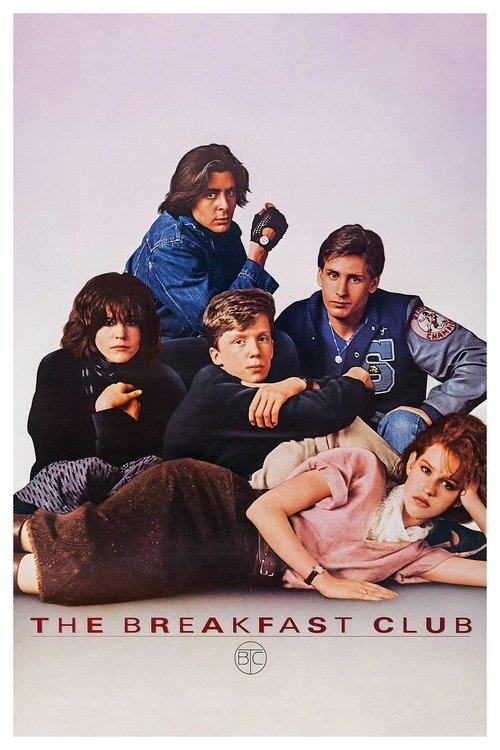
"They only met once, but it changed their lives forever."
The Breakfast Club - Symbolism & Philosophy
Symbols & Motifs
The Library
It symbolizes a liminal space or a purgatory where the normal rules of high school society are suspended. It acts as a stage where the characters are trapped, forcing them to confront each other without escape.
The entire film takes place almost exclusively in this single room, emphasizing the characters' confinement and the intensity of their interaction.
The Lunches
The characters' food choices symbolize their socioeconomic background and personality. It serves as a visual shorthand for their home lives.
Claire has sushi (sophistication/wealth), Andrew has a massive bag of food (athlete's fuel), Brian has a balanced soup and juice box (mothering), Bender has nothing (neglect), and Allison has a bizarre sugar-sandwich (eccentricity/cry for help).
The Essay
It represents rebellion through redefinition. Instead of writing what Vernon wants (an apology/submission), they write a manifesto of their collective identity.
Brian writes the essay on behalf of the group, leaving it on the table as a final statement of defiance as they leave detention.
The Banister
The specific architectural design of the library set, particularly the upper level and banister, serves as a physical hierarchy that the characters move through, eventually sitting together on the floor (leveling the playing field).
Bender often perches high up or runs along the railings, symbolizing his desire to be above the rules and his chaotic energy.
Philosophical Questions
Are we defined by nature or nurture?
The film heavily suggests nurture (specifically parenting) is the primary shaper of character. Every student's flaw is a direct reflection of their parents' treatment (e.g., the bully has a bully father). It asks if it's possible to break the cycle of generational trauma.
What is the nature of identity?
The film uses the essay assignment to ask 'Who are you?' It contrasts the Sartrean idea of 'existence precedes essence' (we create who we are) against the essentialist labels imposed by society (you are a brain/athlete). The students conclude they are fluid and multifaceted, rejecting static definitions.
Core Meaning
At its heart, The Breakfast Club is a critique of the social caste system and a plea for empathy. Director John Hughes argues that the labels placed on teenagers—by adults, peers, and themselves—are reductive and damaging. The film posits that everyone is fighting a hard battle against parental expectation and neglect.
Ultimately, it suggests that the shared experience of pain and alienation is a stronger unifier than social status. The message is one of universal adolescence: that beneath the surface of the 'criminal' or the 'princess,' there is a shared human struggle to be understood and validated.