"It spans a whole new world of entertainment!"
The Bridge on the River Kwai - Symbolism & Philosophy
Symbols & Motifs
The Bridge
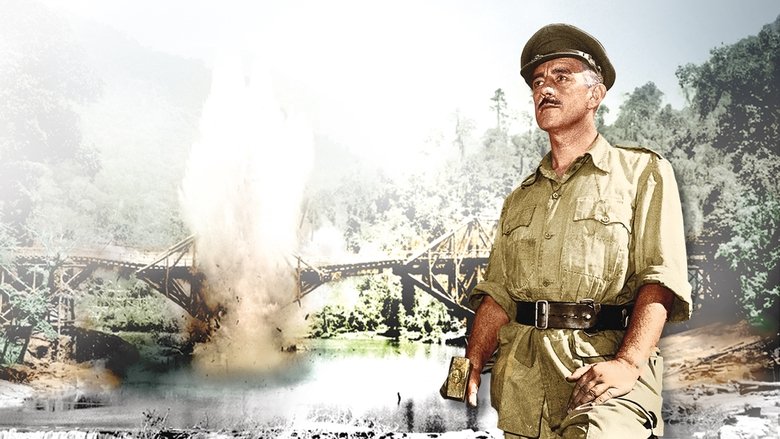
Symbolizes the double-edged nature of achievement. To Nicholson, it is a monument to British civilization; to the Japanese, a vital military asset; to the commandos, a target. It ultimately represents the fragile intersection of pride and utility.
The bridge is the physical and narrative centerpiece of the film, evolving from a site of slave labor into a grand structure that dominates the landscape.
The 'Colonel Bogey March' (Whistle)
Symbolizes defiance and the preservation of spirit. It serves as an auditory 'middle finger' to the captors, signaling that the prisoners' minds have not been conquered.
Introduced when the POWs first march into the camp, the jaunty tune contrasts sharply with their ragged appearance and dire situation.
The Oven
Represents the unyielding weight of oppression and the physical cost of holding onto one's principles.
The small metal box where Nicholson is held in the blistering sun to break his spirit.
The River Kwai
Symbolizes nature's indifference to human conflict. It flows continuously, eventually washing away the debris of the men's vanity.
The river serves as the boundary between the orderly bridge and the chaotic, untamed jungle.
Philosophical Questions
Is achievement meaningful if it serves an evil cause?
The film examines Nicholson's pride in his work. He builds a bridge that will last 600 years, but it is used to transport troops for a genocidal regime. It asks if 'craftsmanship' can ever be neutral.
What is the true nature of 'honor' in a lawless environment?
Both Saito and Nicholson are bound by codes (Bushido and the Geneva Convention) that they prioritize over their own survival, yet these codes eventually lead them both to disaster.
Core Meaning
At its heart, The Bridge on the River Kwai is a profound meditation on the absurdity and futility of war. David Lean explores how high-minded ideals like 'duty' and 'honor' can transform into dangerous obsessions that blind individuals to the larger consequences of their actions. The film suggests that while human achievement is noble, it becomes a form of madness when it serves an inhumane cause. By the end, the distinction between 'hero' and 'villain' is blurred by a shared hubris, leaving only the wreckage of a project that both sides sacrificed everything to create or destroy.