"The path of Francesca Johnson's future seems destined due to an unexpected fork in the road..."
The Bridges of Madison County - Symbolism & Philosophy
Symbols & Motifs
The Covered Bridges
They symbolize the transition between the public world and the private, hidden world of the lovers. They are shelters where Francesca and Robert can be their true selves, protected from the "exposure" of societal judgment.
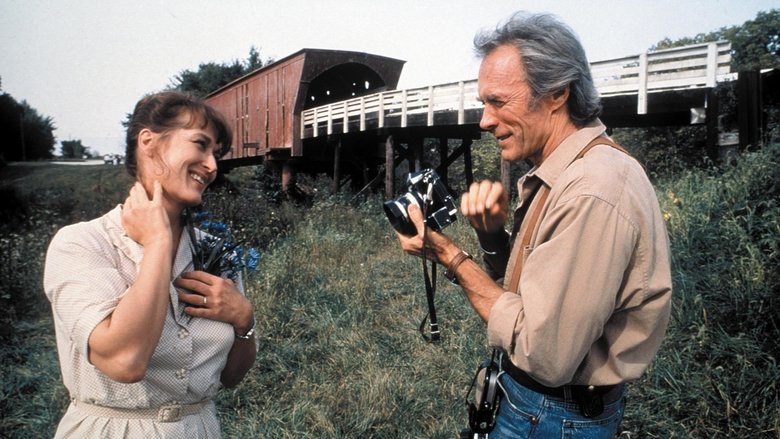
Robert photographs them (capturing beauty), and they serve as the meeting points where their romance begins and deepens (Roseman Bridge).
The Camera
Represents the ability to see beauty in the ordinary and to freeze time. It is Robert's tool for engaging with the world, yet also a shield that keeps him an observer rather than a participant—until he meets Francesca.
Robert is constantly seen with his Nikon; he teaches Francesca to look through the lens, metaphorically showing her a new perspective on her own environment.
The Truck Door Handle
The ultimate symbol of Francesca's paralyzing indecision and the physical weight of her duty. It represents the threshold between running away to a new life and staying in her established one.
In the climactic rain scene, Francesca's hand grips the handle, trembling, as she watches Robert's truck in front of her, moments away from driving out of her life forever.
Bari, Italy
Symbolizes Francesca's lost youth, her exoticism, and the dreams she abandoned to become an American housewife. It represents the "other" life she gave up.
Francesca mentions her hometown early on, establishing her feeling of being an outsider in Iowa; Robert is the first person in years to recognize and validate this part of her identity.
The New Dress
A symbol of Francesca reclaiming her sexuality and womanhood. It signifies her desire to be seen not as a mother or wife, but as a desirable woman.
She buys a simple frock in Des Moines to wear for dinner with Robert, an act of vanity and anticipation she hasn't performed in years.
Philosophical Questions
Can a love be 'true' if it is based on infidelity?
The film challenges moral absolutism by presenting the affair not as a sin, but as a spiritual awakening. It asks if the 'purity' of a connection can transcend the social contract of marriage.
Does duty to others outweigh personal happiness?
Francesca's ultimate choice posits that personal fulfillment is secondary to the harm one's actions would cause to innocents (her children), suggesting a utilitarian ethics of love.
Is a 'life not lived' less real than the one we choose?
Robert and Francesca's four days become more 'real' to them than decades of their actual lives, raising questions about whether time or intensity defines the reality of an experience.
Core Meaning
The film validates the significance of the "road not taken" and the enduring power of hidden love. It suggests that a love lasting only a few days can be as meaningful and defining as a lifetime of marriage. Ultimately, it honors the nobility of sacrifice, showing that choosing duty over passion does not negate the validity of the love left behind, but rather preserves it as a perfect, untouchable memory that sustains one's soul.