Das Cabinet des Dr. Caligari
"You must become Caligari!"
The Cabinet of Dr. Caligari - Symbolism & Philosophy
Symbols & Motifs
The Cabinet
The cabinet symbolizes confinement, repression, and the subconscious mind. It is the box from which Cesare, representing the repressed and darker aspects of the psyche, emerges to do Caligari's bidding. It is a physical manifestation of control and a coffin-like prison for Cesare's true self.
Dr. Caligari presents the cabinet as the main attraction at the fair. Cesare is kept inside it, only to be awakened by Caligari's command. The act of opening the cabinet is akin to unleashing a hidden, dangerous force upon the world.
The Somnambulist (Cesare)
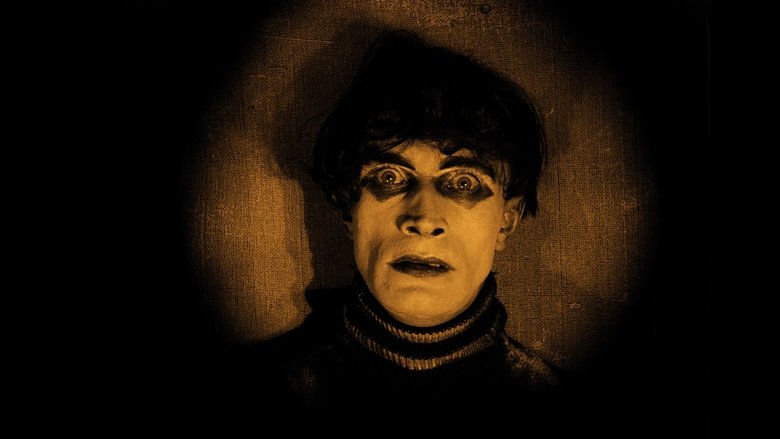
Cesare represents the common man, the passive citizen manipulated and weaponized by a tyrannical authority. He is a puppet without free will, a blank slate upon which Caligari imposes his murderous desires. His ghostly, gaunt appearance symbolizes a soul that has been hollowed out by oppression.
Throughout the film, Cesare is shown in a trance-like state, his movements stiff and controlled. He is ordered by Caligari to commit murders, which he does without question until his encounter with Jane, where his humanity briefly flickers.
Distorted Sets and Painted Shadows
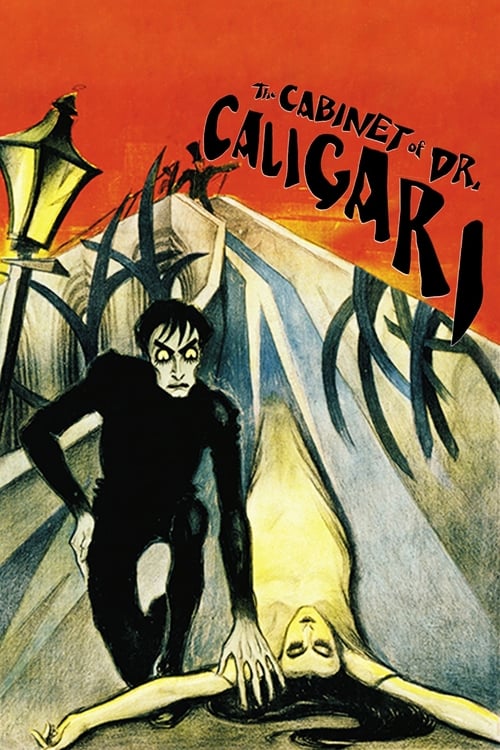
The German Expressionist set design, with its sharp, impossible angles, twisted buildings, and painted-on light and shadow, symbolizes the fractured psychological state of the narrator. It is a visual representation of madness, chaos, and a world thrown off its axis. The environment is not a depiction of reality, but a projection of a disturbed mind.
The entire film is shot on these stylized sets. Streets are jagged and lead to nowhere, rooms are claustrophobic and oddly shaped, and light and shadow are unnaturally fixed. This visual style immerses the viewer in the narrator's subjective and unstable reality from the very beginning.
The Insane Asylum
The asylum symbolizes the collapse of societal order and the blurring of boundaries between sanity and madness. It has been interpreted as a metaphor for the state of post-WWI Germany, a nation grappling with trauma and disillusionment. The institution that is supposed to contain madness becomes the very source of it in Francis's narrative, questioning the legitimacy of authority.
The asylum appears in both the main narrative and the frame story. Initially, it is the place where Francis tracks the villainous Caligari, only to discover he is the director. In the film's twist ending, the asylum is revealed to be Francis's reality, where he is a patient and Caligari is his doctor.
Philosophical Questions
What is the nature of sanity and madness?
The film fundamentally challenges the clear demarcation between sanity and insanity. By presenting a narrative through the eyes of Francis, who is later revealed to be an asylum inmate, it forces the audience to inhabit a world shaped by psychosis. The twist ending doesn't necessarily resolve the question but deepens it: is madness simply a different, subjective perception of reality? The ambiguous final shot suggests that the 'sane' authority figure may himself be the sinister character from the 'insane' narrative, implying that the definitions of sanity are often imposed by those in power.
Can authority be trusted?
A central theme of the film is a profound distrust of authority figures. In Francis's story, Dr. Caligari is a figure of absolute, malevolent power who manipulates a subservient subject to kill, a potent metaphor for the German government during WWI. Even with the twist ending, the critique remains. If the asylum director is Caligari, he is a tyrant hiding in plain sight. If he is just a doctor, his final line about "curing" Francis can be seen as a threat to enforce conformity and silence dissent, raising the question of whether any form of absolute power can be truly benevolent.
Is reality objective or subjective?
"The Cabinet of Dr. Caligari" is a masterclass in subjective storytelling. The distorted, dream-like sets are not a representation of a real town but a projection of the narrator's inner world. The film argues that our perception of reality is not a fixed, objective truth but is filtered through our own emotions, fears, and psychological state. The twist ending reinforces this by revealing that the entire world we have been immersed in is the construct of one person's mind, leaving the audience to question the reliability of any single narrative.
Core Meaning
At its core, "The Cabinet of Dr. Caligari" is a profound exploration of the nature of authority, madness, and the subjective perception of reality. The film critiques the abusive and arbitrary nature of power, with Dr. Caligari representing a tyrannical figure who manipulates and controls an individual (Cesare) to commit heinous acts. This has often been interpreted as a metaphor for the German state during World War I, which sent its citizens to their deaths.
Furthermore, the film delves into the instability of the human mind. Through its revolutionary twist ending, it forces the audience to question everything they have seen, blurring the lines between sanity and insanity. It suggests that reality itself is not fixed but is shaped by the perspective of the individual, leaving the viewer to ponder who the true madman is. The unsettling, distorted visual style of the film is a direct reflection of this psychological turmoil and subjective reality.