The Cabinet of Dr. Caligari
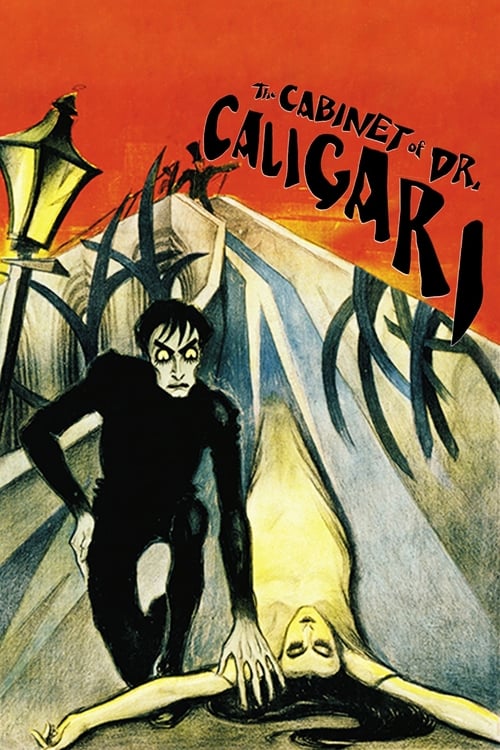
A German Expressionist nightmare of distorted reality, this silent horror film plunges the viewer into a madman's chilling tale, rendered in a world of painted shadows and jagged landscapes.
The Cabinet of Dr. Caligari

The Cabinet of Dr. Caligari

Das Cabinet des Dr. Caligari

"You must become Caligari!"

27 February 1920 Germany 77 min ⭐ 7.9 (1,690)
Director: Robert Wiene
Cast: Werner Krauss, Conrad Veidt, Friedrich Fehér, Lil Dagover, Hans Heinrich von Twardowski
Drama Crime Thriller Horror
Authority and Tyranny Sanity vs. Insanity Deception and Perception Fate and Free Will
Budget: $18,000
Box Office: $8,811

Overview

"The Cabinet of Dr. Caligari" unfolds through a frame story in which a young man named Francis recounts a horrific series of events that befell his hometown of Holstenwall. The narrative begins as the mysterious Dr. Caligari arrives at the town fair with a somnambulist, Cesare, whom he keeps in a coffin-like cabinet and exhibits as a spectacle. Caligari claims that Cesare can answer any question about the future.

When Francis's friend Alan asks Cesare how long he has to live, Cesare predicts he will die by dawn. The prophecy comes true, and Alan is found murdered the next morning. This marks the beginning of a string of mysterious killings that terrorize the town. Francis, along with his fiancée Jane, begins to suspect Dr. Caligari and the somnambulist are responsible and sets out to investigate the enigmatic showman. His investigation leads him down a dark and twisted path as he tries to uncover the truth behind the murders and the doctor's control over the sleepwalking Cesare.

Core Meaning

At its core, "The Cabinet of Dr. Caligari" is a profound exploration of the nature of authority, madness, and the subjective perception of reality. The film critiques the abusive and arbitrary nature of power, with Dr. Caligari representing a tyrannical figure who manipulates and controls an individual (Cesare) to commit heinous acts. This has often been interpreted as a metaphor for the German state during World War I, which sent its citizens to their deaths.

Furthermore, the film delves into the instability of the human mind. Through its revolutionary twist ending, it forces the audience to question everything they have seen, blurring the lines between sanity and insanity. It suggests that reality itself is not fixed but is shaped by the perspective of the individual, leaving the viewer to ponder who the true madman is. The unsettling, distorted visual style of the film is a direct reflection of this psychological turmoil and subjective reality.

Thematic DNA

Authority and Tyranny 35%
Sanity vs. Insanity 30%
Deception and Perception 25%
Fate and Free Will 10%

Authority and Tyranny

The film's central relationship between Dr. Caligari and Cesare is a powerful allegory for the abuse of authority. Caligari exerts absolute control over the somnambulist, forcing him to carry out his murderous will. This theme has been widely interpreted as a premonition or reflection of the authoritarianism that would soon rise in Germany. It explores how charismatic and malevolent figures can manipulate the passive and vulnerable, turning them into instruments of terror. The town officials are depicted as bureaucratic and ineffective, highlighting a breakdown in legitimate authority and leaving the citizens at the mercy of a tyrant.

Sanity vs. Insanity

"The Cabinet of Dr. Caligari" masterfully plays with the audience's perception of reality and sanity. The narrative is presented from the perspective of Francis, but the film's shocking conclusion reframes the entire story as the delusion of a mental patient. This twist forces the viewer to re-evaluate the events and question who is truly sane. The film's distorted, expressionistic set design becomes a physical manifestation of a disturbed mind, visually representing the theme. It ultimately suggests that the line between a sound mind and madness is terrifyingly thin and subjective.

Deception and Perception

The entire film is built upon layers of deception. Dr. Caligari deceives the town with his spectacle, while the narrative structure itself is a grand deception played on the audience. The story challenges the reliability of the narrator and, by extension, the reliability of our own perceptions. The visual style, with its impossible angles, painted shadows, and claustrophobic spaces, constantly reminds the viewer that what they are seeing is not an objective reality but a highly stylized and subjective interpretation of it. The film posits that truth is not absolute but is filtered through the lens of individual experience and psychological state.

Fate and Free Will

The character of Cesare, the somnambulist, raises profound questions about fate and free will. Under Caligari's control, he appears to be an automaton with no agency, his actions dictated by his master. When he predicts Alan's death, it suggests a predetermined fate. However, a crucial moment of defiance occurs when Cesare is ordered to kill Jane. He hesitates and ultimately abducts her instead, suggesting a flicker of personal will or emotion breaking through his programming. This moment introduces ambiguity into whether individuals are merely puppets of a higher power or possess the capacity for independent choice, even in the most oppressive circumstances.

Character Analysis

Dr. Caligari

Werner Krauss

Archetype: The Tyrant / The Mad Scientist
Key Trait: Manipulative

Motivation

In Francis's narrative, Caligari's motivation is rooted in a historical obsession with a mystical figure who used a somnambulist to kill. He seeks to re-enact these events to satisfy his own ego and thirst for control. In the reality of the frame story, his motivation appears to be the treatment of his patients, specifically understanding and curing Francis's delusion.

Character Arc

Dr. Caligari is initially presented as the clear villain of Francis's story—a sinister carnival showman who uses a somnambulist to commit murder. He is depicted as a figure of absolute, malevolent authority. The film's twist ending dramatically shifts his character's arc, revealing him to be the director of the asylum where Francis is a patient. In this new context, he is framed as a benevolent, if misunderstood, authority figure trying to cure his patient, although the final shot leaves his true nature ambiguous.

Cesare

Conrad Veidt

Archetype: The Monster / The Victim
Key Trait: Subservient

Motivation

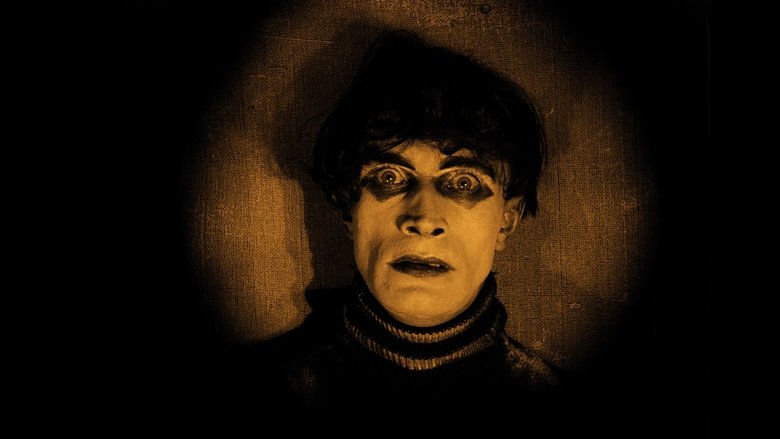
Cesare's primary motivation is to obey the commands of Dr. Caligari, as he exists in a hypnotic, sleepwalking state. His flicker of motivation shifts when he sees Jane, where his actions become driven by a primal, perhaps aesthetic or emotional, impulse that momentarily overrides his programming.

Character Arc

Cesare begins as a mysterious and terrifying figure, the mindless instrument of Dr. Caligari's will. He is the monster in the shadows, committing murders without apparent emotion. His arc takes a turn when he confronts Jane. Instead of killing her, he is captivated by her beauty and abducts her, showing the first sign of independent will. This act leads to his pursuit and eventual death from exhaustion. He evolves from a simple monster to a tragic, sympathetic figure, a victim of Caligari's control.

Francis

Friedrich Fehér

Archetype: The Unreliable Narrator / The Seeker of Truth
Key Trait: Obsessed

Motivation

Initially, his motivation is to solve the murder of his friend Alan and protect his beloved Jane. He is driven by a quest for justice and truth. In the context of the asylum, his motivation is to convince others of his version of reality, a reality in which he is sane and the asylum director is the evil Dr. Caligari.

Character Arc

Francis starts as the film's protagonist, a determined young man driven by love and grief to uncover the truth behind the murders in his town. He acts as the audience's guide through the horrific events. The final twist reveals that his entire story is a fabrication, a delusion created in his mind. His arc is a complete inversion; the hero who sought to expose madness is revealed to be the one who is mad. He transforms from a reliable narrator into an unreliable one, and from a hero into a patient.

Jane Olsen

Lil Dagover

Archetype: The Damsel in Distress
Key Trait: Vulnerable

Motivation

Jane's motivation is primarily to survive and be with Francis. She experiences fear and seeks protection from the men in her life. She does not drive the plot but is central to the motivations of the male characters.

Character Arc

Jane is initially introduced as the object of affection for both Francis and Alan. She functions as a classic damsel in distress, becoming the target of the film's monster. Her arc is largely passive, as she is victimized and eventually captured by Cesare. However, it is her beauty and innocence that trigger Cesare's moment of defiance, making her a catalyst for his brief transformation. In the frame story, she is a fellow inmate of the asylum, her delusion being that she is a queen.

Symbols & Motifs

The Cabinet

Meaning:

The cabinet symbolizes confinement, repression, and the subconscious mind. It is the box from which Cesare, representing the repressed and darker aspects of the psyche, emerges to do Caligari's bidding. It is a physical manifestation of control and a coffin-like prison for Cesare's true self.

Context:

Dr. Caligari presents the cabinet as the main attraction at the fair. Cesare is kept inside it, only to be awakened by Caligari's command. The act of opening the cabinet is akin to unleashing a hidden, dangerous force upon the world.

The Somnambulist (Cesare)

Meaning:

Cesare represents the common man, the passive citizen manipulated and weaponized by a tyrannical authority. He is a puppet without free will, a blank slate upon which Caligari imposes his murderous desires. His ghostly, gaunt appearance symbolizes a soul that has been hollowed out by oppression.

Context:

Throughout the film, Cesare is shown in a trance-like state, his movements stiff and controlled. He is ordered by Caligari to commit murders, which he does without question until his encounter with Jane, where his humanity briefly flickers.

Distorted Sets and Painted Shadows

Meaning:

The German Expressionist set design, with its sharp, impossible angles, twisted buildings, and painted-on light and shadow, symbolizes the fractured psychological state of the narrator. It is a visual representation of madness, chaos, and a world thrown off its axis. The environment is not a depiction of reality, but a projection of a disturbed mind.

Context:

The entire film is shot on these stylized sets. Streets are jagged and lead to nowhere, rooms are claustrophobic and oddly shaped, and light and shadow are unnaturally fixed. This visual style immerses the viewer in the narrator's subjective and unstable reality from the very beginning.

The Insane Asylum

Meaning:

The asylum symbolizes the collapse of societal order and the blurring of boundaries between sanity and madness. It has been interpreted as a metaphor for the state of post-WWI Germany, a nation grappling with trauma and disillusionment. The institution that is supposed to contain madness becomes the very source of it in Francis's narrative, questioning the legitimacy of authority.

Context:

The asylum appears in both the main narrative and the frame story. Initially, it is the place where Francis tracks the villainous Caligari, only to discover he is the director. In the film's twist ending, the asylum is revealed to be Francis's reality, where he is a patient and Caligari is his doctor.

Memorable Quotes

Ich muss Caligari werden!

— Asylum Director (in his diary)

Context:

Francis, having broken into the asylum director's office, reads his diary. This line is presented as a dramatic intertitle, representing the moment the director supposedly decided to reenact the ancient Caligari's crimes, solidifying him as the villain in Francis's narrative.

Meaning:

Translated as "I must become Caligari!", this line marks the climax of the asylum director's obsession in Francis's story. It signifies the complete surrender of his identity to that of the historical, murderous hypnotist, serving as the supposed proof of his guilt and madness. It is the core of the mystery Francis believes he has unraveled.

Wie lange habe ich zu leben?

— Alan

Context:

At the Holstenwall town fair, Francis and his friend Alan visit Dr. Caligari's exhibit. Alan, in a moment of curiosity, poses this fateful question to the somnambulist, Cesare, who has just been awakened from his coffin-like cabinet.

Meaning:

Alan asks Cesare, "How long have I to live?". Cesare's chilling response, "Bis zum Morgengrauen" ("Until dawn"), serves as a prophecy that is fulfilled, launching the film's central murder plot. This exchange blurs the line between fortune-telling and a direct threat, establishing the sinister nature of Caligari's carnival act.

Ihr Narren, dieser Mann plant unser aller Verderben! Wir sterben bei Tagesanbruch! Er ist Caligari!

— Francis

Context:

This line is uttered in the asylum during the final scenes of the film. After Francis finishes recounting his story, the asylum director appears, and Francis hysterically points him out as the evil Dr. Caligari, leading to him being subdued by the staff.

Meaning:

Translated as "You fools, this man is plotting our doom! We die at dawn! He is Caligari!", this is a desperate cry from Francis at the film's climax. Within the frame story, this line reveals the depth of his delusion, as he frantically tries to convince those in the asylum of his version of reality, seeing the benevolent director as the monstrous villain of his tale.

Philosophical Questions

What is the nature of sanity and madness?

The film fundamentally challenges the clear demarcation between sanity and insanity. By presenting a narrative through the eyes of Francis, who is later revealed to be an asylum inmate, it forces the audience to inhabit a world shaped by psychosis. The twist ending doesn't necessarily resolve the question but deepens it: is madness simply a different, subjective perception of reality? The ambiguous final shot suggests that the 'sane' authority figure may himself be the sinister character from the 'insane' narrative, implying that the definitions of sanity are often imposed by those in power.

Can authority be trusted?

A central theme of the film is a profound distrust of authority figures. In Francis's story, Dr. Caligari is a figure of absolute, malevolent power who manipulates a subservient subject to kill, a potent metaphor for the German government during WWI. Even with the twist ending, the critique remains. If the asylum director is Caligari, he is a tyrant hiding in plain sight. If he is just a doctor, his final line about "curing" Francis can be seen as a threat to enforce conformity and silence dissent, raising the question of whether any form of absolute power can be truly benevolent.

Is reality objective or subjective?

"The Cabinet of Dr. Caligari" is a masterclass in subjective storytelling. The distorted, dream-like sets are not a representation of a real town but a projection of the narrator's inner world. The film argues that our perception of reality is not a fixed, objective truth but is filtered through our own emotions, fears, and psychological state. The twist ending reinforces this by revealing that the entire world we have been immersed in is the construct of one person's mind, leaving the audience to question the reliability of any single narrative.

Alternative Interpretations

The film's frame story and its final scene are the source of significant debate and alternative interpretations. While the most direct reading is that Francis is insane and his story is a delusion, many critics argue that this is a simplification that undermines the film's power.

A major alternative interpretation posits that the frame story, which was forced on the writers by the studio, is a betrayal of the original intent. In this view, Francis's core story is the truth, and the asylum ending is an allegorical representation of how authority crushes rebellion by branding it as madness. The director's final line, "Now I know how to cure him," becomes a sinister threat to silence a dissenter, making the supposedly benevolent doctor the true tyrannical Caligari. This reading preserves the film's anti-authoritarian message.

Another perspective suggests that it is not a story of sane vs. insane, but an exploration of the subjective nature of reality itself. Both the inner story and the frame story are presented with Expressionistic, distorted visuals, suggesting that neither perspective is objectively "real." The film, therefore, becomes a commentary on how individuals construct their own realities and the chaos that ensues when these subjective worlds collide. A further psychoanalytic reading suggests Francis may have invented the entire story as a complex alibi to cover his own guilt over murdering Alan, his rival for Jane's affection.

Cultural Impact

"The Cabinet of Dr. Caligari" is a landmark of silent cinema and the quintessential film of the German Expressionist movement. Released in 1920, it emerged from the societal trauma of post-World War I Germany, using its distorted, subjective visuals to reflect the nation's anxiety, paranoia, and distrust of authority. This radical aesthetic, which externalized the inner psychology of the characters, was a stark departure from cinematic realism and helped establish film as a serious art form.

Its influence on the horror genre is immeasurable. It is widely considered one of the first true horror films, shifting the focus from external threats to psychological terror. The film's use of chiaroscuro (high-contrast lighting), stylized sets, and a menacing atmosphere directly influenced the Universal monster movies of the 1930s and was a major precursor to the film noir genre of the 1940s and 50s. Directors from Alfred Hitchcock to Tim Burton have drawn heavily from its visual language, with Burton's entire aesthetic being deeply indebted to its gothic, surreal imagery.

Furthermore, "Caligari" pioneered narrative techniques that became staples of cinema, most notably the use of a frame story and the introduction of the twist ending, where the narrator is revealed to be unreliable. This shocking conclusion forces a re-evaluation of the entire film and has been emulated in countless movies since. The film's critical reception has solidified its place in the cinematic canon as a revolutionary work that expanded the possibilities of visual storytelling and continues to be studied and referenced over a century later.

Audience Reception

Upon its release, "The Cabinet of Dr. Caligari" was met with both public and critical success, particularly internationally, where it helped draw attention to the artistic merit of German cinema after World War I. Audiences were reportedly captivated and terrified; one account noted that women in the audience screamed when Cesare first opened his eyes and fainted during his abduction of Jane. While it performed well in major US cities, it was met with protests in some areas, not for its content, but due to fears of importing German films and impacting local employment.

Modern audiences and critics universally regard it as a masterpiece and a revolutionary film. Its primary points of praise are its groundbreaking visual style, which remains stunning and influential over a century later, and its pioneering use of the twist ending. The unsettling atmosphere and Conrad Veidt's iconic performance as Cesare are also frequently highlighted. The main criticisms from contemporary viewers usually relate to the slow pacing and exaggerated acting style, which are typical of the era but can be jarring for those accustomed to modern filmmaking. Overall, it is celebrated as an essential and foundational work of horror and arthouse cinema.

Interesting Facts

  • The film's iconic German Expressionist visual style, with its distorted sets and painted shadows, was not in the original plan. It was suggested by the set designers Hermann Warm, Walter Reimann, and Walter Röhrig, who were Expressionist painters.
  • The famous twist ending, which reveals the story is the delusion of an asylum inmate, was not in the original script. The studio, Decla-Bioscop, added the frame story to make the film less politically subversive, much to the frustration of the writers, Carl Mayer and Hans Janowitz.
  • The script was inspired by the writers' own negative experiences with authority figures, particularly military psychiatrists, during World War I.
  • The film was shot entirely indoors in a studio, with light and shadows often painted directly onto the canvas sets to enhance the surreal, anti-realistic look.
  • The Cabinet of Dr. Caligari is considered by many critics, including Roger Ebert, to be the first true horror film.
  • In his influential 1947 book "From Caligari to Hitler," critic Siegfried Kracauer argued that the film reflected a subconscious desire in German society for a tyrannical ruler, presaging the rise of Adolf Hitler.
  • Conrad Veidt's performance as Cesare, with his stark makeup and jerky, haunting movements, heavily influenced the portrayal of cinematic monsters for decades to come.

⚠️ Spoiler Analysis

Click to reveal detailed analysis with spoilers

Frequently Asked Questions

Explore More About This Movie

Dive deeper into specific aspects of the movie with our detailed analysis pages

Comments (0)

Leave a comment

No comments yet. Be the first to share your thoughts!