
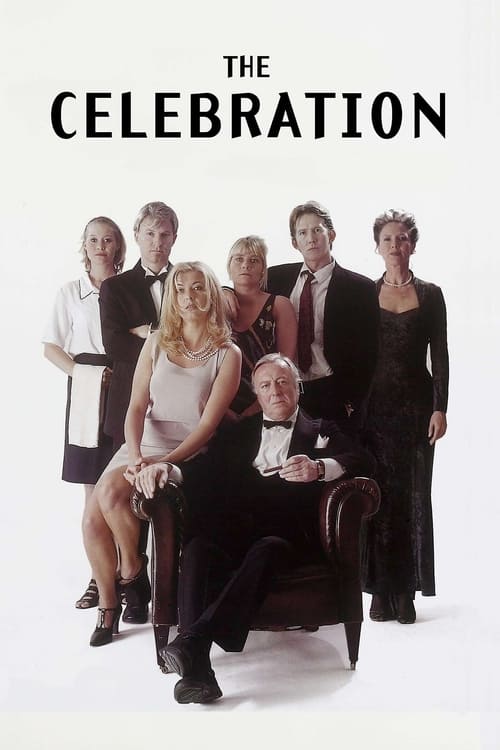
Festen
"Every family has a secret."
The Celebration - Symbolism & Philosophy
Symbols & Motifs
The Green and Yellow Speeches
The Green Speech symbolizes the raw, ugly truth, while the Yellow Speech represents the comforting lies and pleasantries the family expects. Helge's choice of green seals his fate, ironically inviting his own destruction.
Christian holds up two folded papers at the dinner table, asking his father to choose one, initiating the film's central conflict.
Water and Bathing
Water serves as a motif for both memory and cleansing—but a corrupted cleansing. It links to the site of the abuse (the bath) and Linda's suicide (implied drowning/bathtub imagery).
Christian has flashbacks of water; Michael slips in the shower; scenes often return to bathrooms as spaces of secrets and death.
The Chain Dance
A visual metaphor for the family's forced unity and the inescapability of their bond. It represents the mindless repetition of tradition that binds them to the abuser.
The guests link arms and weave through the house in a long, serpentine line, physically trapping the characters in the ritual.
Linda's Suicide Note
The tangible proof of the past, acting as a voice from the grave that finally breaks the cycle of denial.
Found by the waitress Pia and hidden by Helene, it is eventually read aloud, serving as the final nail in Helge's coffin.
Philosophical Questions
Is truth worth the destruction of the family unit?
The film asks whether it is better to live in a comfortable lie or a destructive truth. Christian destroys the family's structure to save his own soul, positing that a foundation built on rot is not worth preserving.
What is the nature of complicity?
By focusing on the guests who stay and the mother who ignores the rape, the film questions the morality of the bystander. It suggests that silence is as damning as the act of violence itself.
Core Meaning
At its heart, The Celebration is a brutal examination of collective denial and the complicity required to maintain social order. Director Thomas Vinterberg uses the raw, unpolished aesthetic of Dogme 95 to strip away cinematic artifice, mirroring Christian's mission to strip away his family's facade. The film argues that the "civilized" rituals of the upper class—toasts, songs, formal dinners—often serve as a cage to silence victims and protect abusers. It is not just about one man's crimes, but about the silence of the mother and the guests who prioritize comfort and status over truth.