The Celebration
A visceral Dogme 95 masterpiece where a patriarch's 60th birthday shatters into chaos. Handheld cameras capture the raw, claustrophobic unveiling of incest and suicide, exposing the rot beneath a bourgeois family's polished veneer.
The Celebration

The Celebration

Festen

"Every family has a secret."

19 June 1998 Denmark 105 min ⭐ 7.7 (1,214)
Director: Thomas Vinterberg
Cast: Ulrich Thomsen, Henning Moritzen, Thomas Bo Larsen, Paprika Steen, Birthe Neumann
Drama
The Facade of Bourgeois Decorum Trauma and Memory Complicity and Silence Racism and Outsiders
Budget: $1,300,000

Overview

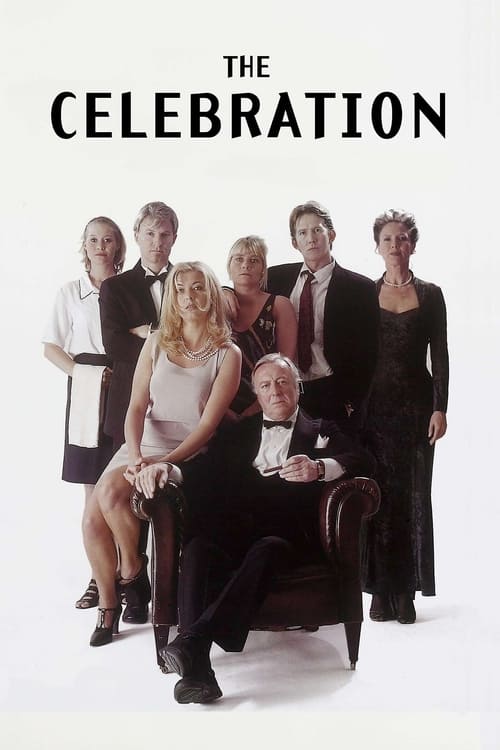
The Celebration (Festen) is a searing family drama set in a Danish country estate, where the wealthy Hansen family gathers to celebrate the 60th birthday of their patriarch, Helge. The event is shadowed by the recent suicide of the eldest daughter, Linda. Her twin brother, Christian, returns from Paris, seemingly calm but harboring a devastating secret. As the guests—including the boisterous, abusive brother Michael and the denial-ridden sister Helene—settle in, the veneer of high-society politeness begins to crack.

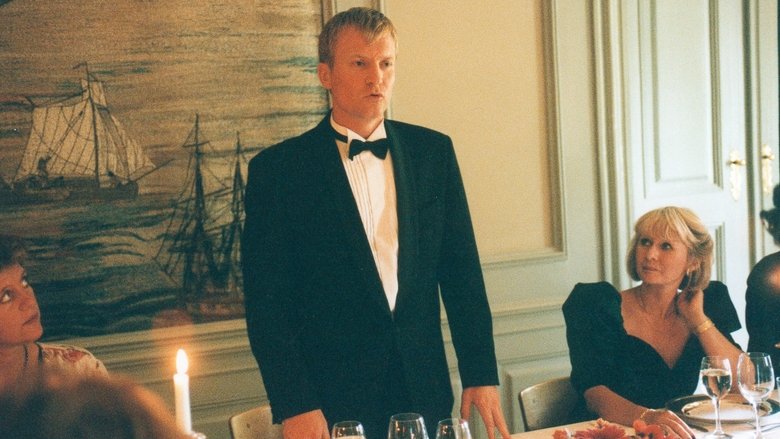
During the dinner, Christian rises to give a toast, offering his father a choice between a "yellow" and a "green" speech. Helge unknowingly chooses the "Speech of Truth," in which Christian calmly reveals that Helge sexually abused both him and Linda as children. The guests, steeped in denial and bourgeois decorum, initially laugh it off as a bad joke or the ramblings of a sick mind. As the night progresses, Christian persists, supported eventually by the discovery of Linda's suicide note, forcing the family to confront the horrific reality they have ignored for decades.

Core Meaning

At its heart, The Celebration is a brutal examination of collective denial and the complicity required to maintain social order. Director Thomas Vinterberg uses the raw, unpolished aesthetic of Dogme 95 to strip away cinematic artifice, mirroring Christian's mission to strip away his family's facade. The film argues that the "civilized" rituals of the upper class—toasts, songs, formal dinners—often serve as a cage to silence victims and protect abusers. It is not just about one man's crimes, but about the silence of the mother and the guests who prioritize comfort and status over truth.

Thematic DNA

The Facade of Bourgeois Decorum 30%
Trauma and Memory 25%
Complicity and Silence 25%
Racism and Outsiders 20%

The Facade of Bourgeois Decorum

The film meticulously depicts how social rituals (toasts, singing, dining) are used to suffocate the truth. Even after Christian's accusation of rape, the toastmaster insists on keeping to the schedule, and guests continue eating, illustrating how deeply ingrained the desire to 'keep up appearances' is, even in the face of monstrosity.

Trauma and Memory

Christian's trauma is the ghost at the feast. The film explores how suppressed memory festers, leading to Linda's suicide and Christian's near-breakdown. The contrast between Christian's painful recollection and the family's willful amnesia highlights the isolating nature of trauma.

Complicity and Silence

The mother, Else, represents the ultimate enabler. Her refusal to acknowledge the abuse—and the revelation that she witnessed it and did nothing—indicts the passive bystander. The guests' refusal to leave or stop the party implicates society in the crimes of the powerful.

Racism and Outsiders

The arrival of Helene's Black boyfriend, Gbatokai, exposes the family's casual and overt racism, particularly from Michael and the guests who sing a racist song. This subplot reinforces the family's moral bankruptcy and fear of the 'other,' paralleling their rejection of Christian's 'alien' truth.

Character Analysis

Christian

Ulrich Thomsen

Archetype: The Tragic Hero / The Truth-Teller
Key Trait: Stoic determination

Motivation

To avenge his twin sister Linda and free himself from the silence that killed her.

Character Arc

Starts as a quiet, seemingly broken man returning home. Through his persistent speeches, he transforms from a victim into an avenging angel, enduring physical expulsion and psychological gaslighting to finally shatter his father's power.

Helge

Henning Moritzen

Archetype: The Patriarch / The Shadow
Key Trait: Narcissistic charm

Motivation

To maintain control and his status as the respected head of the family.

Character Arc

Begins as the beloved, charismatic center of the family. He maintains a facade of joviality until the evidence becomes undeniable. He ends as a pathetic, ousted figure, stripped of his authority and expelled from his own table.

Michael

Thomas Bo Larsen

Archetype: The Volatile Sibling
Key Trait: Explosive rage

Motivation

Insecurity and a desperate need for validation.

Character Arc

Initially aggressive, racist, and desperate for his father's approval (to the point of beating Christian to silence him). His arc pivots sharply when he realizes the truth, turning his rage against his father in a final act of violent rejection.

Else

Birthe Neumann

Archetype: The Enabler
Key Trait: Willful blindness

Motivation

Preservation of the family image and her own comfort.

Character Arc

She remains composed and smiling throughout the accusations, prioritizing the party's success over her son's pain. Her mask only slips at the very end when she chooses to stay with her children, though her complicity remains unforgiven.

Symbols & Motifs

The Green and Yellow Speeches

Meaning:

The Green Speech symbolizes the raw, ugly truth, while the Yellow Speech represents the comforting lies and pleasantries the family expects. Helge's choice of green seals his fate, ironically inviting his own destruction.

Context:

Christian holds up two folded papers at the dinner table, asking his father to choose one, initiating the film's central conflict.

Water and Bathing

Meaning:

Water serves as a motif for both memory and cleansing—but a corrupted cleansing. It links to the site of the abuse (the bath) and Linda's suicide (implied drowning/bathtub imagery).

Context:

Christian has flashbacks of water; Michael slips in the shower; scenes often return to bathrooms as spaces of secrets and death.

The Chain Dance

Meaning:

A visual metaphor for the family's forced unity and the inescapability of their bond. It represents the mindless repetition of tradition that binds them to the abuser.

Context:

The guests link arms and weave through the house in a long, serpentine line, physically trapping the characters in the ritual.

Linda's Suicide Note

Meaning:

The tangible proof of the past, acting as a voice from the grave that finally breaks the cycle of denial.

Context:

Found by the waitress Pia and hidden by Helene, it is eventually read aloud, serving as the final nail in Helge's coffin.

Memorable Quotes

I've written two speeches, Father. One is green, the other is yellow. You choose.

— Christian

Context:

At the start of the dinner, Christian stands up and presents two folded papers to his father.

Meaning:

The pivotal moment of the film. It offers an illusion of choice to the patriarch, but effectively traps him. It highlights the ritualistic nature of the revelation.

The green is an interesting choice. It's a kind of home truth speech.

— Christian

Context:

Immediately after Helge picks the green paper, Christian introduces the topic to the guests.

Meaning:

A masterful understatement that precedes the shocking revelation. It uses the language of polite dinner conversation to introduce a horror.

I shaved at the airport, if you must know!

— Christian

Context:

Spoken into his cell phone early in the film, seemingly mundane but delivered with intense desperation.

Meaning:

A line that reveals Christian's frailty and the cracks in his composure. It suggests he is barely holding himself together.

Cheers to the man who killed my sister! Cheers to the murderer!

— Christian

Context:

A toast given later in the evening as the family tries to ignore his earlier speech.

Meaning:

The escalation of the conflict. Christian drops all subtlety, forcing the guests to acknowledge the accusation directly.

Philosophical Questions

Is truth worth the destruction of the family unit?

The film asks whether it is better to live in a comfortable lie or a destructive truth. Christian destroys the family's structure to save his own soul, positing that a foundation built on rot is not worth preserving.

What is the nature of complicity?

By focusing on the guests who stay and the mother who ignores the rape, the film questions the morality of the bystander. It suggests that silence is as damning as the act of violence itself.

Alternative Interpretations

While the film confirms the abuse is real, some critics initially view the first half as an ambiguous study of madness vs. truth. Christian's erratic behavior and the family's gaslighting create a tension where the audience briefly doubts his sanity—a deliberate choice to make the viewer feel the weight of the family's denial. Another reading suggests the film is a Hamlet retelling: the son returning to a corrupt kingdom (the hotel) to expose the sins of the father, complete with a 'play within a play' (the speeches) and the ghost of a sibling (Linda).

Cultural Impact

The Celebration is a landmark in cinema history as the inaugural Dogme 95 film. It proved that the movement's strict 'Vow of Chastity'—banning artificial lighting, music, and tripods—could produce emotionally devastating and commercially successful art. It won the Jury Prize at the 1998 Cannes Film Festival and catapulted Thomas Vinterberg and Danish cinema onto the global stage. Its 'mockumentary' visual style (shaky cam, awkward zooms) influenced a generation of filmmakers and TV shows, including The Office and Succession. It is widely regarded as one of the best Danish films ever made.

Audience Reception

Audiences and critics alike were stunned by the film's visceral impact. Reviews praised the fearless acting, particularly from Ulrich Thomsen and Henning Moritzen, and the screenplay's ability to balance jet-black humor with tragedy. The shaky camera work was a point of contention for some viewers (causing motion sickness), but most agreed it added to the film's raw authenticity. It is frequently described as 'uncomfortable,' 'harrowing,' and 'brilliant.'

Interesting Facts

  • This was the very first film certified under the **Dogme 95** manifesto (Dogme #1).
  • Director Thomas Vinterberg claimed the story was based on a real radio broadcast he heard. Years later, it was revealed the radio caller was an actor and the story was a hoax, but Vinterberg didn't know this at the time.
  • The film was shot on a consumer-grade Sony DCR-PC3 Handycam to adhere to Dogme rules.
  • Thomas Vinterberg makes a cameo appearance as the taxi driver who brings Gbatokai to the party.
  • The 'Chain Dance' scene was admitted by Vinterberg to be 'plagiarized' from Ingmar Bergman's *Fanny and Alexander*.
  • All music in the film is diegetic (occurring within the scene), as per Dogme rules. The silence is often deafening.
  • Vinterberg confessed he didn't tell the extras what Christian's speech would be about, so their shocked reactions are partly genuine.

Easter Eggs

Thomas Vinterberg's Cameo

The director appears briefly as the taxi driver, physically delivering the 'outsider' (Gbatokai) into the hermetically sealed family environment.

Fish on the Ceiling

A fish is painted on the ceiling of the bathroom where Linda died. It is a surreal, blink-and-you-miss-it detail that hints at the warped reality and the sister's lost innocence.

The 'Phone Call' to Nowhere

Christian is often seen on his bulky cell phone. It is implied he might be talking to no one, or perhaps 'speaking' to his dead sister, emphasizing his isolation.

⚠️ Spoiler Analysis

Click to reveal detailed analysis with spoilers

Frequently Asked Questions

Explore More About This Movie

Dive deeper into specific aspects of the movie with our detailed analysis pages

Comments (0)

Leave a comment

No comments yet. Be the first to share your thoughts!