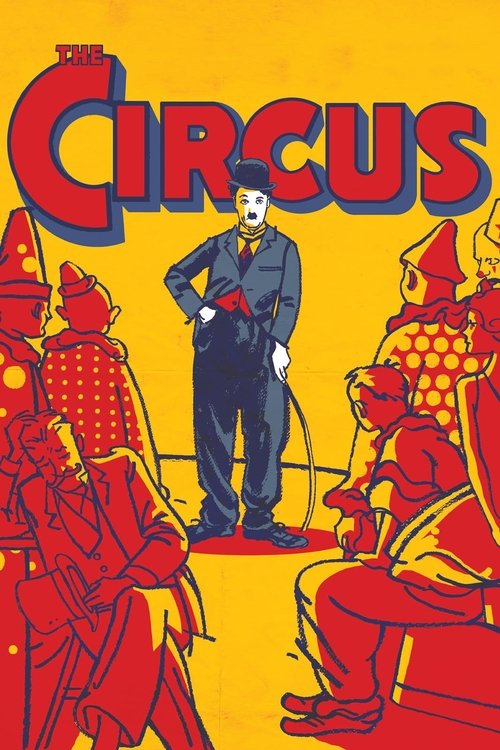
"The Circus is Here!"
The Circus - Symbolism & Philosophy
Symbols & Motifs
The Empty Circus Ring
The final shot of the empty ring symbolizes loneliness, impermanence, and the aftermath of a performance. It represents the space where joy and community once existed, now left desolate. For the Tramp, it is the physical remainder of his brief success and lost love, a circle that ultimately excludes him.
This is the film's final, poignant image. After the circus wagons depart with Merna and Rex, the Tramp is left sitting alone. He looks at a star-shaped piece of paper from one of Merna's hoops before picking himself up and jauntily walking away from the empty space, into the unknown.
The Tightrope
The tightrope symbolizes the precarious balance of life, love, and performance. For the Tramp, it represents the ultimate challenge to win Merna's affection by competing with his rival on his own terms. His chaotic walk, besieged by monkeys, is a metaphor for the overwhelming and absurd difficulties he faces, turning a feat of skill into a comedic nightmare.
In the film's climax, the Tramp is forced to replace Rex on the high wire. Having secretly practiced, he is still terrified, and his situation is made comically worse when mischievous monkeys escape and climb all over him as he tries to maintain his balance far above the crowd.
The Hall of Mirrors
The hall of mirrors symbolizes a fractured identity and the confusion between appearance and reality. As the Tramp navigates the maze of his own reflections, it reflects his fragmented sense of self, caught between being a penniless tramp, an accidental star, and a hopeful lover. The multiple images suggest the many facets of his persona and the difficulty of grasping his true identity.
Early in the film, while fleeing a policeman and a pickpocket, the Tramp runs into a funhouse hall of mirrors. The sequence creates visual chaos as he and his pursuers become lost in a disorienting world of endless reflections.
Philosophical Questions
What is the source of true comedy?
The film explores whether comedy is a deliberate act of performance or an accidental byproduct of life's chaos. The Tramp fails when he tries to be funny according to the clowns' scripted routines, but he is a sensation when he is simply being himself and reacting genuinely to chaotic situations. This raises the question of whether manufactured entertainment can ever be as potent as spontaneous, authentic human experience. It suggests that the most profound humor arises not from intention, but from the unscripted absurdity of existence.
Is it nobler to pursue personal happiness or to sacrifice it for the happiness of another?
The Circus places this classic ethical dilemma at the center of its emotional climax. The Tramp has the opportunity to try and win Merna for himself, or even run away with her when she asks. Instead, he recognizes that her true happiness lies with Rex and actively brings them together. The film presents this self-sacrifice as a profoundly noble and bittersweet act, suggesting that the highest form of love may be selfless and generous, even when it leads to personal heartbreak.
Can one ever truly belong when one is fundamentally an outsider?
The Tramp is an eternal outsider who temporarily finds a place within the circus community. He becomes its star and forms a meaningful bond with Merna. Yet, his position is built on a misunderstanding (his accidental fame) and his love is unreciprocated. The film's ending powerfully argues that for a character like the Tramp, belonging is always temporary. The circus, a society of fellow outsiders, ultimately moves on without him, leaving him to resume his solitary journey, reinforcing the idea that his true nature is to be alone.
Core Meaning
At its heart, The Circus is a poignant exploration of the nature of comedy, the pain of unrequited love, and the isolation of the outsider. The film suggests that true humor is spontaneous and unintentional, a product of circumstance rather than performance. Chaplin uses the circus as a metaphor for the world of cinema and his own precarious position within it, especially with the dawn of the 'talkie' era. The Tramp becomes a star by accident but is ultimately left behind, a solitary figure watching the world (the circus) move on without him. It is a deeply personal film about the pressure to be funny and the loneliness that can exist even amidst applause.