The Circus
A bittersweet comedic ballet where laughter is accidental, love is unrequited, and the spotlight fades, leaving a solitary figure in an empty circus ring.
The Circus

The Circus

"The Circus is Here!"

06 January 1928 United States of America 72 min ⭐ 7.9 (850)
Director: Charlie Chaplin
Cast: Charlie Chaplin, Al Ernest Garcia, Merna Kennedy, Harry Crocker, George Davis
Drama Comedy Romance
Unrequited Love and Self-Sacrifice The Nature of Comedy Illusion vs. Reality Alienation and Loneliness
Budget: $9,000,000

Overview

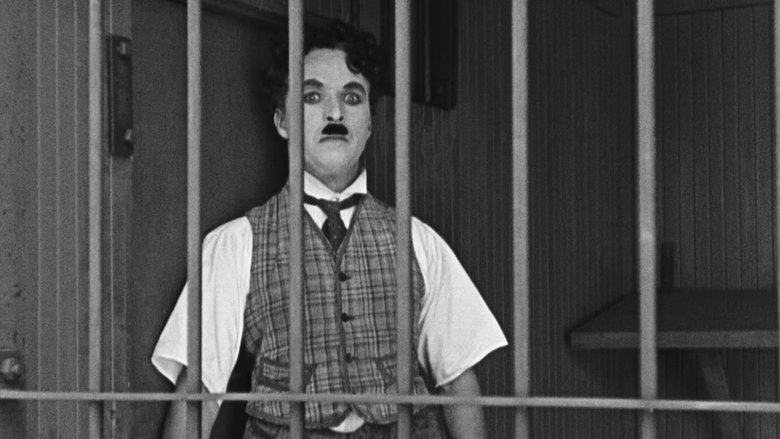
In Charlie Chaplin's The Circus, the Tramp is mistakenly identified as a pickpocket while at a carnival. Fleeing from the police, he stumbles into the main ring of a struggling circus during a performance. His frantic and clumsy attempts to evade the law are unintentionally hilarious to the audience, making him an instant star.

The cruel Ringmaster and proprietor hires him, but soon discovers the Tramp can only be funny by accident, not when he's trying. He is therefore hired as a poorly-paid property man who is unknowingly made the show's main attraction. During his time with the circus, the Tramp falls for Merna, the Ringmaster's beautiful and mistreated step-daughter, a horse rider. His heart is broken when she falls in love with the handsome and daring new tightrope walker, Rex.

Core Meaning

At its heart, The Circus is a poignant exploration of the nature of comedy, the pain of unrequited love, and the isolation of the outsider. The film suggests that true humor is spontaneous and unintentional, a product of circumstance rather than performance. Chaplin uses the circus as a metaphor for the world of cinema and his own precarious position within it, especially with the dawn of the 'talkie' era. The Tramp becomes a star by accident but is ultimately left behind, a solitary figure watching the world (the circus) move on without him. It is a deeply personal film about the pressure to be funny and the loneliness that can exist even amidst applause.

Thematic DNA

Unrequited Love and Self-Sacrifice 35%
The Nature of Comedy 30%
Illusion vs. Reality 20%
Alienation and Loneliness 15%

Unrequited Love and Self-Sacrifice

The central emotional arc of the film is the Tramp's love for Merna. He protects her from her abusive stepfather and dreams of a future with her, even buying a wedding ring. However, when he realizes she loves the tightrope walker, Rex, he selflessly facilitates their union, ensuring her happiness at the cost of his own. This theme of noble sacrifice is a hallmark of the Tramp character, highlighting his inherent goodness despite his lowly status.

The Nature of Comedy

The film delves into a meta-commentary on performance and humor. The Tramp is only funny when he isn't trying to be; his genuine mishaps and chaotic improvisations are what delight the crowd. When he attempts to perform rehearsed clown routines, he fails miserably. This suggests that true comedy springs from authenticity and spontaneity, not from artificial performance, a self-reflexive query Chaplin might have been posing to himself about his own art.

Illusion vs. Reality

The circus setting is inherently a world of artifice and performance. The film plays with this by contrasting the curated fun of the circus with the harsh reality of life behind the scenes, such as the Ringmaster's cruelty to Merna. The Tramp's entire success is based on an illusion; the audience thinks he is a brilliant clown, while in reality, he is just a bumbling property man. The film's famous hall of mirrors sequence visually represents this theme, fracturing the Tramp's identity and blurring the lines between who he is and who he appears to be.

Alienation and Loneliness

Despite finding temporary fame and community, the Tramp remains an outsider. He is exploited by the Ringmaster and ultimately cannot win the love of the woman he adores. The iconic final shot of the film sees the circus caravan disappearing into the distance, leaving the Tramp alone in the empty, scarred circle where the tent once stood. This powerful image encapsulates his perpetual state of solitude, a wanderer who can never truly belong. Film historian Jeffrey Vance sees this as a metaphor for Chaplin's own place in a changing cinema world with the advent of sound films.

Character Analysis

The Tramp

Charlie Chaplin

Archetype: The Lovable Outcast / Accidental Hero
Key Trait: Resilient

Motivation

His primary motivations are survival (finding food and evading the police) and, most importantly, winning the love and affection of Merna, the circus rider. He endures his exploitation by the Ringmaster to be near her and is driven to protect her from her father's cruelty.

Character Arc

The Tramp begins as a hungry and broke wanderer, and through a series of accidents, rises to become the star of a circus. He experiences hope, love, and fleeting fame. However, his arc is ultimately circular; after a selfless act of sacrifice for the woman he loves, he is once again left alone, walking down a road to nowhere, albeit with his resilient spirit intact.

Merna, The Ringmaster's Step-daughter

Merna Kennedy

Archetype: The Damsel in Distress
Key Trait: Hopeful

Motivation

Her main motivation is to find happiness, love, and escape from her abusive stepfather. She is drawn to the kindness of the Tramp but ultimately falls for the dashing and heroic Rex.

Character Arc

Merna starts as a victim of her stepfather's abuse, deprived of food and kindness. Through her friendship with the Tramp, she gains a protector and a confidant. He empowers her, securing better treatment for her. She ultimately finds happiness and escapes her oppressive life by falling in love with and marrying Rex, leaving the circus with a newfound sense of freedom.

The Circus Proprietor and Ringmaster

Al Ernest Garcia

Archetype: The Tyrant / The Exploiter
Key Trait: Cruel

Motivation

His sole motivation is profit. He is obsessed with the financial success of his circus and will exploit anyone, including his stepdaughter and the Tramp, to achieve it.

Character Arc

The Ringmaster is a static character who remains cruel and opportunistic throughout the film. He begins by abusing his stepdaughter and running a failing circus. He recognizes the Tramp's accidental comedic talent but chooses to exploit him for profit rather than reward him fairly. He shows no growth or redemption, serving as the film's primary antagonist.

Rex, a Tight Rope Walker

Harry Crocker

Archetype: The Romantic Rival
Key Trait: Dashing

Motivation

His motivation is to perform his daring act and win the affection of Merna. He is a rival to the Tramp but is not malicious, simply a more traditionally attractive romantic figure.

Character Arc

Rex is a handsome and skilled tightrope walker who is hired by the circus. He is a straightforward character who represents a more conventional and heroic ideal than the Tramp. He quickly wins Merna's heart and, with the Tramp's help, marries her, completing his simple arc as the successful suitor.

Symbols & Motifs

The Empty Circus Ring

Meaning:

The final shot of the empty ring symbolizes loneliness, impermanence, and the aftermath of a performance. It represents the space where joy and community once existed, now left desolate. For the Tramp, it is the physical remainder of his brief success and lost love, a circle that ultimately excludes him.

Context:

This is the film's final, poignant image. After the circus wagons depart with Merna and Rex, the Tramp is left sitting alone. He looks at a star-shaped piece of paper from one of Merna's hoops before picking himself up and jauntily walking away from the empty space, into the unknown.

The Tightrope

Meaning:

The tightrope symbolizes the precarious balance of life, love, and performance. For the Tramp, it represents the ultimate challenge to win Merna's affection by competing with his rival on his own terms. His chaotic walk, besieged by monkeys, is a metaphor for the overwhelming and absurd difficulties he faces, turning a feat of skill into a comedic nightmare.

Context:

In the film's climax, the Tramp is forced to replace Rex on the high wire. Having secretly practiced, he is still terrified, and his situation is made comically worse when mischievous monkeys escape and climb all over him as he tries to maintain his balance far above the crowd.

The Hall of Mirrors

Meaning:

The hall of mirrors symbolizes a fractured identity and the confusion between appearance and reality. As the Tramp navigates the maze of his own reflections, it reflects his fragmented sense of self, caught between being a penniless tramp, an accidental star, and a hopeful lover. The multiple images suggest the many facets of his persona and the difficulty of grasping his true identity.

Context:

Early in the film, while fleeing a policeman and a pickpocket, the Tramp runs into a funhouse hall of mirrors. The sequence creates visual chaos as he and his pursuers become lost in a disorienting world of endless reflections.

Memorable Quotes

For that you don't eat tonight.

— The Ringmaster

Context:

This is said by the Ringmaster to his stepdaughter, Merna, backstage after she makes a mistake during her horse-riding performance in the opening scene.

Meaning:

This line immediately establishes the Ringmaster's cruelty and the abusive environment Merna lives in. It sets up the stakes for her character and provides the Tramp with the opportunity to show his kindness and become her protector.

Where's the funny man?

— Audience Member (via intertitle)

Context:

The audience shouts this after the Tramp's accidental debut, when the regular, unfunny clowns come out to perform their act.

Meaning:

This recurring demand from the audience highlights the central theme of the film: the pressure to be funny. It underscores the irony that the 'funny man' they want is only funny by accident and is completely unaware of his stardom, adding to the film's meta-commentary on comedy.

I see love and marriage with a dark, handsome man who is near you now.

— Fortune Teller

Context:

A fortune teller says this to Merna. The Tramp, who is standing nearby, overhears and mistakenly assumes he is the subject of the prophecy.

Meaning:

This line is a pivotal moment of dramatic irony. The Tramp, overhearing it, believes it refers to him and is overjoyed. The audience soon learns, along with the heartbroken Tramp, that it actually refers to the new tightrope walker, Rex, setting up the film's central romantic conflict.

Can't you take me with you?

— Merna

Context:

Merna says this to the Tramp after he is fired by her stepfather. She runs away from the circus, hoping to join him.

Meaning:

This is a moment of desperation for Merna after the Tramp is fired for defending her. It shows her reliance on him and her desire to escape. The Tramp's subsequent actions, choosing to reunite her with Rex instead of running away with her himself, demonstrate his selfless love for her.

Philosophical Questions

What is the source of true comedy?

The film explores whether comedy is a deliberate act of performance or an accidental byproduct of life's chaos. The Tramp fails when he tries to be funny according to the clowns' scripted routines, but he is a sensation when he is simply being himself and reacting genuinely to chaotic situations. This raises the question of whether manufactured entertainment can ever be as potent as spontaneous, authentic human experience. It suggests that the most profound humor arises not from intention, but from the unscripted absurdity of existence.

Is it nobler to pursue personal happiness or to sacrifice it for the happiness of another?

The Circus places this classic ethical dilemma at the center of its emotional climax. The Tramp has the opportunity to try and win Merna for himself, or even run away with her when she asks. Instead, he recognizes that her true happiness lies with Rex and actively brings them together. The film presents this self-sacrifice as a profoundly noble and bittersweet act, suggesting that the highest form of love may be selfless and generous, even when it leads to personal heartbreak.

Can one ever truly belong when one is fundamentally an outsider?

The Tramp is an eternal outsider who temporarily finds a place within the circus community. He becomes its star and forms a meaningful bond with Merna. Yet, his position is built on a misunderstanding (his accidental fame) and his love is unreciprocated. The film's ending powerfully argues that for a character like the Tramp, belonging is always temporary. The circus, a society of fellow outsiders, ultimately moves on without him, leaving him to resume his solitary journey, reinforcing the idea that his true nature is to be alone.

Alternative Interpretations

The ending of The Circus is famously bittersweet and open to interpretation. One perspective is that it is a tragic conclusion, emphasizing the Tramp's ultimate failure to find love or a permanent place in society. He is left completely alone, his brief moment of stardom over, reinforcing his status as a perpetual outsider.

However, another, more optimistic reading sees the ending as a testament to the Tramp's resilience and nobility. By sacrificing his own happiness for Merna's, he achieves a moral victory. His final act of shrugging and jauntily walking away suggests an unbroken spirit. He is not defeated but is instead choosing his path, reaffirming his identity as a solitary wanderer who finds freedom in his independence. This interpretation views the ending not as a failure, but as a reaffirmation of the Tramp's essential character: bowed but never broken.

Furthermore, the film can be read as Chaplin's commentary on his own art and the transition to sound cinema. The circus, with its silent clowns and routines, 'moves on' without the Tramp, just as Hollywood was moving on from silent films. The Tramp's solitary walk away from the circus could be seen as Chaplin's defiant statement of artistic integrity, choosing to walk his own path rather than immediately conform to the new era of 'talkies'.

Cultural Impact

The Circus was released at a pivotal moment in cinema history, just as the silent era was giving way to sound. Despite the looming change, the film was a major box office success, becoming the seventh-highest grossing silent film in history and demonstrating the enduring power of pantomime and visual storytelling. It was critically acclaimed upon release, and its reputation has only grown over time, with many critics now considering it one of Chaplin's finest works, alongside The Gold Rush and City Lights.

The film's troubled production is legendary and speaks to Chaplin's resilience as an artist. He faced a studio fire, damaged negatives, a nervous breakdown, and a scandalous divorce, yet still created a masterpiece of comedy and pathos. For his work, the Academy of Motion Picture Arts and Sciences gave Chaplin a special, honorary award at the very first Academy Awards ceremony for his 'versatility and genius in acting, writing, directing, and producing The Circus.'

Its influence can be seen in countless subsequent films that blend comedy with melancholy. The final scene, in particular, is one of the most iconic and poignant endings in cinema, a powerful statement on loneliness and resilience that continues to resonate with audiences and filmmakers. The film's themes of the exploited performer and the bittersweet nature of fame have been revisited in many other works. Film historian Jeffrey Vance interprets the film as an autobiographical metaphor for Chaplin's own career, with the Tramp being left behind by the circus just as Chaplin felt the world of cinema was moving on from silent clowns.

Audience Reception

Upon its release in 1928, The Circus was very well-received by both audiences and critics. It was a significant commercial success, earning over $3.8 million and becoming one of the highest-grossing silent films of all time. Audiences praised the film for its brilliant blend of slapstick comedy and genuine pathos, a combination that had become Chaplin's signature. The intricate and daring set pieces, particularly the tightrope walk with the monkeys and the scene in the lion's cage, were celebrated as highlights of Chaplin's comedic genius. While some modern viewers find the love triangle's resolution to be abrupt, with Merna falling for Rex too quickly, the emotional core of the Tramp's sacrifice was largely praised. The film's bittersweet ending was particularly noted, leaving a lasting, poignant impression that elevated it beyond simple comedy.

Interesting Facts

  • The production of The Circus was the most difficult of Chaplin's career, plagued by numerous disasters. A studio fire destroyed the sets, the main circus tent was destroyed by gales, and early negatives were found to be scratched and unusable.
  • Production was halted for eight months due to Chaplin's bitter and highly public divorce from his second wife, Lita Grey. Fearing the film's assets would be seized, Chaplin had to smuggle the reels into hiding.
  • Chaplin suffered a nervous breakdown during the troubled production, and the stress reportedly caused his hair to turn white prematurely.
  • For the climactic tightrope scene, Chaplin actually learned to walk a tightrope and performed on a rope 40 feet in the air. The scene required over 700 takes.
  • The scene inside the lion's cage required around 200 takes, many of which involved Chaplin genuinely being inside the cage with the lion.
  • Despite being one of his most acclaimed films and winning him a special Academy Award, Chaplin completely omitted The Circus from his 1964 autobiography, likely due to the painful memories associated with its creation.
  • The film was released just three months after The Jazz Singer, which signaled the end of the silent era. The ending of The Circus is seen by some as an allegory for Chaplin and his Tramp character being left behind by a changing Hollywood.
  • In 1969, Chaplin re-released the film with a new musical score he composed himself, including a title song, "Swing Little Girl," which he sang at the age of 79.
  • A bizarre urban legend emerged in 2010 when footage from the film's 1928 premiere appeared to show a person walking by while seemingly talking on a cell phone, sparking 'time traveler' theories.

⚠️ Spoiler Analysis

Click to reveal detailed analysis with spoilers

Frequently Asked Questions

Explore More About This Movie

Dive deeper into specific aspects of the movie with our detailed analysis pages

Comments (0)

Leave a comment

No comments yet. Be the first to share your thoughts!