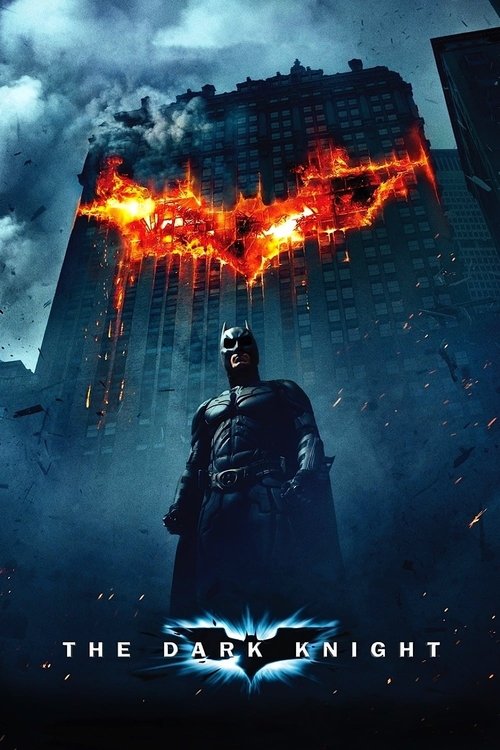
The Dark Knight
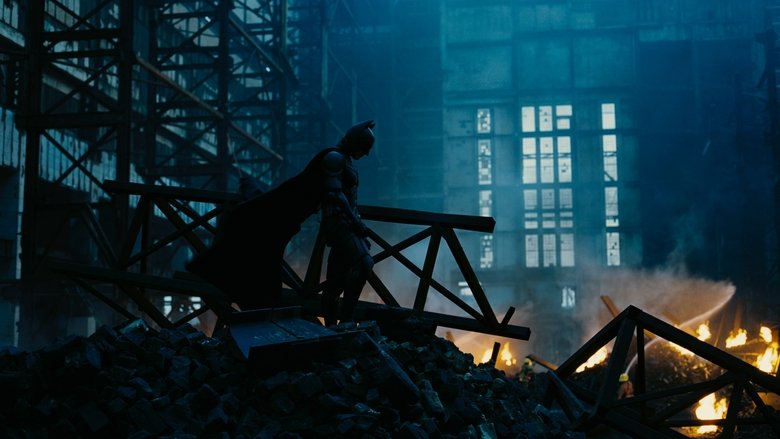
A haunting crime saga painted in shades of bruised twilight, where the clash between order and anarchy becomes a visceral, psychological ballet.
The Dark Knight
The Dark Knight

"Welcome to a world without rules."

16 July 2008 United Kingdom 152 min ⭐ 8.5 (34,482)
Director: Christopher Nolan
Cast: Christian Bale, Heath Ledger, Aaron Eckhart, Michael Caine, Maggie Gyllenhaal
Drama Crime Action Thriller
Order vs. Chaos Heroism and Sacrifice Duality and the Fragility of Morality Escalation
Budget: $185,000,000
Box Office: $1,004,558,444

The Dark Knight - Movie Quotes

Memorable Quotes

Why so serious?

— The Joker

Context:

The Joker delivers this line in multiple scenes, each time offering a different, contradictory story about how he got his facial scars. One account involves his abusive father, and another involves self-mutilation for his wife. This use of the line underscores his unreliable and purely chaotic nature.

Meaning:

This is the Joker's iconic, chilling catchphrase. It encapsulates his worldview, mocking the gravity and order that others try to impose on life. It's a taunt that highlights his love for chaos and his twisted perception of the world as a grim joke. The line is used to intimidate and unsettle his victims and adversaries, exposing the madness beneath his humor.

You either die a hero, or you live long enough to see yourself become the villain.

— Harvey Dent

Context:

Spoken by Harvey Dent during a dinner with Bruce Wayne, Rachel Dawes, and his date. They are discussing Batman's role in Gotham and the nature of heroism. The line becomes tragically ironic as it perfectly describes his own fate.

Meaning:

This quote is the thematic core of the film, a profound statement on the corrupting influence of a dark world on even the most noble intentions. It foreshadows Harvey's own tragic transformation into the vengeful Two-Face and also reflects Batman's ultimate decision to become a villain in the public's eye to protect Harvey's heroic legacy.

Some men just want to watch the world burn.

— Alfred Pennyworth

Context:

Alfred says this to Bruce as they struggle to comprehend the Joker's actions after he burns a mountain of the mob's money. Alfred recounts a story from his past about a bandit in Burma who was stealing for the thrill of it, drawing a parallel to the Joker's incomprehensible and anarchic nature.

Meaning:

Alfred's observation provides Bruce Wayne—and the audience—with the clearest explanation of the Joker's motivations. It defines a new type of enemy who operates outside the logical frameworks of crime. The Joker cannot be understood through conventional means because his goal is not material gain but destruction and chaos for its own sake. This quote has become a widely used expression to describe senseless, destructive behavior.

I'm an agent of chaos.

— The Joker

Context:

The Joker says this to a hospitalized and disfigured Harvey Dent. He is manipulating Dent, absolving himself of direct responsibility for Rachel's death and blaming the 'schemers' of Gotham. This conversation is the final 'push' that corrupts Dent and turns him into Two-Face.

Meaning:

This is the Joker's explicit self-identification and a declaration of his philosophical mission. He explains that while others, like the mob or the police, are 'schemers' trying to control their worlds, he is a force that exists to dismantle that control by introducing anarchy. It cements his role not just as a criminal, but as an ideological opponent to the very concept of societal order.

Because he's the hero Gotham deserves, but not the one it needs right now. So we'll hunt him. Because he can take it. Because he's not our hero. He's a silent guardian, a watchful protector. A dark knight.

— James Gordon

Context:

Gordon delivers this speech to his son as they watch Batman flee from the police at the site of Harvey Dent's death. He has just destroyed the Bat-Signal, and the city's law enforcement now sees Batman as a murderer and an enemy.

Meaning:

This final monologue powerfully defines the film's concept of heroism as a thankless, sacrificial role. It explains why Batman must become a fugitive, taking the blame for Two-Face's crimes to preserve the symbol of hope that Harvey Dent represented. It cements Batman's new title, the 'Dark Knight,' a hero who operates from the shadows, accepts being vilified, and endures it all for the city's greater good.