"A true story of courage and human dignity."
The Elephant Man - Symbolism & Philosophy
Symbols & Motifs
The Cathedral Model
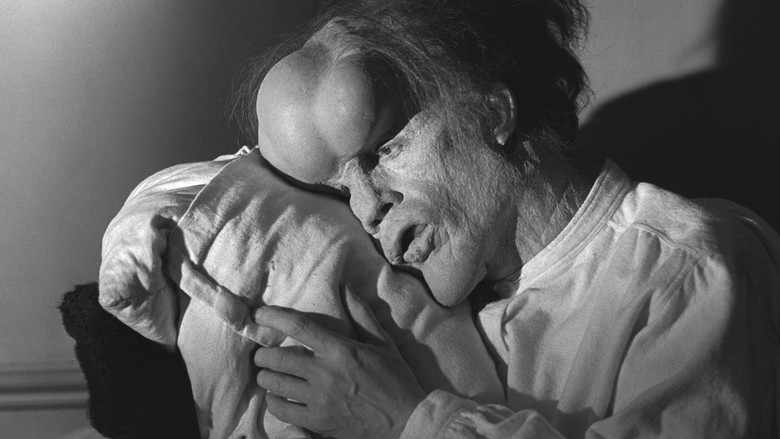
The model of the cathedral that Merrick builds represents his own soul, his quest for grace, and his creation of beauty and order out of a life of chaos and suffering. It is an "imitation of grace flying up and up from the mud." As he builds it, his own social and inner world becomes more complete. Its completion coincides with his feeling of final acceptance, allowing him to find peace.
Merrick sees the spires of a cathedral from his hospital window and dedicates himself to recreating it. The progress of the model often mirrors his own journey toward acceptance. When he is abused by the night porter, the model is disturbed. He finishes it just before his death, after attending the theatre and receiving a standing ovation, signifying that his life's work of being seen as human is complete.
The Hood and Mask
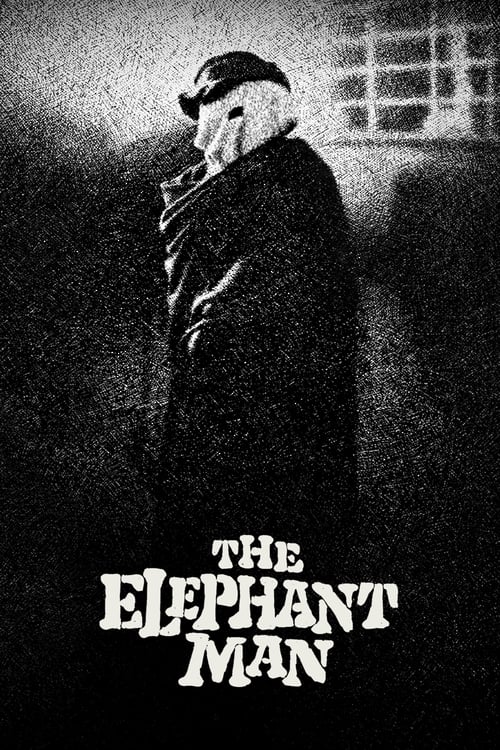
The hood and mask that Merrick wears symbolize his forced alienation from society. They are tools to hide his appearance and make him palatable for public view, effectively erasing his identity to prevent others' discomfort. When the mob tears it from him at the train station, it is a violent stripping of his last defense, forcing him into the open to be judged.
Dr. Treves first provides Merrick with a hood and cap to travel to and from the hospital without causing a scene. Merrick is constantly seen under some form of covering in public. The most dramatic use is at the Liverpool Street Station, where he is cornered by a mob and his hood is torn off, leading to his desperate cry, "I am not an animal!".
Industrial Machinery
The recurring imagery of smokestacks, steam, and harsh industrial machinery represents the oppressive, dehumanizing forces of Victorian society. This industrial world is as uncaring and monstrous as the mobs that torment Merrick. Lynch visually links the explosive, uncontrolled growth of Merrick's tumors to the chaotic, powerful, and often destructive nature of the industrial revolution. Dr. Treves even remarks, "Abominable things these machines—you can't reason with them."
The film is filled with shots of factories, loud machinery, and smoke. The sound design often incorporates industrial noises, creating an atmosphere of dread and oppression. This imagery contrasts sharply with the quiet, gentle moments of human connection Merrick experiences in his room.
Mirrors and Reflections
Mirrors symbolize self-awareness, identity, and the horror of Merrick's own condition. For most of his life, he has been shielded from his own reflection. When confronted with it, he is frightened not just by his appearance, but by the confirmation of how the world sees him. It represents the inescapable reality of his physical self.
In a key scene, the cruel night porter, Jim, forces a mirror in front of Merrick's face, a moment of profound psychological abuse. His fear of his own reflection is one of his deepest terrors, mentioned alongside the trauma of his mother's supposed accident with an elephant. This contrasts with how others serve as mirrors for him; through their kindness, he begins to see a reflection of a worthy human being.
Philosophical Questions
What is the true nature of humanity?
The film relentlessly explores whether humanity is defined by outward appearance or inner qualities. It contrasts John Merrick, who is physically monstrous but embodies kindness, intelligence, and grace, with characters who are physically "normal" but act with monstrous cruelty and prejudice. The film suggests that core human virtues like empathy, creativity, and the capacity to love are the true measures of a person, forcing the audience to question their own criteria for judging others.
What are the ethics of 'helping'?
Through Dr. Treves, the film examines the fine line between compassion and exploitation. Treves rescues Merrick from abject cruelty, but in doing so, he also makes him a subject of medical study and a spectacle for London's elite. The film raises questions about the motivations behind charity and care. Is it truly for the benefit of the afflicted, or does it also serve the ego and reputation of the benefactor? Mrs. Mothershead's accusation that Treves is still running a freak show, just with a "better class of people," crystallizes this dilemma.
Can one find beauty and purpose in profound suffering?
Merrick's life is one of almost unimaginable suffering, yet he is not portrayed as merely a victim. He is a creator, an artist who builds the beautiful cathedral model. He has a deep appreciation for literature, art, and religion. The film explores the idea that even in the darkest circumstances, the human spirit can find and create beauty. Merrick's gentle nature and lack of bitterness suggest a capacity for grace that transcends his physical pain, posing the question of whether suffering can lead to a deeper understanding of life's meaning.
Core Meaning
The core meaning of "The Elephant Man" is a profound exploration of human dignity and the essence of humanity itself. Director David Lynch poses the question: What defines a man? Is it his appearance or the quality of his soul? The film argues that true humanity lies not in physical form but in kindness, intelligence, creativity, and the capacity for love. It serves as a powerful critique of a society that judges, fears, and exploits what it doesn't understand, contrasting the cruelty of the mob with the quiet grace of a man who, despite immense suffering, never loses his gentle spirit. Ultimately, the film is a testament to the idea that love and acceptance are what make life truly full and meaningful.