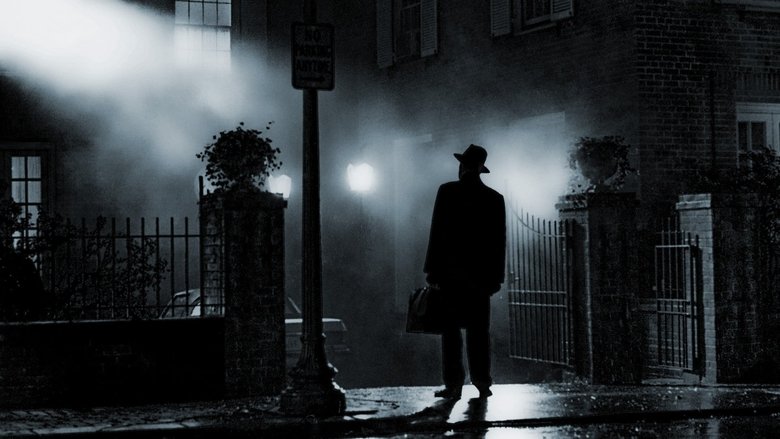
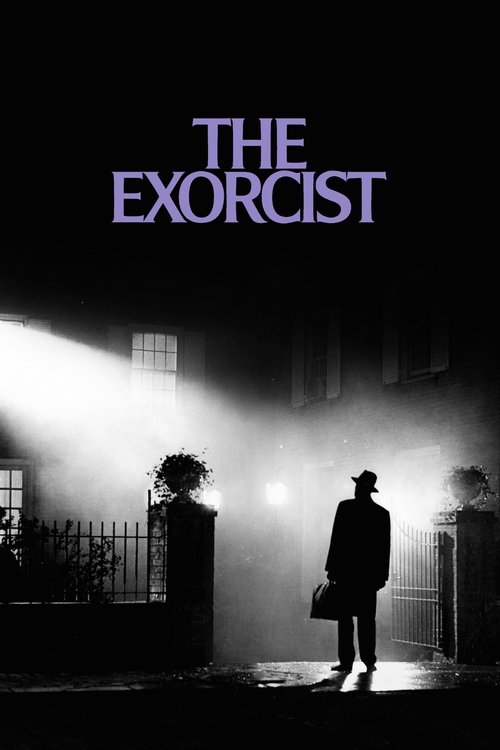
"Something almost beyond comprehension is happening to a girl on this street, in this house…And a man has been sent for as a last resort. This man is The Exorcist."
The Exorcist - Symbolism & Philosophy
Symbols & Motifs
The Hitchcock Steps (The Stone Stairs)
They represent a steep, dangerous descent into hell and a sudden, violent exit from the world. Visually, they suggest a precipice between the safety of the street and the darkness of the MacNeil home.
Located beside the MacNeil house, these steep stairs are where Karras falls to his death, transforming a fatal plunge into an act of spiritual ascension and sacrifice.
The St. Joseph Medallion
A symbol of protection and fatherly care. Its loss and recovery signify the loss and restoration of faith.
Chris finds the medal (which belonged to Karras) near the climax. The demon rips it from Karras's neck, symbolizing the stripping away of his defenses, but Karras reclaims his purpose through sacrifice.
Pazuzu Statue
An ancient symbol of the wind demon, representing a pre-Christian, primordial evil that predates modern rationality.
Seen in the opening Iraq sequence standing defiant against the sun and Father Merrin, establishing the timeless rivalry between the priest and the demon.
Extreme Cold / Breath
The unnatural drop in temperature in Regan's room symbolizes the presence of death and the unholy, creating a physical boundary between the demon's domain and the rest of the house.
Whenever the entity manifests strongly, the actors' breath becomes visible (achieved practically by freezing the set), emphasizing the chilling isolation of the possession.
Philosophical Questions
Does the existence of Evil prove the existence of God?
The film suggests that if such profound, unnatural evil exists, then a benevolent counterpart must also exist to combat it. Karras finds his faith not through a miracle of light, but through the undeniable reality of darkness.
Why does the innocent suffer?
The film grapples with the Problem of Evil. Regan has done nothing to deserve possession. The film suggests the suffering of the innocent serves a grim purpose: to test the faith and love of those around them, forcing them to confront their own spiritual voids.
Core Meaning
At its heart, The Exorcist is not merely a horror film about a monster, but a profound exploration of the mystery of faith. Director William Friedkin and writer William Peter Blatty intended to show that in a modern, scientific world where God is often silent, the undeniable presence of absolute Evil can ironically serve as proof of the spiritual realm. The film posits that faith is not a passive state but an active, often painful struggle, and that love—specifically the sacrificial love of a parent or a priest—is the ultimate weapon against darkness.