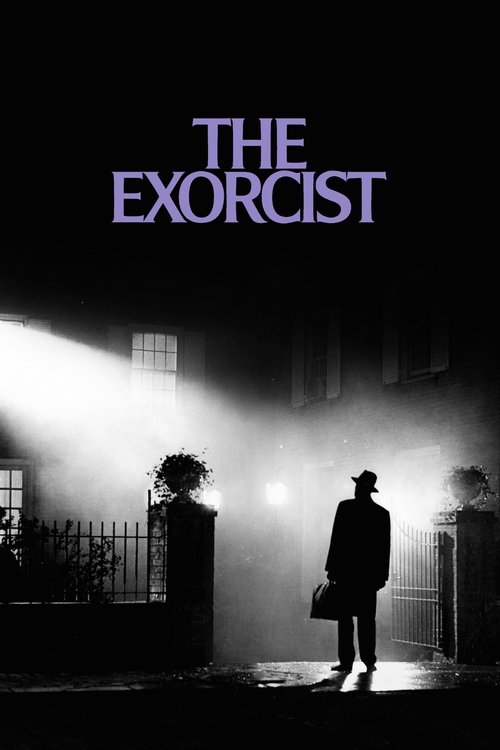
The Exorcist
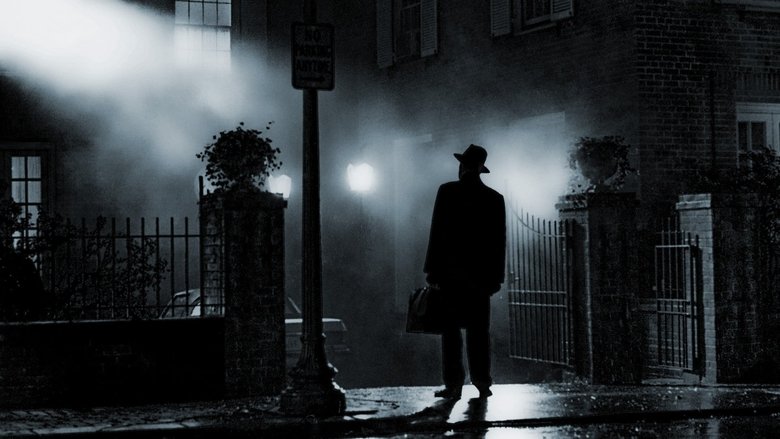
A visceral descent into supernatural dread where documentary realism collides with ancient evil. Amidst the mundane silence of Georgetown, a mother's desperate love battles a demon for her daughter's soul, culminating in a chilling, foggy plunge from grace to redemption.
The Exorcist

The Exorcist

"Something almost beyond comprehension is happening to a girl on this street, in this house…And a man has been sent for as a last resort. This man is The Exorcist."

26 December 1973 United States of America 122 min ⭐ 7.7 (8,431)
Director: William Friedkin
Cast: Ellen Burstyn, Linda Blair, Jason Miller, Max von Sydow, Lee J. Cobb
Horror
The Crisis of Faith vs. Modern Science The Nature of Evil Parental Guilt and Helplessness
Budget: $12,000,000
Box Office: $441,306,145

Overview

In Northern Iraq, the elderly archaeologist and priest Father Lankester Merrin unearths a small amulet of the demon Pazuzu, sensing the return of an ancient evil he has battled before. Meanwhile, in Georgetown, Washington D.C., famous actress Chris MacNeil begins to notice disturbing changes in her 12-year-old daughter, Regan. What starts as odd noises in the attic and imaginary friends escalates into violent seizures, profanity, and telekinesis, baffling medical experts who subject the girl to grueling, invasive tests with no results.

As Regan's condition deteriorates into full-blown grotesquerie, doctors admit defeat and hesitantly suggest an exorcism as a psychosomatic last resort. Desperate, Chris turns to Father Damien Karras, a young Jesuit psychiatrist struggling with his own crisis of faith and the guilt of his mother's death. Initially skeptical, Karras is eventually convinced of the paranormal nature of Regan's affliction and the Church summons Father Merrin to lead the ritual. Together, the two priests lock themselves in the freezing bedroom to wage a spiritual war against the entity claiming to be the Devil himself.
Core Meaning

At its heart, The Exorcist is not merely a horror film about a monster, but a profound exploration of the mystery of faith. Director William Friedkin and writer William Peter Blatty intended to show that in a modern, scientific world where God is often silent, the undeniable presence of absolute Evil can ironically serve as proof of the spiritual realm. The film posits that faith is not a passive state but an active, often painful struggle, and that love—specifically the sacrificial love of a parent or a priest—is the ultimate weapon against darkness.

Thematic DNA

The Crisis of Faith vs. Modern Science 40%
The Nature of Evil 30%
Parental Guilt and Helplessness 30%

The Crisis of Faith vs. Modern Science

The film juxtaposes the sterile, cold, and mechanical world of modern medicine with the ancient, ritualistic power of the Church. Father Karras serves as the bridge between these worlds; as a psychiatrist, he seeks rational explanations (lesions, psychosis), but as a priest, he confronts a reality science cannot explain. The failure of the doctors—depicted in brutal, clinical detail—paves the way for the necessity of faith.

The Nature of Evil

Evil is portrayed not as a grand, abstract concept, but as a dirty, obscenity-laden, physical invasive force. It degrades the human body and dignity to make the observers despair and reject their own humanity. The demon's goal is not just to kill the girl, but to destroy the faith and hope of those around her by displaying ultimate ugliness.

Parental Guilt and Helplessness

Chris MacNeil represents the secular parent who can buy anything for her child but cannot save her from suffering. Her arc highlights the terrifying vulnerability of parenthood. Simultaneously, Karras carries the crushing guilt of abandoning his own mother to die alone in a squalid apartment, a weakness the demon ruthlessly exploits.

Character Analysis

Father Damien Karras

Jason Miller

Archetype: The Tragic Hero / The Doubter
Key Trait: Empathy

Motivation

To find the truth behind Regan's illness and to absolve his own guilt regarding his mother's death.

Character Arc

Starts as a man of science and a priest who has lost his faith, tormented by guilt over his mother's neglect. Through the ordeal with Regan, he exhausts all rational explanations and is forced to confront the spiritual reality. His arc concludes with a Christ-like self-sacrifice, regaining his faith in his final moments.

Chris MacNeil

Ellen Burstyn

Archetype: The Desperate Mother
Key Trait: Resilience

Motivation

To save her daughter at any cost.

Character Arc

A successful, secular woman used to controlling her life, she is stripped of her agency as science fails her daughter. She moves from disbelief to desperation, ultimately humbling herself to ask for religious intervention she doesn't fully understand.

Father Lankester Merrin

Max von Sydow

Archetype: The Mentor / The Warrior
Key Trait: Steadfastness

Motivation

To defeat the ancient enemy he faced before and save the innocent.

Character Arc

He is the spiritual anchor of the film, a man who knows the enemy intimately. He arrives knowing he may not survive the encounter. He represents unwavering faith and the 'old guard' of the Church.

Regan MacNeil

Linda Blair

Archetype: The Innocent / The Vessel
Key Trait: Innocence

Motivation

N/A (Possessed for the majority of the film)

Character Arc

Regan begins as a sweet, normal child and becomes a prisoner in her own body, a puppet for the demon's obscenities. Her arc is one of victimization and eventual liberation, though she remembers nothing of the trauma.

Symbols & Motifs

The Hitchcock Steps (The Stone Stairs)

Meaning:

They represent a steep, dangerous descent into hell and a sudden, violent exit from the world. Visually, they suggest a precipice between the safety of the street and the darkness of the MacNeil home.

Context:

Located beside the MacNeil house, these steep stairs are where Karras falls to his death, transforming a fatal plunge into an act of spiritual ascension and sacrifice.

The St. Joseph Medallion

Meaning:

A symbol of protection and fatherly care. Its loss and recovery signify the loss and restoration of faith.

Context:

Chris finds the medal (which belonged to Karras) near the climax. The demon rips it from Karras's neck, symbolizing the stripping away of his defenses, but Karras reclaims his purpose through sacrifice.

Pazuzu Statue

Meaning:

An ancient symbol of the wind demon, representing a pre-Christian, primordial evil that predates modern rationality.

Context:

Seen in the opening Iraq sequence standing defiant against the sun and Father Merrin, establishing the timeless rivalry between the priest and the demon.

Extreme Cold / Breath

Meaning:

The unnatural drop in temperature in Regan's room symbolizes the presence of death and the unholy, creating a physical boundary between the demon's domain and the rest of the house.

Context:

Whenever the entity manifests strongly, the actors' breath becomes visible (achieved practically by freezing the set), emphasizing the chilling isolation of the possession.

Memorable Quotes

The power of Christ compels you!

— Father Merrin

Context:

During the climax of the exorcism, as Merrin and Karras sprinkle holy water on the levitating Regan.

Meaning:

The ultimate assertion of faith and divine authority over evil, repeated as a mantra of spiritual warfare.

What an excellent day for an exorcism.

— The Demon (Regan)

Context:

Spoken to Father Karras when he first enters the room and introduces himself, establishing the entity's awareness and malice.

Meaning:

A chilling display of the demon's confidence and mockery of the priests' efforts.

I think the point is to make us despair. To see ourselves as... animal and ugly. To reject the possibility that God could love us.

— Father Merrin

Context:

Spoken quietly to Karras during a break in the exorcism, explaining the demon's psychological strategy.

Meaning:

The thematic thesis of the film: the demon's target is not just the girl's body, but the observers' faith in humanity and God.

There are no experts.

— Father Karras

Context:

Karras explaining to Chris that modern exorcisms are rare and there is no simple 'fix' available.

Meaning:

Highlights the isolation of the characters; even the Church is unprepared for this level of ancient evil.

Philosophical Questions

Does the existence of Evil prove the existence of God?

The film suggests that if such profound, unnatural evil exists, then a benevolent counterpart must also exist to combat it. Karras finds his faith not through a miracle of light, but through the undeniable reality of darkness.

Why does the innocent suffer?

The film grapples with the Problem of Evil. Regan has done nothing to deserve possession. The film suggests the suffering of the innocent serves a grim purpose: to test the faith and love of those around them, forcing them to confront their own spiritual voids.

Alternative Interpretations

While explicitly supernatural, the film can be read as an allegory for parental anxiety in the face of a child's puberty. Regan's changes—cursing, sexual aggression, changing body, rebellion against the mother—mirror a terrifyingly accelerated adolescence that the parent cannot control. Another interpretation focuses on psychosomatic hysteria: until the furniture starts flying, much of the phenomenon could theoretically be explained by the collective stress and guilt of the characters manifesting in a shared delusion, though the film heavily favors the supernatural explanation by the end.

Cultural Impact

The Exorcist is a watershed moment in cinema history. Released during the cynical 1970s (post-Vietnam, Watergate), it struck a nerve by presenting evil not as a human flaw but as a literal, invading force. It legitimized the horror genre, proving it could be high art worthy of Oscar nominations. The film sparked a massive cultural conversation about religion, the occult, and the limits of science. Theaters saw lines around the block, and the media frenzy over audience reactions (vomiting, fainting) created a 'forbidden fruit' allure. It established the template for every possession movie that followed, cementing tropes like the levitating bed, the pea-soup vomit, and the contorted body.

Audience Reception

Upon release, the reception was polarized but intense. Critics like Roger Ebert praised it as a 'raw and painful experience,' while others condemned it as 'religious pornography' or exploitative trash. Audiences were terrified, with reports of mass hysteria becoming part of the film's legend. Over time, the criticism of it being 'gross-out' horror has faded, and it is now universally acclaimed as a masterwork of tension, atmosphere, and performance, consistently ranking as one of the scariest films ever made.

Interesting Facts

  • The set of Regan's bedroom was built inside a refrigerated cocoon to make the actors' breath visible; it was so cold that snow would fall from the humidity.
  • The 'cursed set' burned down during production, delaying filming by six weeks. Surprisingly, Regan's room was the only part left untouched by the fire.
  • Mercedes McCambridge, who provided the voice of the demon, swallowed raw eggs, chain-smoked, and drank whiskey to achieve the raspy, terrifying vocal quality.
  • Linda Blair and Ellen Burstyn both suffered permanent back injuries during filming due to the violent harnesses used for the thrashing and stunts.
  • The film was the first horror movie to be nominated for the Academy Award for Best Picture.
  • Audience reactions in 1973 were unprecedented; paramedics were often called to theaters to treat patrons who had fainted or become hysterical.
  • The famous 'spider walk' scene was filmed for the original release but cut by director William Friedkin because the wires were visible; it was restored in the 2000 'Version You've Never Seen'.
  • The white face that flashes subliminally during Karras's dream is a makeup test for the demon that was rejected for the main film but used by Friedkin for psychological effect.

Easter Eggs

Captain Howdy / Pazuzu Face

A grotesque white face with red lips flashes on screen for a fraction of a second during Karras's dream and the exorcism. It represents the demon taunting the subconscious mind.

The sound of pigs

When the demon is struggling or being cast out, the sound mix includes the squealing of pigs, a biblical reference to the Legion of demons Jesus cast into swine.

Help Me

The words 'Help Me' appear as raised welts on Regan's stomach. While a plot point, it serves as a visual plea from the trapped child inside, distinguishing the vessel from the possessor.

⚠️ Spoiler Analysis

Click to reveal detailed analysis with spoilers

Frequently Asked Questions

Explore More About This Movie

Dive deeper into specific aspects of the movie with our detailed analysis pages

Comments (0)

Leave a comment

No comments yet. Be the first to share your thoughts!