El ángel exterminador
"The degeneration of high society!"
The Exterminating Angel - Symbolism & Philosophy
Symbols & Motifs
The Open Doorway
The open but impassable doorway symbolizes the invisible, psychological barriers that confine people. It represents the self-imposed limitations of social convention, class norms, and mental inertia. The barrier is not physical but entirely in the minds of the guests, suggesting that freedom is often a state of mind and that people can be prisoners of their own etiquette and lack of will.
The central premise of the film revolves around the guests' inability to cross the threshold of the music room to leave the party. They approach the exit but always find a reason to turn back. This is mirrored by the crowd outside, who cannot bring themselves to enter the mansion gates.
Sheep
The sheep are a multivalent symbol. On one level, they represent innocence and passivity, contrasting with the devolving savagery of the human guests. They can also be interpreted as religious symbols, representing the Lamb of God or a sacrificial offering, especially since they are slaughtered and eaten in a desperate, almost ritualistic manner. In the final scene, a flock of sheep entering the church reinforces the idea of the congregation as a mindless flock, blindly following ritual.
A bear and three sheep are part of a planned surprise for the guests. The sheep later wander into the salon where the trapped guests are starving. They are captured and roasted over a makeshift fire. In the film's final shot, a flock of sheep is seen entering the cathedral where the characters have become trapped again.
Repetition
Buñuel uses repetition to disorient the viewer and to critique the ritualistic, cyclical nature of bourgeois life. The repeated entrance of the guests suggests that their lives are a series of meaningless, repeated actions. The eventual escape is achieved only through a conscious, meticulous re-enactment of the moments before they were trapped, suggesting that breaking a cycle requires awareness of the repetition itself. However, the ending implies humanity is doomed to repeat its mistakes.
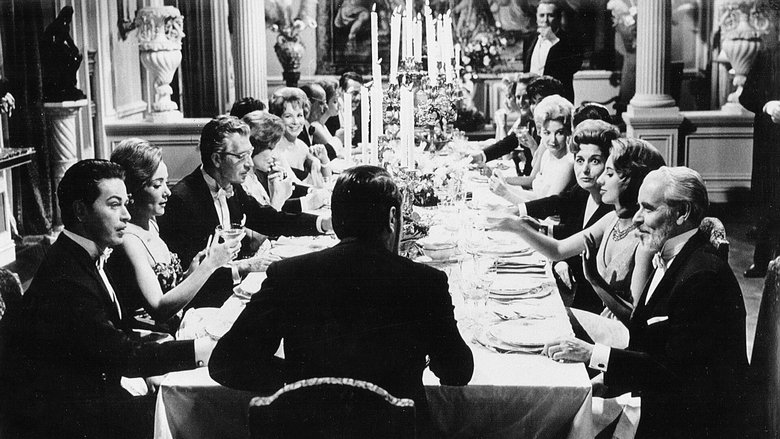
Several scenes are repeated with slight variations. Most notably, the guests' arrival at the mansion is shown twice at the beginning of the film. The hostess's toast is also repeated. The key to their escape is Leticia's realization that they must repeat the exact words and actions from the first night.
The Severed Hand
A classic Buñuelian and surrealist image, the severed hand represents themes of irrationality, desire, and the grotesque breaking through into reality. It echoes similar imagery from his first film, "Un Chien Andalou," and is often linked to Freudian concepts of castration and repressed fears. It serves as a purely jarring, dream-like element that defies logical interpretation within the narrative.
The severed hand appears in a dream or hallucination. One of the female guests dreams of it, and it crawls across the floor. Another character has a nightmare where they are tormented by a disembodied hand.
Philosophical Questions
What is the true nature of civilization and social order?
The film posits that civilization is a thin veneer, a collection of arbitrary rituals and etiquette that masks a more primal, savage human nature. By removing the ability for the guests to leave, Buñuel strips away the external structures of their lives, forcing them to confront their own inner emptiness and brutality. The rapid descent into chaos questions whether social order is an inherent human trait or merely a fragile construct, easily shattered by unexplained circumstances.
Are we prisoners of our own routines and social conventions?
The psychological, rather than physical, nature of the guests' imprisonment suggests that the most powerful cages are the ones we build for ourselves. Their inability to simply walk through a door reflects a profound inertia and an enslavement to social norms and unspoken rules. The film asks whether our daily routines, social hierarchies, and accepted behaviors are forms of freedom or subtle forms of confinement that prevent authentic action and thought.
Can reason and logic prevail against the irrational?
Through the character of Dr. Conde, the film explores the limits of rationality. Despite his calm, logical approach, he is powerless to stop the group's slide into hysteria, superstition, and violence. Buñuel, a true surrealist, challenges the primacy of reason, suggesting that human existence is fundamentally governed by unconscious, absurd, and irrational forces that science and logic cannot explain or control.
Core Meaning
Luis Buñuel intended "The Exterminating Angel" as a devastating critique of the bourgeoisie, exposing their moral hollowness and the superficiality of their social rituals. The film suggests that beneath their refined exteriors, the ruling class harbors savage instincts that emerge when the structures of society collapse. The inexplicable entrapment serves as a metaphor for the self-imposed prisons of convention, ritual, and class structure. Buñuel himself resisted a single explanation, stating, "The best explanation of this film is that, from the standpoint of pure reason, there is no explanation." This highlights the film's surrealist nature, aiming to explore the irrational and unconscious forces that govern human behavior, suggesting that societal norms are arbitrary and can easily crumble, revealing a more primal human nature underneath.