Skip to content
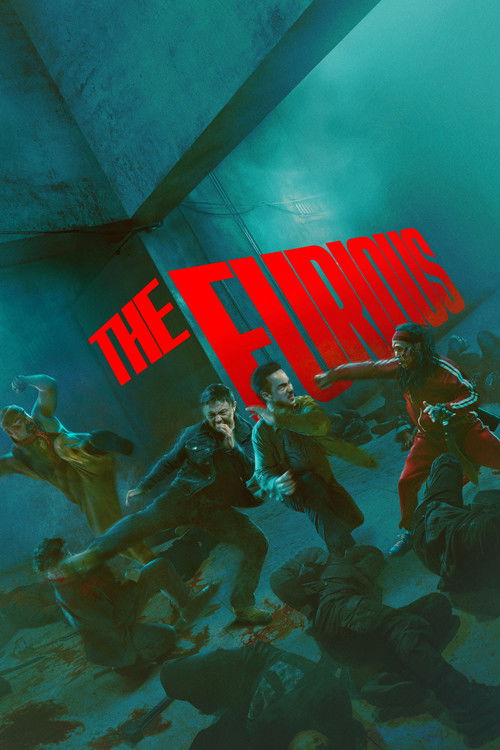
The Furious
A gritty martial arts thriller pulsing with paternal grief. Amidst a chaotic, blood-soaked underworld, a silent father's vengeance becomes a kinetic symphony of shattered ice and flying fists, tearing down an empire of corruption to reclaim his stolen light.
The Furious

The Furious

火遮眼

"To save their loved ones, they will fight everyone."

10 June 2026 Hong Kong 113 min 7.4 (212)

Director: Kenji Tanigaki

Cast: Xie Miao, Joe Taslim, Yang Enyou, Yayan Ruhian, JeeJa Yanin

Crime Action Thriller The Depths of Paternal Devotion Institutional Corruption and Apathy Grief as a Catalyst for Rage The Power of the Voiceless
Budget: $20,000,000
Box Office: $36,653,413

Overview

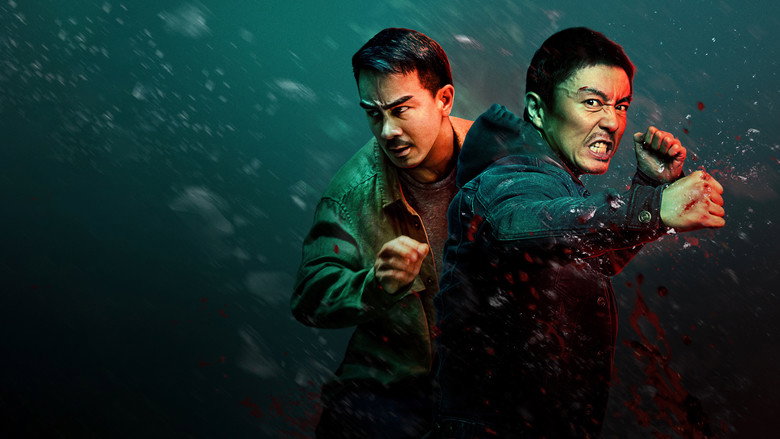
Set in a nameless, corruption-riddled city in Southeast Asia, The Furious follows the harrowing journey of Wang Wei, a widowed and mute handyman. When his young daughter, Rainy, is kidnapped by a ruthless human trafficking syndicate right off the streets, Wei's desperate pleas to the local police fall on deaf ears. Realizing that the law will not help him, he sheds his quiet life and embarks on a brutal, one-man crusade to track down the criminals responsible.

During his relentless pursuit, Wei crosses paths with Navin, a fiercely determined journalist whose wife, Matia, vanished while investigating the very same trafficking ring. Driven by parallel traumas of love and loss, the two men form an unlikely alliance. Together, they carve a violent path through the city's criminal underbelly, transforming everyday environments—from back alleys to an ice factory—into arenas of survival as they fight their way to the top of the syndicate.
Core Meaning

At its core, The Furious explores the terrifying lengths to which a parent will go when driven by sheer grief and love. Director Kenji Tanigaki strips away the romanticism of traditional heroism, replacing it with raw, primal desperation. The film suggests that in a society plagued by systemic corruption and institutional failure, ordinary people are forced to become monsters to protect the innocent. Wei's muteness acts as a powerful metaphor for the marginalized and voiceless, proving that when words fail against systemic evil, relentless, visceral action becomes the only universal language.

Thematic DNA

The Depths of Paternal Devotion 40%
Institutional Corruption and Apathy 25%
Grief as a Catalyst for Rage 25%
The Power of the Voiceless 10%

The Depths of Paternal Devotion

Wang Wei's entire journey is fueled by a desperate, unconditional love for his daughter. The film showcases how a seemingly ordinary, quiet father transforms into an unstoppable force of nature when his child is threatened, highlighting the primal instinct to protect one's kin.

Institutional Corruption and Apathy

The unnamed Southeast Asian city is depicted as a morally bankrupt wasteland where the police are indifferent and complicit. This theme underscores the helplessness of the lower class and serves as the catalyst for the protagonists' vigilante justice.

Grief as a Catalyst for Rage

Both Wang Wei and Navin are bound by profound loss. Navin's agonizing search for his missing wife parallels Wei's hunt for his daughter. The film illustrates how unaddressed sorrow curdles into a furious, violent vengeance that leaves no room for mercy.

The Power of the Voiceless

Wang Wei's inability to speak amplifies his physical presence. In a world full of empty political promises and corrupt deals, his silence speaks volumes, demonstrating that true resolve is shown through actions rather than words.

Character Analysis

Wang Wei

Xie Miao

Archetype: The Relentless Father (Avenging Hero) Key Trait: Mute and fiercely protective.

Motivation

To rescue his kidnapped daughter, Rainy, at any cost.

Character Arc

Wei begins as a passive, grieving widower trying to make an honest living. When his daughter is taken, he sheds his pacifism, devolving into a primal warrior, ultimately finding closure by reclaiming his child and returning to his role as a protector.

Navin

Joe Taslim

Archetype: The Broken Crusader (Ally) Key Trait: Relentless and traumatized.

Motivation

To uncover the truth behind his wife Matia's disappearance and tear down the trafficking ring responsible.

Character Arc

Navin starts as an isolated, desperate journalist consumed by the disappearance of his wife. By teaming up with Wei, he channels his despair into focused retribution, finding a sense of brotherhood and grim purpose in dismantling the organization.

Tak

Yayan Ruhian

Archetype: The Elite Enforcer (Dragon) Key Trait: Sadistic precision (wielding a bow and arrow/kukri).

Motivation

To protect the syndicate's operations and eliminate anyone who threatens their criminal empire.

Character Arc

As a high-ranking lieutenant of the trafficking syndicate, Tak acts as a terrifying physical barrier for the heroes. He exists purely as an instrument of violence, remaining unrepentant until his brutal defeat in the climax.

Ho

Brian Le

Archetype: The Unstoppable Henchman Key Trait: Inhuman durability and unorthodox fighting style.

Motivation

Blind loyalty to the syndicate and a pure love for combat.

Character Arc

Ho is a near-indestructible obstacle for the protagonists. Dressed in overalls, he absorbs immense punishment and keeps returning to the fight, escalating the physical toll on the heroes before finally being put down.

Symbols & Motifs

The Sledgehammer and Handyman Tools

Meaning:

They represent the weaponization of the working class.

Context:

Wang Wei uses his everyday work tools to inflict devastating damage upon the syndicate, turning the instruments of his humble, honest labor into tools of righteous destruction.

The Ice Factory

Meaning:

It symbolizes the cold, inhuman nature of the human trafficking network.

Context:

In a mesmerizing and brutal set piece, the protagonists fight through an ice factory where frozen blocks housing human remains are smashed. The melting ice and shattered blocks physically manifest the dismantling of the syndicate's hidden atrocities.

Wang Wei's Silence

Meaning:

It symbolizes the disenfranchisement of the common citizen and the sheer, unspoken weight of parental grief.

Context:

Wei utters no threats or battle cries. His complete silence during combat creates a stark contrast to the chaotic, loud environment of the criminal underworld, making his violence feel mechanical and absolute.

Memorable Quotes

We're here to help.
— Navin

Context

Spoken by Navin when he and Wang Wei confidently confront a room full of heavily armed syndicate thugs.

Meaning

A darkly ironic statement delivered just before a massive, brutal confrontation, showcasing the film's gritty humor and the duo's unorthodox brand of justice.

Somewhere in Southeast Asia...
— Title Card

Context

Appears at the very beginning of the film, setting a grim and universal tone for the story.

Meaning

Establishes the setting not as a specific country, but as an archetypal, lawless frontier where the systems meant to protect people have entirely failed.

...
— Wang Wei

Context

Used multiple times before Wei dispatches high-level enforcers, emphasizing his lack of interest in villainous banter.

Meaning

Though not a spoken line, Wei's silent, unblinking glare before unleashing devastating violence became an iconic moment for audiences, representing his unwavering resolve.

Philosophical Questions

Does the end justify the means when confronting absolute evil?

The film challenges the audience's moral compass by having its 'heroes' commit acts of extreme, sadistic violence to rescue the innocent. It asks whether dismantling a corrupt system requires becoming a monster oneself, as Wei and Navin show no mercy to the traffickers.

Can words ever adequately express profound grief?

By making the main protagonist mute, the film suggests that immense trauma and sorrow transcend language. Wei's violent actions become his only outlet, posing the question of how society addresses pain when it cannot be verbalized.

Alternative Interpretations

While the film is largely viewed as a straightforward revenge thriller, some critics have interpreted the narrative as a surreal, purgatorial descent. Under this reading, the unnamed Southeast Asian city is less a geographic location and more a mythological underworld. Wang Wei and Navin act as tortured souls navigating the circles of Hell to reclaim their lost loved ones, with the increasingly grotesque villains representing different sins and systemic evils.

Another reading focuses on the film's commentary on modern masculinity and fatherhood. Instead of the typical macho bravado, the heroes are broken, grieving men who express their sorrow entirely through physical exhaustion and violence. The violence is not glorified as 'cool' but depicted as a tragic necessity—a physical manifestation of a father's inability to protect his child from a cruel world.

Cultural Impact

Released quietly but quickly gaining a massive word-of-mouth following, The Furious was hailed as a benchmark for modern action cinema, drawing immediate comparisons to era-defining classics like The Raid and John Wick. Culturally, the film marked a triumphant moment for Pan-Asian cinema, successfully uniting elite martial artists from China, Indonesia, Japan, and Vietnam into a single, cohesive blockbuster. Critics praised it for proving that practical, highly choreographed stunts and raw human athleticism could still outshine big-budget Hollywood CGI.

The film elevated Xie Miao from a Chinese web-movie favorite to an international action star, while further solidifying Kenji Tanigaki's status as a master of visual storytelling. By stripping away convoluted lore and focusing on pure, kinetic emotion, The Furious reignited audience appreciation for the "Essential Action" genre, influencing how future filmmakers approach close-quarters combat and practical stunt work.

Audience Reception

Audience reception for The Furious was overwhelmingly ecstatic, particularly among action aficionados. Viewers universally praised the astonishing, jaw-dropping fight choreography engineered by Kenji Tanigaki and Kensuke Sonomura, often citing the ice factory sequence and the climax as some of the best action put to screen in the 21st century. Fans also lauded the emotional weight brought by Xie Miao and Joe Taslim, who managed to anchor the relentless carnage with genuine pathos.

However, some criticism was directed at the film's narrative simplicity and the lack of depth given to the villains, who functioned more as physical obstacles than fleshed-out characters. A few viewers found the amateurish acting of the supporting cast (particularly the corrupt police) distracting. Despite these minor gripes, the overall verdict was immensely positive, cementing the film as a must-watch, adrenaline-fueled masterpiece.

Interesting Facts

  • The film blends five different martial arts styles, representing the diverse pan-Asian backgrounds of its international cast, combining elements of Wushu, Silat, and modern street fighting.
  • Director Kenji Tanigaki, renowned for his choreography on films like 'Rurouni Kenshin' and 'John Wick: Chapter 4', co-designed the film's action with Kensuke Sonomura, creating what critics called the most complex choreography of Joe Taslim's career.
  • The climactic five-way battle scene was so intense and visually extreme that Tanigaki reportedly had to fight his editors to keep certain brutal shots in the final cut.
  • The ice factory sequence was filmed using real wet surfaces and practical ice blocks to provide authentic 'glide and grace' to the performers' movements.
  • Actor Brian Le based parts of his fighting style in the film on 'Frog Fu', paying homage to the 2004 martial arts comedy 'Kung Fu Hustle'.

Easter Eggs

Brian Le's "Frog Fu" fighting stance.

During his fights, Brian Le adopts a squatting, springing stance and faint frog noises can be heard in the sound mix. This is a direct homage to the character 'The Beast' from Stephen Chow's Kung Fu Hustle.

Yayan Ruhian and Joe Taslim's reunion.

The inclusion of Joe Taslim and Yayan Ruhian serves as a nod to their groundbreaking work in Gareth Evans' The Raid: Redemption (2011), appealing directly to hardcore fans of Indonesian action cinema.

A visual homage to The Good, the Bad and the Ugly.

During the climactic five-way fight, the editing briefly cuts to extreme close-ups of the combatants' faces, mirroring the iconic Mexican standoff directed by Sergio Leone.

⚠️ Spoiler Analysis

Click to reveal detailed analysis with spoilers

Frequently Asked Questions

Explore More About This Movie

Dive deeper into specific aspects of the movie with our detailed analysis pages

Comments (0)

Leave a comment

No comments yet. Be the first to share your thoughts!

Similar Movies