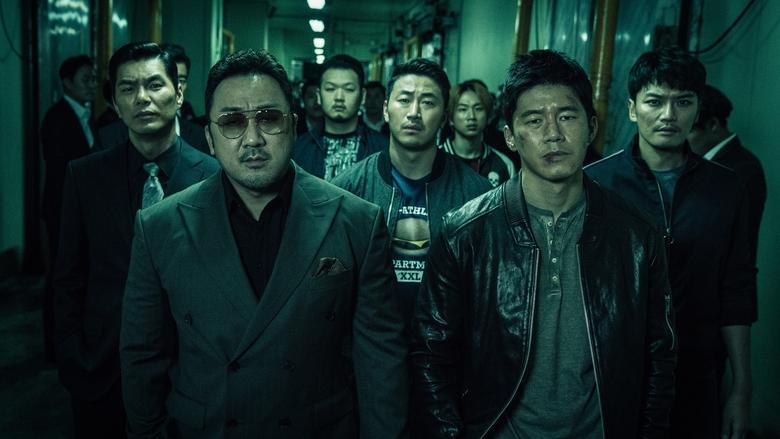

악인전
"Don't let the devil win."
The Gangster, the Cop, the Devil - Symbolism & Philosophy
Symbols & Motifs
Rain and Neon Lights
Symbolizes the murky morality and gritty, noir atmosphere of the film's world. The constant rain washes over the city, but it never cleanses the underlying corruption and violence, merely reflecting the neon signs of the criminal underworld.
Many of the film's key sequences, including the initial attacks by the killer and the first confrontation between Jang Dong-soo and the 'Devil', occur on rain-slicked streets at night, establishing a classic, moody crime-thriller aesthetic.
The Killer's Knife
Represents chaos and the transfer of evil. It is the instrument of random, senseless violence. When it is used by the gangster's crew to frame the killer for another murder, the knife's symbolism expands to represent calculated, manipulative evil, blurring the lines between the two.
The killer uses the same knife in his attacks. In a pivotal plot point, Dong-soo has his right-hand man use the killer's captured knife to murder a rival gangster, thereby manipulating the police investigation and intertwining his own crimes with the killer's.
The Umbrella
A rare symbol of kindness and humanity that is quickly corrupted by the film's pervasive violence. It serves as a stark reminder that no good deed goes unpunished in this world and that innocence is a frequent casualty.
In a moment of compassion, Jang Dong-soo gives his umbrella to a high school girl caught in the rain. Tragically, she becomes the killer's next victim, and the umbrella is found at the crime scene, directly implicating Dong-soo and drawing him deeper into the hunt.
Philosophical Questions
What is the true nature of justice when the system fails?
The film explores this by juxtaposing the slow, bureaucratic, and often ineffective legal system with the swift, brutal, and personal justice of the gangster. It forces the audience to consider whether an imperfect, state-sanctioned justice is superior to a more primal, but perhaps more emotionally satisfying, form of retribution. Tae-seok's legal victory feels hollow compared to the grim finality of Dong-soo's impending revenge.
Can one use the tools of evil to fight a greater evil without becoming a monster?
This question is central to the alliance between Jung Tae-seok and Jang Dong-soo. The cop must adopt the gangster's methods, leverage his resources, and ultimately make a deal that enables further violence in order to stop the killer. The film suggests that confronting absolute evil requires a descent into moral compromise, blurring the lines until the 'hero' is barely distinguishable from the villains he hunts.
Core Meaning
The central message of "The Gangster, the Cop, the Devil" is a cynical exploration of justice, morality, and the systems designed to uphold them. Director Lee Won-tae posits that when institutional justice proves inept or corrupt, the vacuum is filled by more primitive, personal forms of retribution. The film challenges the audience to question who the true 'devil' is: the chaotic, motiveless serial killer, the systematically violent gangster, or the cop who readily bends the law for his own ambitions. The uneasy alliance at the film's core suggests that in a world of profound evil, the boundaries between 'good' and 'bad' become meaningless, and fighting a monster may require embracing one's own.