The Gangster, the Cop, the Devil
악인전
"Don't let the devil win."
Overview
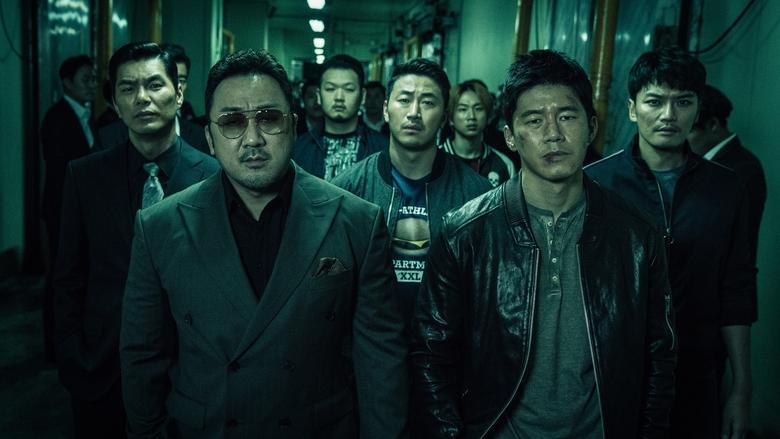
"The Gangster, the Cop, the Devil" is a 2019 South Korean action-thriller that revolves around an audacious and unorthodox alliance. The city of Cheonan is gripped by fear as a mysterious and brutal serial killer, Kang Kyung-ho, leaves a trail of random victims. His reign of terror takes a surprising turn when he attacks Jang Dong-soo, a formidable and feared local crime boss. Dong-soo, however, becomes the killer's only known survivor, an outcome that severely damages his reputation in the criminal underworld.
Meanwhile, Detective Jung Tae-seok, a hot-headed and ambitious cop, is convinced that the recent murders are the work of a single individual, but his superiors dismiss his theory. Seeing a unique opportunity, Tae-seok approaches the gangster he despises with a dangerous proposition: they will combine their resources—the cop's investigative tools and the gangster's manpower—to hunt down the killer. Their pact is simple: whoever finds the killer first gets to enact their own form of justice. For Tae-seok, it's a legal arrest and prosecution; for Dong-soo, it's brutal, personal revenge. This sets the stage for a tense, high-stakes game of cat-and-mouse, where the lines between law and crime are irrevocably blurred.
Core Meaning
The central message of "The Gangster, the Cop, the Devil" is a cynical exploration of justice, morality, and the systems designed to uphold them. Director Lee Won-tae posits that when institutional justice proves inept or corrupt, the vacuum is filled by more primitive, personal forms of retribution. The film challenges the audience to question who the true 'devil' is: the chaotic, motiveless serial killer, the systematically violent gangster, or the cop who readily bends the law for his own ambitions. The uneasy alliance at the film's core suggests that in a world of profound evil, the boundaries between 'good' and 'bad' become meaningless, and fighting a monster may require embracing one's own.
Thematic DNA
The Ambiguity of Justice
The film deliberately contrasts legal justice with personal revenge. Detective Jung Tae-seok seeks to capture the killer to uphold the law (and advance his career), while gangster Jang Dong-soo is driven purely by a need to restore his honor and exact vengeance. The narrative constantly questions which path is more effective or even more 'just' in a corrupt system, culminating in an ending where both forms of justice are grimly satisfied in parallel.
The Fluidity of Morality
No character is purely good or evil. Jang Dong-soo, a ruthless criminal, operates with a personal code and becomes a surprisingly sympathetic anti-hero. Conversely, Jung Tae-seok, a law enforcer, frequently employs brutal and unethical methods. This moral grayness is highlighted when the cop accidentally kills a rival gang member, and the gangster calmly cleans up the mess, forcing the characters and the audience to confront their own definitions of right and wrong.
Systemic Corruption and Incompetence
The official system of law enforcement is portrayed as bureaucratic and ineffective. Tae-seok's superiors are more concerned with political fallout and internal politics than with solving the murders, which forces him to seek an alliance outside the law. This serves as a critique of institutional failure and highlights how the gangster's private network can be more efficient than the state's resources.
Ego and Reputation
Both the gangster and the cop are driven by ego. Dong-soo's primary motivation is to salvage his reputation, which was shattered when he was overpowered by a random attacker. Tae-seok is equally motivated by a thirst for glory and the promotion that will come from solving a high-profile case that his superiors dismissed. Their hunt for the killer is as much about personal pride as it is about public safety.
Character Analysis
Jang Dong-soo
Don Lee (Ma Dong-seok)
Motivation
His primary motivation is restoring his reputation in the criminal underworld and exacting personal revenge on the man who dared to attack him and made him look weak.
Character Arc
Jang Dong-soo begins as a feared, untouchable crime boss. After surviving the attack, his arc becomes one of vulnerability and obsession. He is forced to humble himself by partnering with a cop he detests. His journey is not about redemption, but about reclaiming his alpha status through vengeance. By the end, he manipulates the legal system itself to ensure his personal, brutal form of justice is served.
Jung Tae-seok
Kim Moo-yul
Motivation
He is driven by a mix of genuine desire to stop the killer and a powerful ambition for career advancement and recognition. He is determined to prove his superiors wrong and solve the case no one else believes in.
Character Arc
Jung Tae-seok starts as an arrogant, rule-bending detective frustrated by a corrupt system. His arc is a descent into deeper moral compromise. By aligning with a gangster, he blurs the line between cop and criminal. While he succeeds in his goal of capturing the killer and earning a promotion, he does so by making a deal with the devil, ultimately enabling the gangster's final act of revenge.
Kang Kyung-ho ('K')
Kim Sung-kyu
Motivation
The film presents his motivation as non-existent beyond the sadistic pleasure of killing. He is a representation of random, unpredictable violence, which makes him a terrifying and enigmatic antagonist.
Character Arc
Kang Kyung-ho has no discernible arc; he is a static force of pure, motiveless evil. He begins and ends as a sadistic killer who enjoys the chaos he creates. His character's only shift is in the final scene, where his signature unnerving smile finally vanishes when he realizes he is trapped with the one victim who survived and is bent on revenge.
Symbols & Motifs
Rain and Neon Lights
Symbolizes the murky morality and gritty, noir atmosphere of the film's world. The constant rain washes over the city, but it never cleanses the underlying corruption and violence, merely reflecting the neon signs of the criminal underworld.
Many of the film's key sequences, including the initial attacks by the killer and the first confrontation between Jang Dong-soo and the 'Devil', occur on rain-slicked streets at night, establishing a classic, moody crime-thriller aesthetic.
The Killer's Knife
Represents chaos and the transfer of evil. It is the instrument of random, senseless violence. When it is used by the gangster's crew to frame the killer for another murder, the knife's symbolism expands to represent calculated, manipulative evil, blurring the lines between the two.
The killer uses the same knife in his attacks. In a pivotal plot point, Dong-soo has his right-hand man use the killer's captured knife to murder a rival gangster, thereby manipulating the police investigation and intertwining his own crimes with the killer's.
The Umbrella
A rare symbol of kindness and humanity that is quickly corrupted by the film's pervasive violence. It serves as a stark reminder that no good deed goes unpunished in this world and that innocence is a frequent casualty.
In a moment of compassion, Jang Dong-soo gives his umbrella to a high school girl caught in the rain. Tragically, she becomes the killer's next victim, and the umbrella is found at the crime scene, directly implicating Dong-soo and drawing him deeper into the hunt.
Memorable Quotes
먼저 잡는 사람이 갖는 거지.
— Jang Dong-soo & Jung Tae-seok
Context:
This is the agreement made between the gangster and the cop when they form their uneasy alliance. They are deciding the ultimate fate of the killer based on who captures him first, establishing the rules of their dangerous game.
Meaning:
Translated as, "Whoever catches him first gets to keep him." This line solidifies the central pact and the core conflict of the film: the clash between legal justice and personal revenge. It's the twisted bet that sets the entire plot in motion.
Philosophical Questions
What is the true nature of justice when the system fails?
The film explores this by juxtaposing the slow, bureaucratic, and often ineffective legal system with the swift, brutal, and personal justice of the gangster. It forces the audience to consider whether an imperfect, state-sanctioned justice is superior to a more primal, but perhaps more emotionally satisfying, form of retribution. Tae-seok's legal victory feels hollow compared to the grim finality of Dong-soo's impending revenge.
Can one use the tools of evil to fight a greater evil without becoming a monster?
This question is central to the alliance between Jung Tae-seok and Jang Dong-soo. The cop must adopt the gangster's methods, leverage his resources, and ultimately make a deal that enables further violence in order to stop the killer. The film suggests that confronting absolute evil requires a descent into moral compromise, blurring the lines until the 'hero' is barely distinguishable from the villains he hunts.
Alternative Interpretations
One alternative reading of the film focuses on the title itself. While the roles of 'Gangster', 'Cop', and 'Devil' are explicitly assigned to the three main characters, their actions suggest these labels are interchangeable. The gangster dispenses a form of justice, the cop acts with criminal brutality, and the true 'devil' might be the corrupt system that allows such chaos to flourish. The film can be interpreted not as a story of three distinct figures, but as an allegory for the different faces of evil that society harbors. The ending can also be read less as a victory for the gangster and more as a condemnation of a justice system so flawed that the only satisfying conclusion must happen outside its walls, in the dark confines of a prison shower, perpetuating a cycle of violence.
Cultural Impact
"The Gangster, the Cop, the Devil" was a commercial and critical success in South Korea and gained significant international attention following its screening at Cannes. Its high-concept premise proved universally appealing, leading to the announcement of a high-profile American remake produced by Sylvester Stallone, with star Don Lee reprising his role. This signaled a growing trend in Hollywood of looking to South Korean cinema for fresh and compelling narratives, especially in the crime and thriller genres. The film's success came amid a global surge in popularity for Korean content, following films like "Parasite" and shows like "Squid Game". Critics praised the film for its stylish execution, brutal action choreography, and particularly the charismatic, star-making performance of Don Lee, who solidified his status as a leading action star both at home and abroad.
Audience Reception
Audiences largely praised "The Gangster, the Cop, the Devil" for being a highly entertaining and slick action thriller. The performance of Don Lee as the charismatic gangster Jang Dong-soo received widespread acclaim, with many viewers finding themselves rooting for the compelling anti-hero. The brutal, well-choreographed action sequences, particularly the focus on hand-to-hand combat and knife fights over gunplay, were also a highlight for many. The main points of criticism from some viewers and critics were that the characters, particularly the cop and the devil, could feel like archetypes rather than fully developed individuals. The killer's lack of backstory or clear motivation was seen as a weakness by some, who felt he was more of a plot device than a character. Nevertheless, the overall verdict was overwhelmingly positive, with audiences appreciating the unique premise, gripping pace, and satisfyingly dark ending.
Interesting Facts
- The film is loosely based on a true story from 2005 where a crime boss was attacked by a serial killer and survived, subsequently leading to an informal collaboration with law enforcement to catch the culprit.
- The movie was screened in the Midnight Screenings section at the prestigious 2019 Cannes Film Festival.
- Even before its wide release, Hollywood producer Sylvester Stallone and his studio Balboa Productions acquired the rights for an American remake.
- Star Don Lee (Ma Dong-seok) is set to reprise his role as the gangster in the upcoming American remake, a rare occurrence for a South Korean actor in a Hollywood adaptation of their own work.
⚠️ Spoiler Analysis
Click to reveal detailed analysis with spoilers
Frequently Asked Questions
Explore More About This Movie
Dive deeper into specific aspects of the movie with our detailed analysis pages
Comments (0)
No comments yet. Be the first to share your thoughts!