Skip to content
The Gardener
A French action comedy where manicured suburban hedges hide a state death list — and the quiet man trimming them turns out to be the last thing standing between one panicked family and a government's tidy annual purge.
The Gardener
The Gardener

Le Jardinier

30 January 2025 Belgium 109 min 6.1 (200)

Director: David Charhon

Cast: Jean-Claude Van Damme, Michaël Youn, Nawell Madani, Carla Poquin, Jérôme Le Banner

Action Comedy Raison d'État and the banality of institutional violence The underestimated man Family as the last defensible ground Ageing, screen legacy and self-parody Cowardice, complicity and the making of a reluctant hero
Budget: $10,000,000
Box Office: $4,772

The Gardener — Ending Explained

⚠️ Spoiler Analysis

Note on scope: the sources consulted document the premise, structure and reveals below, but not a beat-by-beat account of the final scenes; nothing here is invented to fill that gap.

The mechanism. The film's foundational reveal is that the annual elimination list is not a rogue operation but standing practice — the Prime Minister has troublemakers of every kind removed each year in the name of raison d'État. Serge Shuster, a senior official close to the Presidency, does not stumble onto a conspiracy from outside; he is a beneficiary of the system who is placed on the list by a machination he did not initiate. The forty-eight-hour window given to the elite government hit team is what converts a political thriller into a siege.

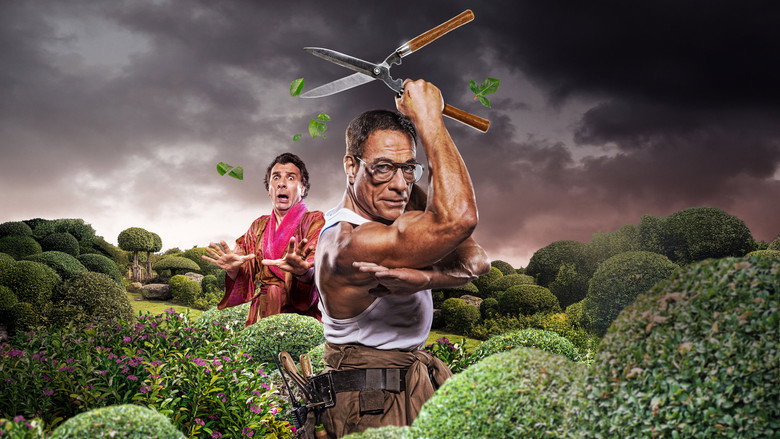
The central twist. Léo, the family's odd gardener, is not what he appears. Every earlier scene of him tending the grounds is retroactively recoded once his capabilities surface: the film has been hiding a lethal operative in the most socially invisible role available. This is the engine of the whole picture — the Shusters' salvation was on the payroll the entire time, unrecognised, and the state's professionals have no idea what is waiting at the address on their file.

Why the state secret matters. Serge is not hunted for what he did but for what he now carries. Because the knowledge is what condemns him, it cannot be surrendered, negotiated away or confessed — which is precisely why the family cannot go to any authority. The film's structure forecloses every institutional exit, forcing the story into the house and turning the domestic space into the last defensible ground.

What becomes clear afterwards. On reflection the film's real joke is structural: the two 'gardeners' in the story are the Prime Minister and Léo. Both prune. One does it to keep a system tidy, the other to keep a family alive, and the film's moral architecture rests entirely on that distinction. The self-aware humour about Van Damme's age reads differently in hindsight too — the ageing body is the disguise, and the underestimation that fuels the comedy is the same underestimation that gets the assassins killed.

Alternative Interpretations

As straight-faced political satire. One reading takes the list seriously: the film is about a state that has normalised assassination as budgetary housekeeping, and the comedy is a delivery mechanism for genuine cynicism about French executive power. On this view, Serge's panic is the point — the system only becomes visible to those it consumes.

As pure star vehicle. A more deflationary reading holds that the political premise is scaffolding, and the actual subject is Van Damme. The film exists to place him in a room, remove his advantages, and let him demonstrate that he still works. Critics who found the action weightless argued the scaffolding never bears the load it was built for.

As a class fable. The gardener saves the household that never looked at him. Read this way, the film is about domestic labour and social invisibility — the employer's survival is entirely contingent on the goodwill of the person he pays least and notices least, which is either a warm humanist gesture or a fantasy that flatters the employer.

The tonal dispute. The most-discussed ambiguity is whether the inconsistent register is a failure or a strategy. Some reviewers described the mix of political thriller and broad farce as incoherent; others found that the very inconsistency, combined with Van Damme's charm and Youn's total commitment to absurdity, produced something genuinely enjoyable. Both readings appear in the published reviews, and the film is not decisive enough to settle the argument.

Explore More About This Movie

Dive deeper into specific aspects of the movie with our detailed analysis pages

Similar Movies