Skip to content
The Gardener
A French action comedy where manicured suburban hedges hide a state death list — and the quiet man trimming them turns out to be the last thing standing between one panicked family and a government's tidy annual purge.
The Gardener

The Gardener

Le Jardinier

30 January 2025 Belgium 109 min 6.1 (200)

Director: David Charhon

Cast: Jean-Claude Van Damme, Michaël Youn, Nawell Madani, Carla Poquin, Jérôme Le Banner

Action Comedy Raison d'État and the banality of institutional violence The underestimated man Family as the last defensible ground Ageing, screen legacy and self-parody Cowardice, complicity and the making of a reluctant hero
Budget: $10,000,000
Box Office: $4,772

Overview

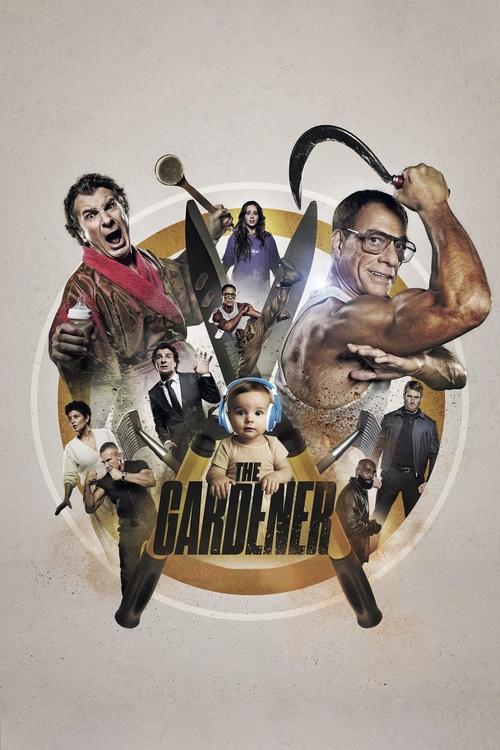
The Gardener (Le Jardinier) is a 2025 French action comedy directed by David Charhon, written by Sébastien Fechner and Vincent De Brus, and released by Amazon MGM Studios on Prime Video on 10 January 2025. Its premise is a piece of pure political black humour: every year, the Prime Minister quietly draws up a list of inconvenient people — troublemakers of every kind — to be eliminated in the name of raison d'État.

Serge Shuster (Michaël Youn), a senior civil servant close to the Presidency, discovers through a machination he never saw coming that his own name has appeared on that list. The rules are brutally simple: once you are on it, an elite team of state killers has forty-eight hours to close the file. Serge is not a spy, not a fighter and not especially brave — he is a bureaucrat with a wife, children and a comfortable house, suddenly holding a state secret that makes his entire family collateral.

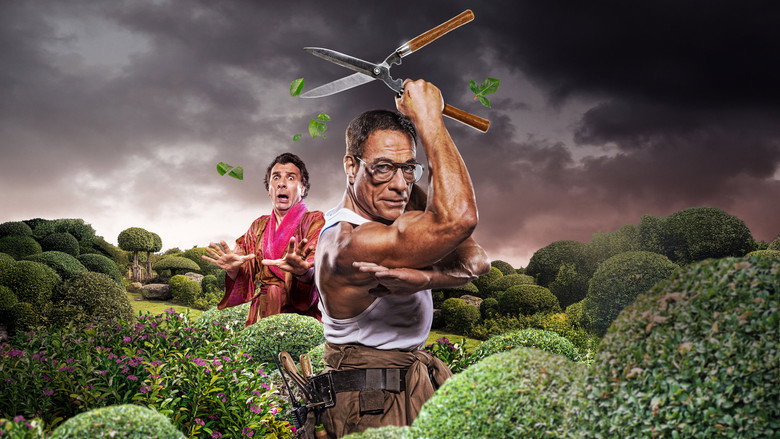
With nowhere to run and no institution left to trust, the Shusters fall back on the only person on the property who does not seem frightened: Léo (Jean-Claude Van Damme), their strange, taciturn gardener. The film turns the family home into a battleground, staging a siege-style action comedy in which Van Damme plays knowingly with his own late-career screen image while Youn supplies escalating panic. It is broad, loud and unabashedly old-school in its action pedigree.
Core Meaning

Beneath the slapstick, The Gardener is a farce about the invisibility of the people who actually keep things alive. The state in this film is an efficient machine that maintains itself the way a landscaper maintains a lawn — by periodically cutting back whatever grows out of line. The joke Charhon builds the film on is that the man with the shears is also the only moral agent in the story.

The film's message is deliberately unsubtle: power treats human beings as maintenance work, and the comfortable functionary who administers that system is safe only until the list turns toward him. Serge's terror is the film's satire in miniature — he does not object to the machine on principle, he objects to being inside it.

There is also a second, more personal statement running through the casting itself. By handing the role of the humble, underestimated gardener to Jean-Claude Van Damme — and by openly joking about his age — the film argues that competence and dignity outlast spectacle. Reviewers noted the film is fully aware that its star is no longer young, and it converts that awareness into its own subject: the old craftsman still knows exactly where to cut.

Thematic DNA

Raison d'État and the banality of institutional violence 30%
The underestimated man 25%
Family as the last defensible ground 20%
Ageing, screen legacy and self-parody 15%
Cowardice, complicity and the making of a reluctant hero 10%

Raison d'État and the banality of institutional violence

The film's engine is a routine, annual list of people to be eliminated 'in the name of reason of state.' The horror is administrative rather than dramatic: no villain monologue, just a procedure with a deadline. Serge Shuster, a senior official close to the Presidency, is himself a product of that world, which makes his sudden appearance on the list a satirical boomerang — the paperwork finally points at the man who files it.

The underestimated man

Léo is introduced as scenery — the help, the guy with the hedge trimmer, someone the family has never really looked at. The plot only exists because that assumption is wrong. The Gardener repeatedly stages the gap between social status and actual capability: the powerful bureaucrat is helpless, the invisible employee is lethal, and the household's hierarchy inverts the moment competence becomes the only currency.

Family as the last defensible ground

Once the institutions turn predatory, the film shrinks the world down to a house and the people in it. Serge's wife and children are not decoration — they are the reason the panic has stakes, and the siege structure forces a man who has outsourced every hard thing in his life to physically stand somewhere. The action comedy is, structurally, a domestic film about a household discovering what it is willing to do together.

Ageing, screen legacy and self-parody

Critics consistently observed that everyone involved knows Van Damme is older now, and the film plays that for laughs rather than hiding it. The result is a running commentary on action stardom itself: the body that once sold the fantasy is now the punchline and the payoff at once. That tonal double-game — reverence and mockery in the same shot — is the film's most distinctive, and most divisive, quality.

Cowardice, complicity and the making of a reluctant hero

Michaël Youn's Serge is a comic study in self-preservation. His arc asks whether a man shaped entirely by proximity to power can locate a spine when the power withdraws its protection. The comedy comes from how long he resists that transformation, and how much of it he ultimately has to borrow from his gardener.

Character Analysis

Léo

Jean-Claude Van Damme

Archetype: Mysterious protector / mentor-warrior in disguise Key Trait: Unnervingly calm competence

Motivation

Protection of the family who employ him, and an evident personal code that outranks any institutional loyalty. He acts because someone has to, not because anyone has authorised him to.

Character Arc

Léo begins as household furniture — the odd, quiet gardener nobody in the family has really examined. The crisis forces him to reveal a competence that reframes every earlier scene, and he shifts from employee to the household's sole line of defence. His trajectory is less transformation than unveiling: the film gradually strips away the disguise of ordinariness.

Serge Shuster

Michaël Youn

Archetype: Reluctant everyman / comic antihero Key Trait: Hysterical self-preservation

Motivation

Staying alive — and, past the initial cowardice, keeping his wife and children out of the machine he served.

Character Arc

A senior official close to the Presidency, Serge is comfortable, well-connected and utterly unequipped for physical danger. Finding his own name on the elimination list detonates his identity: the insider becomes prey. His arc is a panicked, farcical descent from status to survival, and Youn's willingness to commit fully to the character's wackiness was singled out by reviewers as one of the film's real assets.

All 3 characters and cast

Symbols & Motifs

The list

Meaning:

The purest image of bureaucratised murder: human lives reduced to entries that can be added, sorted and closed. It symbolises a state that has replaced judgement with procedure, and it makes death an item with a due date — forty-eight hours.

Context:

It structures the entire plot. The Prime Minister's annual list is established as routine before Serge's name lands on it, so the audience already understands the machine when it turns on him.

The garden and the act of pruning

Meaning:

Gardening is the film's central metaphor for governance: something is kept beautiful by cutting away what grows inconveniently. The same verb describes Léo's day job and the state's dirty work — the difference is who decides what counts as a weed.

Context:

Embedded in the title and in Léo's profession, and reinforced every time domestic tools and horticultural competence intersect with lethal skill.

The bourgeois family house

Meaning:

A symbol of purchased safety. The house represents everything Serge's career bought him, and the film's siege structure exists to demonstrate how thin that shell really is once official protection is withdrawn.

Context:

The film functions in large part as a home-invasion actioner, with the residence converted from status object into fortress and then into battlefield.

The gardener's tools

Meaning:

Everyday implements repurposed as weapons dramatise the theme of hidden dual function: the same object serves upkeep or destruction depending on the hand holding it — exactly like the state apparatus the film satirises.

Context:

Runs through the action comedy of the siege, where domestic and horticultural objects replace the arsenal a conventional thriller would supply.

Van Damme's body

Meaning:

The star's physique is itself a text: a monument to 1990s action cinema, now openly acknowledged as aged. It stands for craft that survives its own golden age, and for the film's argument that experience is a weapon.

Context:

Foregrounded by the film's self-aware humour about its lead's age, which reviewers identified as one of its defining comic strategies.

Philosophical Questions

Can a state be legitimate if it maintains itself by removing people?

The film's premise treats political murder as annual maintenance carried out in the name of raison d'État. By making the practice routine rather than exceptional, it asks whether the justification 'for the good of the nation' is ever anything more than a licence, and it answers largely through farce: the moment the reasoning is applied to an insider, it is revealed as arbitrary.

What do we owe to the people we do not see?

Léo has been on the property all along, unregarded. The plot is built so that the family's survival depends entirely on someone they never bothered to know. The film explores the question through inversion — status buys nothing, and the household's fate rests on the character with the least of it.

Is complicity innocent as long as it is comfortable?

Serge is a senior official near the Presidency, part of the apparatus that produces the list. His terror is not moral awakening but self-interest, and the comedy sits precisely in that gap. The film keeps asking whether he ever actually objects to the machine or only to his position within it.

What is left of a hero when his body is no longer heroic?

By openly joking about Van Damme's age, the film makes physical decline part of its text. It probes whether heroism resides in spectacle or in judgement, timing and will — and argues, through Léo's economy and calm, for the latter.

Alternative Interpretations

As straight-faced political satire. One reading takes the list seriously: the film is about a state that has normalised assassination as budgetary housekeeping, and the comedy is a delivery mechanism for genuine cynicism about French executive power. On this view, Serge's panic is the point — the system only becomes visible to those it consumes.

Full ending explanation

Cultural Impact

The Gardener sits at the intersection of two currents in mid-2020s French cinema. The first is the streaming-first French genre film: Amazon bought the picture for France and put it out on Prime Video on 10 January 2025, bypassing theatrical release entirely — part of a broader shift in which globally distributed platforms have become the primary financiers and shop windows for mid-budget French action.

The second is the late-career reinvention of Jean-Claude Van Damme. Since JCVD and Jean-Claude Van Johnson, Van Damme's most interesting work has involved playing versions of his own myth, and this film continues that lineage by casting him as a man whose extraordinary abilities are hidden inside a menial job. RogerEbert.com's Simon Abrams framed his 2/4 review precisely around this tension, arguing the film shows Van Damme still hasn't found the formula for giving audiences what they want while also showing range.

Culturally, the film's satire is specifically French: raison d'État is a phrase with real weight in a country whose political history includes genuine state scandals, and the joke of a Prime Minister with an annual clean-up list lands as caricature of a recognisable anxiety about opaque executive power. Its wider influence on cinema has so far been negligible — it was received as disposable platform entertainment rather than as a work with a legacy — but it stands as a data point in how algorithms and streamers now shape the French comedy-action hybrid.

Audience Reception

Reception was mixed to negative, with a clear split between genre-friendly and mainstream critics. The film holds a low user rating on IMDb (around 4.2/10), and French reviewers were the harshest: one dismissal called it flatly unwatchable and 'the biggest turkey of the year.'

What was praised: Van Damme's residual screen charisma and Michaël Youn's willingness to commit completely to the absurdity of his character. Reviewers who enjoyed the film described it as goofy but fun — a home-invasion actioner that entertains in spite of itself. Film Threat's Alan Ng gave it 6/10, calling it a ridiculous blend of political thriller and action comedy that somehow manages to entertain despite its many flaws.

Main criticisms: the action was widely described as lacking weight, with the film reaching for old-school genre thrills but never quite taking off. The tone was the other recurring complaint — an inconsistent register that swings between political conspiracy and broad slapstick. Simon Abrams at RogerEbert.com awarded 2/4, concluding that Van Damme still hasn't worked out how to satisfy his audience and display range at the same time. The most negative appraisals called it unpleasant, unfunny, awkward and loud, and one outlet framed it as a career low for its star.

The controversial element is the humour aimed at Van Damme's age: viewers who read it as affectionate self-parody enjoyed the film most, while those who read it as the film undercutting its own hero found the whole enterprise misjudged.

Verdict: a disposable but not joyless platform action comedy — better received by audiences who came for Van Damme than by critics who came for a movie.

Interesting Facts

  • The film was produced on a budget of approximately €10 million, a substantial figure for a French action comedy.
  • Amazon acquired the film for France: Variety reported in 2024 that 'Le Jardinier' had sold to Prime Video in France ahead of release.
  • It was released by Amazon MGM Studios through Prime Video on 10 January 2025, going straight to streaming rather than to French cinemas.
  • The screenplay was written by Sébastien Fechner and Vincent De Brus, with David Charhon directing.
  • The cast mixes disciplines and generations of French popular culture: comedian and TV personality Michaël Youn, comedian Élie Semoun, stand-up performer Nawell Madani, rapper Kaaris and kickboxing champion Jérôme Le Banner appear alongside Jean-Claude Van Damme.
  • Kaaris plays a character named Quasimodo, an on-the-nose nickname for the film's muscle.
  • Critical reception was sharply split along geographic lines: Anglophone genre outlets were relatively forgiving (Film Threat gave it 6/10), while some French critics were savage, one calling it the biggest turkey of the year.
  • The film holds a low audience score on IMDb (around 4.2/10), well beneath the friendlier appraisals from genre-focused reviewers.

Easter Eggs

The enforcer is named 'Quasimodo'

A direct nod to Victor Hugo's Notre-Dame de Paris. Giving the hulking heavy the name of literature's most famous misunderstood strongman is a very French piece of comic shorthand — and a sly rhyme with the film's own theme of judging people by their surface.

The film's running jokes about Van Damme's age

Reviewers noted that everyone in the film is aware that its star is no longer the athlete of Bloodsport or Kickboxer, and the script leans into it. It functions as an extended meta-reference to Van Damme's own filmography and to his established taste for self-parody.

Casting Jérôme Le Banner, a real K-1 kickboxing champion, opposite Van Damme

A wink to genre fans: pitting an authentic combat-sports figure against an actor whose stardom was built on martial-arts choreography stages a small collision between real fighting and movie fighting.

Frequently Asked Questions

Explore More About This Movie

Dive deeper into specific aspects of the movie with our detailed analysis pages

Comments (0)

Leave a comment

No comments yet. Be the first to share your thoughts!

Similar Movies