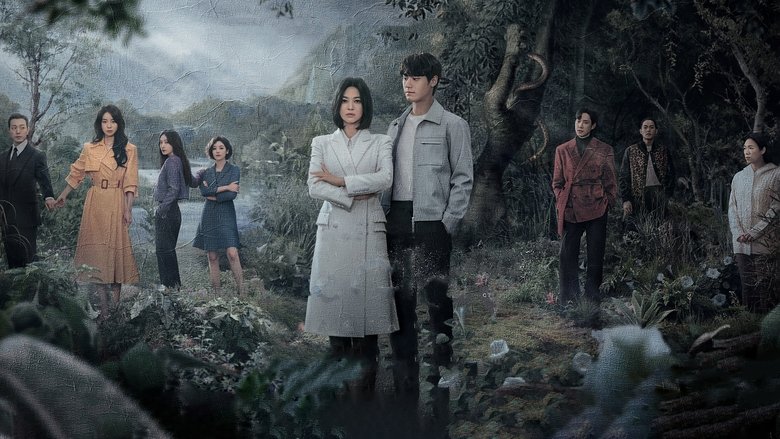
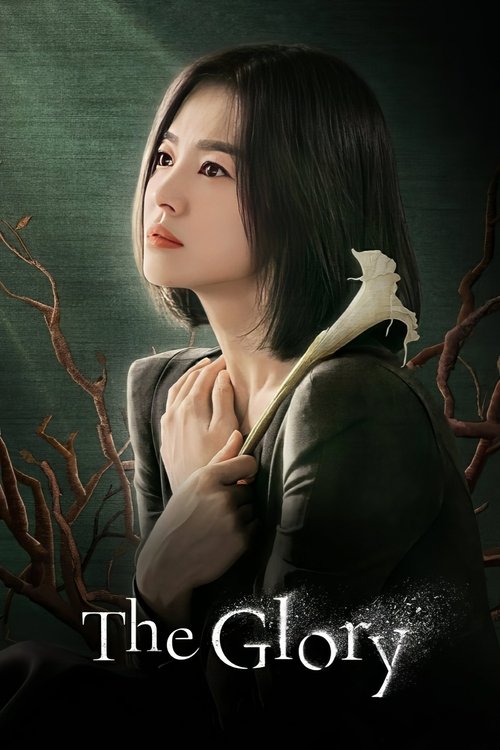
더 글로리
"Let's wilt and die together."
The Glory - Symbolism & Philosophy
Symbols & Motifs
The Game of Go (Baduk)
Go symbolizes Dong-eun's long-term revenge strategy. It's a game of silently surrounding and capturing an opponent's territory, mirroring how she meticulously builds her plan over years to slowly corner her enemies. She learns the game specifically to get close to Yeon-jin's husband, Ha Do-yeong, turning his own passion into a weapon against him.
Dong-eun spends years mastering Go. She uses it as a pretext to meet and intrigue Ha Do-yeong. The game board often appears as a visual metaphor for her intricate web of connections and her methodical takedown of the bullies' lives, piece by piece.
Green Colorblindness / Green Shoes
Green symbolizes Park Yeon-jin's sin and hidden vulnerability. The green high-heeled shoes, a gift from Jae-joon, are a recurring motif. The color is significant because Jeon Jae-joon and Yeon-jin's daughter, Ye-sol, both have colorblindness that makes it difficult to distinguish red from green. This shared genetic trait serves as the ultimate proof of Ye-sol's true paternity, a secret that eventually destroys Yeon-jin's family.
The green shoes are present at the scene of Yoon So-hee's death, tying Yeon-jin to an old crime. Choi Hye-jeong later uses a pair of green shoes to taunt Yeon-jin. Most importantly, Ye-sol's inability to identify the color green is a constant, ticking time bomb that confirms her father is Jae-joon, not Do-yeong.
The Curling Iron
The curling iron is the most visceral symbol of the bullies' cruelty and the physical trauma inflicted upon Dong-eun. It represents the searing, unforgettable pain that fuels her revenge. The burns it leaves are the permanent, physical manifestation of her psychological scars.
The series opens with scenes of the bullies using a heated curling iron to burn Dong-eun's arms and legs in the school gym. This specific act of torture is based on a real-life school violence incident in Cheongju in 2006, making its depiction even more horrifying and impactful. The scars are revealed in a pivotal scene to Joo Yeo-jeong, making him understand the depth of her suffering and commit to helping her.
Night-Blooming Flowers (Devil's Trumpet)
These flowers, which bloom in the darkness, symbolize Dong-eun herself. She has lived her life in the darkness of her trauma, but it is in this darkness that her plan for revenge—her own form of blooming—takes shape. The flowers are beautiful but poisonous, reflecting the dangerous and captivating nature of her quest.
The flowers are shown in the garden of the villa where Joo Yeo-jeong lives and are mentioned in conversations between him and Dong-eun. They represent the quiet, deadly beauty of her mission and the hope that can be found even in the darkest of nights.
Philosophical Questions
Is revenge a valid path to healing?
The series challenges the common moral stance that "an eye for an eye leaves the whole world blind." For Dong-eun, forgiveness is not an option, as it would invalidate the suffering that defined her entire existence. The narrative suggests that for certain deep traumas, the act of methodically dismantling the lives of one's abusers is the only way to reclaim one's agency and honor. Dong-eun's plan to die after her revenge is complete shows she sees it as the final act of her life, not the beginning of a new one. However, the series complicates this by having her find a new reason to live through her allies, suggesting that while revenge may be a necessary step, it is the human connection forged along the way that ultimately offers a path forward.
What is the nature of good and evil when systems of justice fail?
"The Glory" operates in a world where institutions—schools, police, and even family—are corrupt or indifferent, failing to protect the vulnerable. In this context, Dong-eun's actions, while illegal and morally grey, are framed as a form of righteous, almost divine, punishment. The series asks whether one can remain "good" while employing evil methods to fight a greater evil. Dong-eun herself acknowledges she is heading toward her own personal hell. The series seems to conclude that in a world devoid of justice, creating your own becomes a necessary, albeit soul-corrupting, endeavor.
Core Meaning
"The Glory" is a profound exploration of the aftermath of trauma and the agonizing pursuit of justice when societal systems fail. The series posits that for some victims, revenge is not merely a destructive act but a necessary path to reclaiming one's honor, dignity, and will to live. It was inspired by a question from writer Kim Eun-sook's daughter: would it be more heartbreaking if she bullied someone to death or was bullied to death herself? This question forms the series' core, examining the immense resources—financial and emotional—required to fight back against powerful perpetrators. The drama argues that true "glory" for a victim like Dong-eun is not about forgiveness, but about seeing her abusers face absolute ruin, thus allowing her to finally move forward from the hellish ruins of her past and begin anew.