The Glory
더 글로리
"Let's wilt and die together."
Overview
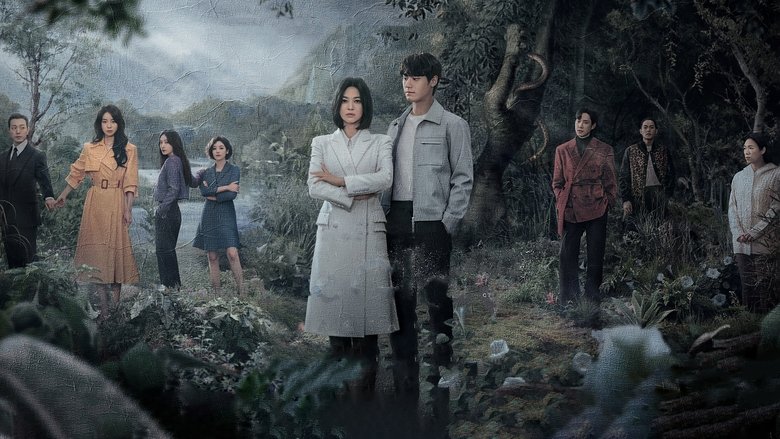
"The Glory" tells the harrowing story of Moon Dong-eun, a woman whose soul was shattered by horrific school violence. Forced to drop out of high school due to brutal and relentless bullying by a group of wealthy classmates led by Park Yeon-jin, Dong-eun spends the next two decades meticulously planning her revenge. Her dream of becoming an architect is replaced by a singular, all-consuming goal: to make her tormentors pay for their crimes.
As an adult, Dong-eun becomes the homeroom teacher for the daughter of her chief tormentor, Yeon-jin, marking the beginning of her intricate and chilling plan. She slowly unravels the seemingly perfect lives of her five bullies, exposing their secrets, sins, and vulnerabilities. Along the way, she finds unlikely allies in Joo Yeo-jeong, a cheerful plastic surgeon with his own deep-seated trauma, and Kang Hyeon-nam, a domestic abuse victim who becomes Dong-eun's loyal assistant. The series is a slow-burn thriller that explores the depths of trauma, the moral complexities of vengeance, and the possibility of finding solidarity and a new purpose in the darkest of times.

Core Meaning
"The Glory" is a profound exploration of the aftermath of trauma and the agonizing pursuit of justice when societal systems fail. The series posits that for some victims, revenge is not merely a destructive act but a necessary path to reclaiming one's honor, dignity, and will to live. It was inspired by a question from writer Kim Eun-sook's daughter: would it be more heartbreaking if she bullied someone to death or was bullied to death herself? This question forms the series' core, examining the immense resources—financial and emotional—required to fight back against powerful perpetrators. The drama argues that true "glory" for a victim like Dong-eun is not about forgiveness, but about seeing her abusers face absolute ruin, thus allowing her to finally move forward from the hellish ruins of her past and begin anew.
Thematic DNA
Revenge and Justice
The central theme is the meticulous, life-long pursuit of revenge. Dong-eun's plan is not impulsive; it is a cold, calculated, and all-consuming mission that she dedicates her entire adult life to. The series delves into the moral ambiguity of her quest, questioning whether an "eye for an eye" can ever lead to true peace. Ultimately, it portrays her revenge not just as destruction, but as a form of divine punishment and a means to achieve a personal justice that the legal system and society denied her.
School Violence and Trauma
The series graphically depicts the brutal reality of school violence and its lifelong consequences. Dong-eun's physical scars are a constant reminder of her trauma, which manifests as PTSD and an inability to experience simple joys. The show's portrayal was so realistic it was revealed to be based on a real 2006 bullying case in South Korea involving a curling iron, which sparked widespread public discussion about the severity of school violence.
Social Class and Privilege
A stark contrast is drawn between the powerless, working-class Dong-eun and her wealthy, well-connected bullies. The perpetrators are shielded by their parents' money and influence, allowing them to evade responsibility for their actions. The police, teachers, and even Dong-eun's own mother are bribed or intimidated into silence, highlighting a corrupt system where the rich can literally get away with murder. Dong-eun's revenge is thus also an attack on this entrenched class structure.
Solidarity and Healing
Despite its dark tone, the series finds hope in the solidarity among victims. Dong-eun, who initially plans to die after her revenge is complete, finds a new reason to live through her relationships with fellow victims Kang Hyeon-nam and Joo Yeo-jeong. Hyeon-nam finds the strength to escape her abusive husband through her work with Dong-eun, and Yeo-jeong confronts his own trauma by helping Dong-eun. Their alliance transforms the quest from one of solitary self-destruction to a shared mission for justice and mutual healing.
Character Analysis
Moon Dong-eun
Song Hye-kyo
Motivation
Her primary motivation is to make her tormentors' lives a living hell, ensuring they face a ruin as complete as the one they inflicted on her. She doesn't seek financial compensation or a simple apology; she wants to destroy their world, their relationships, and their souls. This motivation later expands to include protecting her allies and finding a way to live on after her vengeance is enacted.
Character Arc
Dong-eun begins as a bright high school student with dreams of being an architect. After being subjected to unimaginable torture and abandoned by everyone, her soul becomes an empty, frozen shell dedicated solely to revenge. For nearly two decades, she lives a life devoid of color and emotion, meticulously preparing for her enemies' downfall. Her transformation is not about becoming a hero, but about reclaiming her life through vengeance. Initially, she plans to commit suicide after her revenge is complete, but her relationships with Yeo-jeong and Hyeon-nam offer her a new path. She evolves from a lone, self-destructive avenger to someone who can accept help and find a new purpose in fighting for another's justice, signifying a small but profound step toward healing.
Park Yeon-jin
Lim Ji-yeon
Motivation
Yeon-jin is motivated by a narcissistic need for superiority and control. She bullies others because she can, and she believes her wealth and status put her above consequences. Her primary motivation throughout the series is self-preservation: she will lie, manipulate, and even kill to protect her perfect life and prevent her past from being exposed.
Character Arc
Yeon-jin is the personification of unchecked privilege and cruelty. As a teenager, she is the sadistic ringleader of the bullies, deriving pleasure from others' suffering without a hint of remorse. As an adult, she has built a perfect life as a successful weathercaster and the wife of a rich CEO, burying her past crimes under a veneer of sophistication. Her arc is a downward spiral from the pinnacle of society to utter ruin. She shows no growth or remorse, remaining defiant and self-justifying until the very end. As Dong-eun's plan unfolds, every pillar of her life—career, family, friends, and even her own mother—is systematically destroyed, leaving her imprisoned and abandoned by everyone.
Joo Yeo-jeong
Lee Do-hyun
Motivation
Initially motivated by his love for Dong-eun and a desire to help her heal, his motivation evolves to confront his own trauma. Seeing Dong-eun's determination inspires him to stop fantasizing about revenge and actively pursue it. His ultimate goal is to make his father's killer suffer and to build a new life with Dong-eun where they can both find peace.
Character Arc
Yeo-jeong is introduced as a cheerful and kind plastic surgeon from a wealthy family. However, his bright exterior conceals a deep darkness stemming from the unsolved murder of his father. He lives with constant fantasies of brutally murdering his father's killer. Initially, he offers Dong-eun support and medical help, but as he falls for her and learns the extent of her suffering, he embraces his own darkness. He transitions from a passive victim of his trauma to an active participant in revenge, offering to become Dong-eun's "headsman" or "executioner". His arc culminates in him and Dong-eun joining forces to exact revenge on his father's murderer, finding a shared purpose in their respective quests for justice.
Kang Hyeon-nam
Yeom Hye-ran
Motivation
Her sole motivation is to protect her daughter from her abusive husband and create a safe future for her. This desperation drives her to ally with Dong-eun. As she grows more confident, her motivation expands to genuine loyalty and friendship with Dong-eun, whom she sees as a fellow sufferer.
Character Arc
Hyeon-nam is a housekeeper and a victim of brutal domestic violence. Initially, she appears timid and beaten down by life. She discovers Dong-eun's plan and offers her services as an investigator in exchange for Dong-eun killing her abusive husband. Through her work, she transforms from a powerless victim into a competent and brave operative. She learns to drive, take photographs, and tail people, gaining skills and confidence. While Dong-eun ultimately arranges for her husband to be dealt with in a way that doesn't make Hyeon-nam a murderer, the journey empowers her to protect her daughter and start a new life. Her arc is one of the most hopeful, showing a path of empowerment and escape from victimhood.
Symbols & Motifs
The Game of Go (Baduk)
Go symbolizes Dong-eun's long-term revenge strategy. It's a game of silently surrounding and capturing an opponent's territory, mirroring how she meticulously builds her plan over years to slowly corner her enemies. She learns the game specifically to get close to Yeon-jin's husband, Ha Do-yeong, turning his own passion into a weapon against him.
Dong-eun spends years mastering Go. She uses it as a pretext to meet and intrigue Ha Do-yeong. The game board often appears as a visual metaphor for her intricate web of connections and her methodical takedown of the bullies' lives, piece by piece.
Green Colorblindness / Green Shoes
Green symbolizes Park Yeon-jin's sin and hidden vulnerability. The green high-heeled shoes, a gift from Jae-joon, are a recurring motif. The color is significant because Jeon Jae-joon and Yeon-jin's daughter, Ye-sol, both have colorblindness that makes it difficult to distinguish red from green. This shared genetic trait serves as the ultimate proof of Ye-sol's true paternity, a secret that eventually destroys Yeon-jin's family.
The green shoes are present at the scene of Yoon So-hee's death, tying Yeon-jin to an old crime. Choi Hye-jeong later uses a pair of green shoes to taunt Yeon-jin. Most importantly, Ye-sol's inability to identify the color green is a constant, ticking time bomb that confirms her father is Jae-joon, not Do-yeong.
The Curling Iron
The curling iron is the most visceral symbol of the bullies' cruelty and the physical trauma inflicted upon Dong-eun. It represents the searing, unforgettable pain that fuels her revenge. The burns it leaves are the permanent, physical manifestation of her psychological scars.
The series opens with scenes of the bullies using a heated curling iron to burn Dong-eun's arms and legs in the school gym. This specific act of torture is based on a real-life school violence incident in Cheongju in 2006, making its depiction even more horrifying and impactful. The scars are revealed in a pivotal scene to Joo Yeo-jeong, making him understand the depth of her suffering and commit to helping her.
Night-Blooming Flowers (Devil's Trumpet)
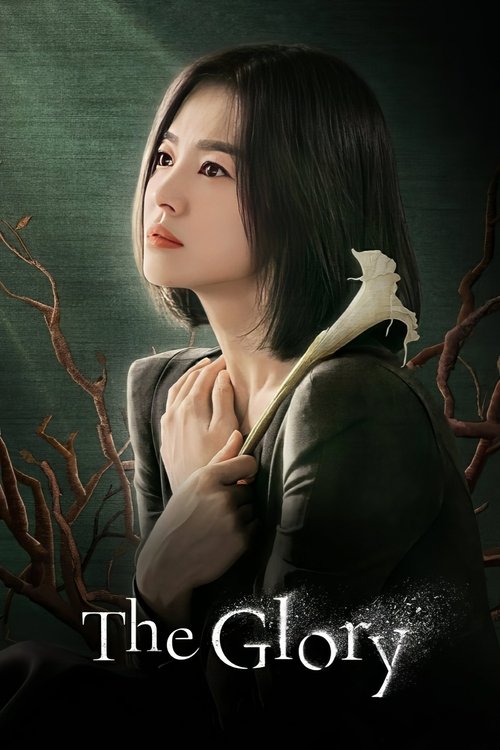
These flowers, which bloom in the darkness, symbolize Dong-eun herself. She has lived her life in the darkness of her trauma, but it is in this darkness that her plan for revenge—her own form of blooming—takes shape. The flowers are beautiful but poisonous, reflecting the dangerous and captivating nature of her quest.
The flowers are shown in the garden of the villa where Joo Yeo-jeong lives and are mentioned in conversations between him and Dong-eun. They represent the quiet, deadly beauty of her mission and the hope that can be found even in the darkest of nights.
Memorable Quotes
From now on, every single day will be a nightmare. They’ll be provocative and terrifying. You can’t stop me or make me disappear. I’m planning on becoming a very old rumor of yours.
— Moon Dong-eun
Context:
This is said during a tense reunion at an alumni award ceremony in Episode 3. Dong-eun confronts Yeon-jin directly for the first time as an adult, making it clear that her meticulously planned revenge has just begun.
Meaning:
This is Dong-eun's declaration of war to Yeon-jin. It encapsulates the psychological nature of her revenge. She won't just inflict physical pain; she will become a haunting presence, a ghost from the past that systematically dismantles Yeon-jin's life through fear and paranoia.
There will be no forgiveness. And so, there will be no glory either.
— Moon Dong-eun
Context:
This line appears in Dong-eun's narration and letters, summarizing her core philosophy. It underscores her unwavering commitment to her path, clarifying that her goal isn't spiritual enlightenment or peace through forgiveness, but retribution.
Meaning:
This quote strikes at the heart of the series' title. Dong-eun redefines what "glory" means for a victim. She rejects the conventional idea that forgiveness leads to a glorious or triumphant healing. For her, the only path to reclaiming her honor and dignity is through complete and total vengeance, even if it means sacrificing her own chance at a conventionally happy life.
I’m not looking for a prince. What I need is not a prince, but an executioner who will join me in the sword dance.
— Moon Dong-eun
Context:
She says this to Joo Yeo-jeong in Episode 6, after he confesses his feelings for her. It's a critical moment that defines the nature of their relationship, shifting it from a potential romance to a dark alliance.
Meaning:
Dong-eun rejects the trope of being a damsel in distress who needs saving. She is not waiting for a hero to solve her problems. This line is her way of telling Yeo-jeong that if he wants to be with her, he must accept the darkness of her path and be willing to become an active participant in her violent quest for justice, not just a passive supporter.
Some hatred resembles longing. It’s impossible to get rid of.
— Moon Dong-eun
Context:
This is part of Dong-eun's internal monologue in Episode 1, as she reflects on her past and the unyielding grip her abusers have on her life, even after nearly two decades.
Meaning:
This poetic line beautifully captures the all-consuming nature of Dong-eun's obsession. Her hatred for Yeon-jin has been the central focus of her life for so long that it has become as constant and defining as a deep sense of longing. It speaks to how trauma and the desire for revenge can completely reshape a person's inner world.
Episode Highlights
Episode 1
The first episode brutally and unflinchingly establishes the foundation of Dong-eun's trauma. It depicts the horrific bullying in 2004, including the curling iron incident, and the utter failure of every adult—her teacher, the police, and her own mother—to protect her. This episode is crucial for understanding the depths of her pain and the justification for her lifelong quest for revenge.
This episode sets the dark, uncompromising tone of the series. By showing the extremity of the violence, it ensures the audience fully empathizes with Dong-eun's later actions, framing her revenge not as villainy but as a desperate fight for justice in a corrupt world.
Episode 8
The finale of Part 1 is a major turning point. Dong-eun confronts Yeon-jin's husband, Ha Do-yeong, revealing a glimpse of her scarred body and her intentions. The episode ends with Do-yeong arriving at Dong-eun's apartment, which is covered wall-to-wall with photos of Yeon-jin and her friends—a shrine to her revenge. He finally understands the nature of the woman he has been drawn to.
This cliffhanger episode perfectly bridges the two parts of the series. It marks the moment Dong-eun's private war becomes known to a key player, Do-yeong, officially drawing him into the vortex and setting the stage for the explosive confrontations of Part 2.
Episode 9
This episode reveals the full extent of Joo Yeo-jeong's own trauma—the story of his father's murder and the taunting letters he receives from the killer in prison. In a powerful scene, Dong-eun appears before him and asks him to be her "executioner," cementing their dark alliance. The power dynamic shifts as Dong-eun is no longer just manipulating him; she is asking for a true partner in crime.
It fundamentally changes Dong-eun's and Yeo-jeong's relationship. It's no longer just a doctor helping a patient or a one-sided crush. They become equals, bound by their shared desire for vengeance, which significantly escalates the stakes for the final act.
Episode 12
The bullies begin to turn on each other viciously. Lee Sa-ra's drug use and tax evasion are exposed, leading to a public meltdown. Most critically, Choi Hye-jeong loses her voice after Sa-ra stabs her in the neck with a pen. This episode demonstrates the success of Dong-eun's strategy: she doesn't have to get her own hands dirty, as the bullies' paranoia and self-interest cause them to destroy each other.
This episode showcases the implosion of the perpetrators' alliance. It's a deeply satisfying chapter in Dong-eun's revenge, as the very bonds that allowed them to torment others become the instruments of their own downfall.
Episode 16
The finale delivers the conclusion to Dong-eun's revenge. Yeon-jin is framed for murder and abandoned by everyone, including her own mother, landing her in prison where she is tormented. Having achieved her goal, Dong-eun prepares to end her life but is stopped by Yeo-jeong's mother. She finds a new purpose: helping Yeo-jeong with his revenge. The final scene shows them beginning their new plan together at Jisan Prison.
The finale provides a cathartic and complete resolution to the revenge plot while offering a surprising and hopeful new beginning. It reframes the story from one of self-destruction to one of finding a reason to live through shared purpose, suggesting that the fight for justice is ongoing and can be a source of life, not just death.
Philosophical Questions
Is revenge a valid path to healing?
The series challenges the common moral stance that "an eye for an eye leaves the whole world blind." For Dong-eun, forgiveness is not an option, as it would invalidate the suffering that defined her entire existence. The narrative suggests that for certain deep traumas, the act of methodically dismantling the lives of one's abusers is the only way to reclaim one's agency and honor. Dong-eun's plan to die after her revenge is complete shows she sees it as the final act of her life, not the beginning of a new one. However, the series complicates this by having her find a new reason to live through her allies, suggesting that while revenge may be a necessary step, it is the human connection forged along the way that ultimately offers a path forward.
What is the nature of good and evil when systems of justice fail?
"The Glory" operates in a world where institutions—schools, police, and even family—are corrupt or indifferent, failing to protect the vulnerable. In this context, Dong-eun's actions, while illegal and morally grey, are framed as a form of righteous, almost divine, punishment. The series asks whether one can remain "good" while employing evil methods to fight a greater evil. Dong-eun herself acknowledges she is heading toward her own personal hell. The series seems to conclude that in a world devoid of justice, creating your own becomes a necessary, albeit soul-corrupting, endeavor.
Alternative Interpretations
While the ending is largely seen as a triumphant, albeit dark, conclusion, some interpretations question the nature of Dong-eun's "healing." One perspective is that she never truly escapes her trauma but simply finds a new obsession to channel her meticulous planning and rage into: Yeo-jeong's revenge. In this reading, her new purpose isn't a sign of recovery but a continuation of her life defined by vengeance. Instead of moving on to a peaceful life, she enters another dark vortex, suggesting that such profound trauma can never be fully overcome, only redirected.
Another interpretation focuses on the series as a critique of the justice system itself. The fact that Dong-eun and Yeo-jeong must resort to elaborate, extra-legal means to punish criminals who the law either failed to or could not adequately punish is a cynical statement. The ending, where they become a vigilante duo operating within a prison, can be read not as a happy ending, but as an indictment of a broken system where true justice can only be found outside of it.
Cultural Impact
"The Glory" had a profound and immediate cultural impact, both domestically in South Korea and internationally. Upon its release, the series dominated Netflix's global charts, but its influence extended far beyond viewership numbers.
The show's realistic and brutal depiction of school violence, based on a true story, reignited a national conversation in South Korea about bullying. It prompted widespread public outcry and calls for stricter laws and better support systems for victims. The series' popularity led to what became known as the "The Glory effect," where numerous celebrities and public figures in South Korea faced accusations of past school bullying, with some issuing public apologies and suffering career setbacks. This phenomenon also spread to other countries, notably Thailand, where a social media campaign with the hashtag #TheGloryThai encouraged victims to share their stories and led to apologies from several Thai celebrities.
Critically, the series was lauded for its tight plotting, superb acting—especially by Song Hye-kyo and Lim Ji-yeon—and its unflinching look at dark subject matter. It demonstrated the global appetite for stories that tackle difficult social issues with nuance and intensity. The series' legacy is its role as a powerful catalyst for social change, using a fictional narrative to force a real-world reckoning with the long-lasting trauma of school violence and the systemic failures that allow it to persist.
Audience Reception
"The Glory" was met with overwhelmingly positive reception from audiences worldwide. Viewers praised the series for its compelling and intricate plot, calling it a masterclass in the revenge thriller genre. The meticulous, slow-burn nature of Dong-eun's plan was a frequent point of acclaim, with many finding the eventual downfall of the bullies deeply cathartic and satisfying. The performances of the cast were universally lauded, especially Song Hye-kyo's transformative portrayal of the cold and broken Dong-eun, a stark departure from her previous roles, and Lim Ji-yeon's chilling performance as the remorseless villain Park Yeon-jin.
The main points of criticism, or rather triggers for some viewers, were the graphic and disturbing depictions of bullying in the early episodes. While many understood these scenes were necessary to establish the stakes, some found them difficult to watch. The split of the series into two parts was also a point of discussion; while some felt it built anticipation effectively, others were frustrated by the wait. Overall, the audience verdict was that "The Glory" is a powerful, well-crafted, and unforgettable drama that excels in its genre and raises important social questions.
Interesting Facts
- The story was inspired by a shocking question from writer Kim Eun-sook's daughter, who asked if she would be more heartbroken if she beat someone to death or was beaten to death.
- The horrific scene where Dong-eun is burned with a curling iron is based on a real-life school bullying incident that occurred in Cheongju, South Korea, in 2006.
- Actress Song Hye-kyo went on a strict diet, eating only konjac rice for days, to prepare for the scene where she reveals her scars, wanting to look gaunt and worn out rather than pretty.
- The snake that appears in Lee Sa-ra's drug-fueled hallucination was real, not CGI. It was a trained 'actor' snake that had appeared in other productions.
- Before filming, all the actors cast in the series were investigated for any personal history of school bullying. Ironically, after the show aired, director Ahn Gil-ho faced and admitted to his own past as a perpetrator of school violence.
- Writer Kim Eun-sook is famous for writing blockbuster romance K-dramas like 'Descendants of the Sun' and 'Goblin.' 'The Glory' marked a significant and acclaimed departure into the darker thriller genre for her.
- The series had a massive cultural impact, particularly in South Korea and Thailand, sparking renewed public debate and awareness campaigns about the severity of school violence.
Easter Eggs
In Episode 1, when Park Yeon-jin's mother picks her up from the police station after the first bullying incident, she mentions that a shaman warned her that Yeon-jin should avoid people with the 'O' (ㅇ) sound in their name.
This detail foreshadows Yeon-jin's ultimate downfall. The two characters who betray her most significantly and aid in her ruin are Son Myeong-o (손명오) and Choi Hye-jeong (최혜정). It's a subtle nod to the mother's reliance on superstition and a clever piece of narrative foreshadowing.
⚠️ Spoiler Analysis
Click to reveal detailed analysis with spoilers
Frequently Asked Questions
Explore More About This Movie
Dive deeper into specific aspects of the movie with our detailed analysis pages
Comments (0)
No comments yet. Be the first to share your thoughts!