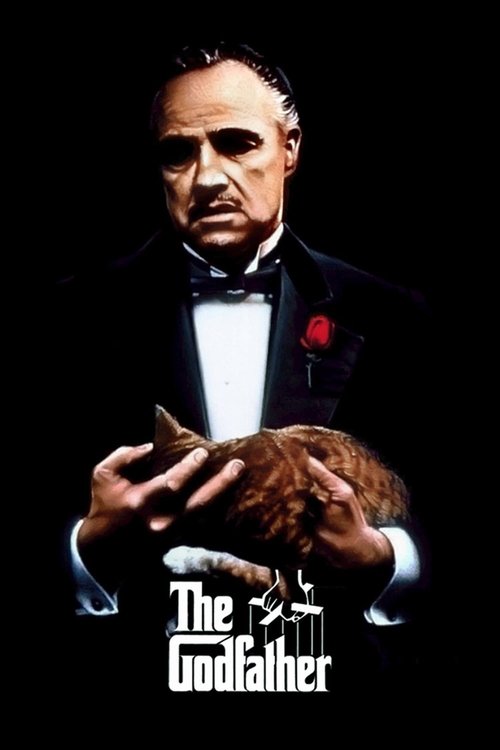
The Godfather
A sweeping crime epic of operatic grandeur, where the seduction of power casts a chiaroscuro shadow over the sanctity of family.
The Godfather
The Godfather

"An offer you can't refuse."

14 March 1972 United States of America 175 min ⭐ 8.7 (21,890)
Director: Francis Ford Coppola
Cast: Marlon Brando, Al Pacino, James Caan, Robert Duvall, Richard S. Castellano
Drama Crime
The Corruption of the American Dream Family vs. Business Power and Its Corrupting Influence Loyalty and Betrayal
Budget: $6,000,000
Box Office: $245,066,411

The Godfather - Ending Explained

⚠️ Spoiler Analysis

The entire narrative of "The Godfather" is built around the tragic transformation of Michael Corleone. Initially a war hero and outsider, he is drawn into the family's criminal enterprises after an attempt on his father's life. His first major turning point is his calculated murder of Virgil Sollozzo and the corrupt police Captain McCluskey in an Italian restaurant. This act forces him into exile in Sicily, where he marries a local woman, Apollonia, who is then tragically killed by a car bomb intended for him. This loss further hardens him.

Upon his return to America, and following the brutal murder of his older brother Sonny at a causeway tollbooth, Michael assumes control of the family business under the tutelage of his aging father. The film's climax is a masterfully edited sequence known as the "baptism massacre." While Michael stands in a church as the godfather to his sister Connie's child, he has orchestrated the simultaneous assassinations of the heads of the five rival families and other key enemies. Moe Greene is shot through the eye in a massage parlor, Don Cuneo is trapped and killed in a revolving door, and the heads of the Barzini and Tattaglia families are also eliminated.

Following this consolidation of power, Michael confronts his brother-in-law, Carlo, revealing he knows Carlo conspired with Barzini to set up Sonny's murder. After extracting a confession, Michael has Carlo garroted in a car. He also has the disloyal capo, Tessio, taken away to be killed after Tessio revealed himself as a traitor. The final, chilling scene shows Michael lying to his wife Kay, denying his involvement in Carlo's death. Moments later, Kay watches as his men pay their respects, calling him Don Corleone, before the office door is shut, closing her out of his world completely. This ending solidifies his complete descent into the role of a ruthless, isolated, and powerful crime lord, a destiny he once desperately tried to avoid.

Alternative Interpretations

While the primary reading of "The Godfather" is a tragic tale of moral corruption, several alternative interpretations exist. One prominent view is that the film is a metaphor for American capitalism. This interpretation sees the Corleone family's operations—their focus on business, eliminating competition, and securing political influence—as a mirror of corporate America, just operating outside the law. The film's narrative of succession from the old-world values of Vito to the cold, corporate ruthlessness of Michael can be seen as a commentary on the evolution of American business practices.

Another interpretation focuses on the film as a story of immigrant assimilation and the perversion of the American Dream. From this perspective, the Corleones are a family who, facing prejudice and limited opportunities, create their own power structure. Vito's criminal enterprise is seen as a twisted path to achieving the security and influence denied to them by mainstream society. Michael's initial desire for legitimacy represents the second generation's attempt to assimilate fully, but he ultimately finds that he cannot escape the legacy and methods of the old world.

A more controversial reading suggests the film, despite its tragic elements, glorifies the Mafia. This view argues that by telling the story entirely from the Corleones' perspective and rarely showing the civilian victims of their crimes, the film invites the audience to sympathize with and even admire these violent criminals. Don Vito, in particular, is often seen as a noble, admirable figure, a man of honor and family values, which can overshadow the brutality of his profession.